

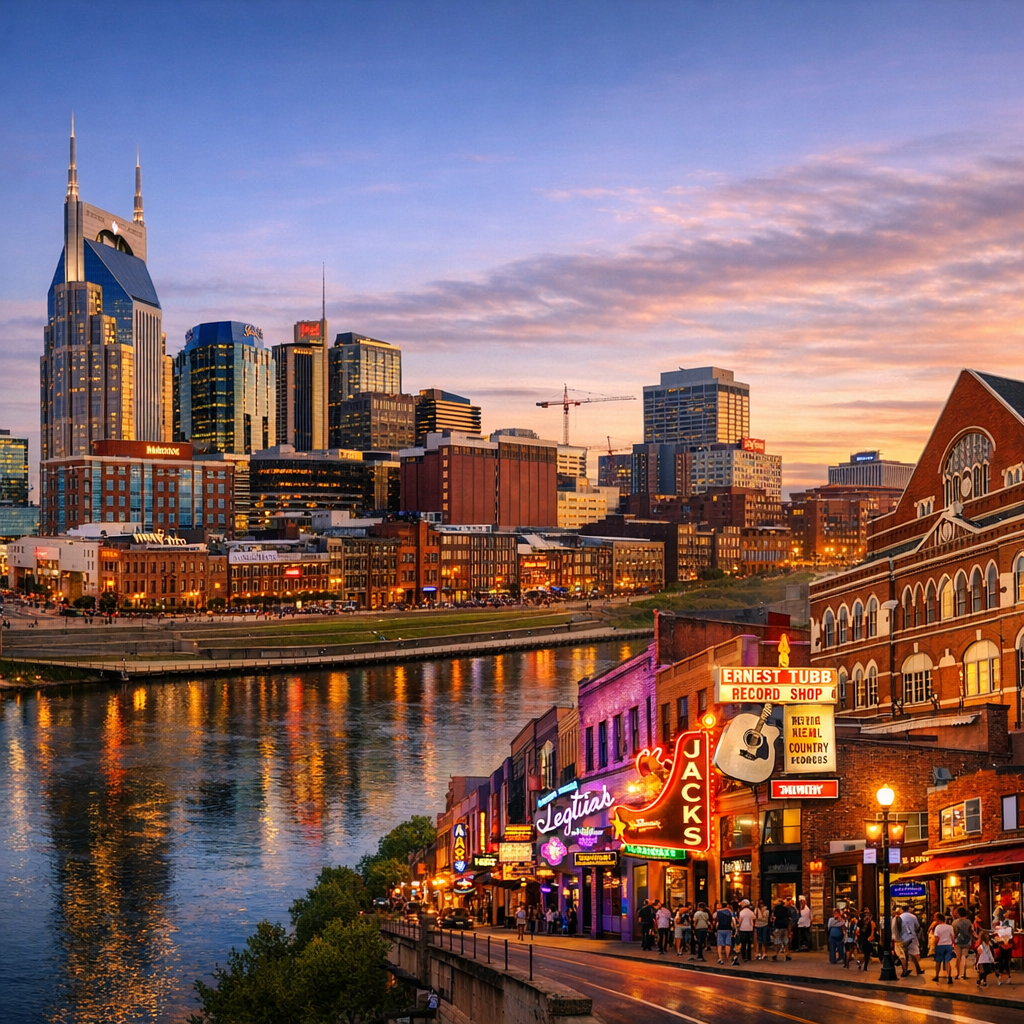
Nashville, long celebrated as the heart of country music, has undergone a remarkable transformation into a dynamic business hub. This evolution mirrors broader national economic trends and offers insights into the interplay between cultural heritage and economic development.
Population Growth and Economic Diversification
The city’s population has seen significant growth, with Davidson County adding nearly 9,300 residents in 2025, the highest increase among Tennessee’s 95 counties. This surge is attributed to domestic migration and a burgeoning job market, particularly in sectors like healthcare and technology.
Educational Attainment and Income Levels
Data from 2024 indicates a strong correlation between higher education and income in Nashville. Adults aged 25 or older without a college degree earned a median income of $41,393, highlighting the economic advantages of higher education. Initiatives like Tennessee Reconnect aim to make college more accessible, addressing barriers such as rising tuition and student debt.
Housing Market Dynamics
The COVID-19 pandemic significantly impacted Nashville’s housing market. Historically low borrowing costs and the rise of remote work led to a surge in home prices, making homeownership less attainable for many residents. This trend reflects national patterns observed over the past five years.
Infrastructure and Transportation Initiatives
In response to rapid growth, Nashville has invested in infrastructure improvements. The “Choose How You Move” program, launched in 2025, allocated $104 million for transit projects, including sidewalk enhancements, smart traffic signals, and public transportation upgrades. By January 2026, these efforts contributed to a 7.3% increase in public transit ridership.
Economic Contributions of Vanderbilt University
Vanderbilt University and its Medical Center have played a pivotal role in Nashville’s economy. Between 2019 and 2024, they contributed $22.13 billion to the local and state economies, underscoring the significant impact of educational and healthcare institutions on regional economic health.
National Events and Economic Impact
Looking ahead, Nashville is set to host Super Bowl LXIV in 2030. The city plans to invest $60 million into the event, anticipating substantial economic returns through tourism and related activities. This strategic move aligns with Nashville’s broader efforts to position itself as a major player on the national stage.
Nashville’s journey from a music-centric city to a multifaceted economic powerhouse exemplifies the dynamic nature of urban development in the United States. By leveraging its cultural heritage while embracing new industries and infrastructure projects, Nashville offers a model for other cities navigating the complexities of growth and diversification.