

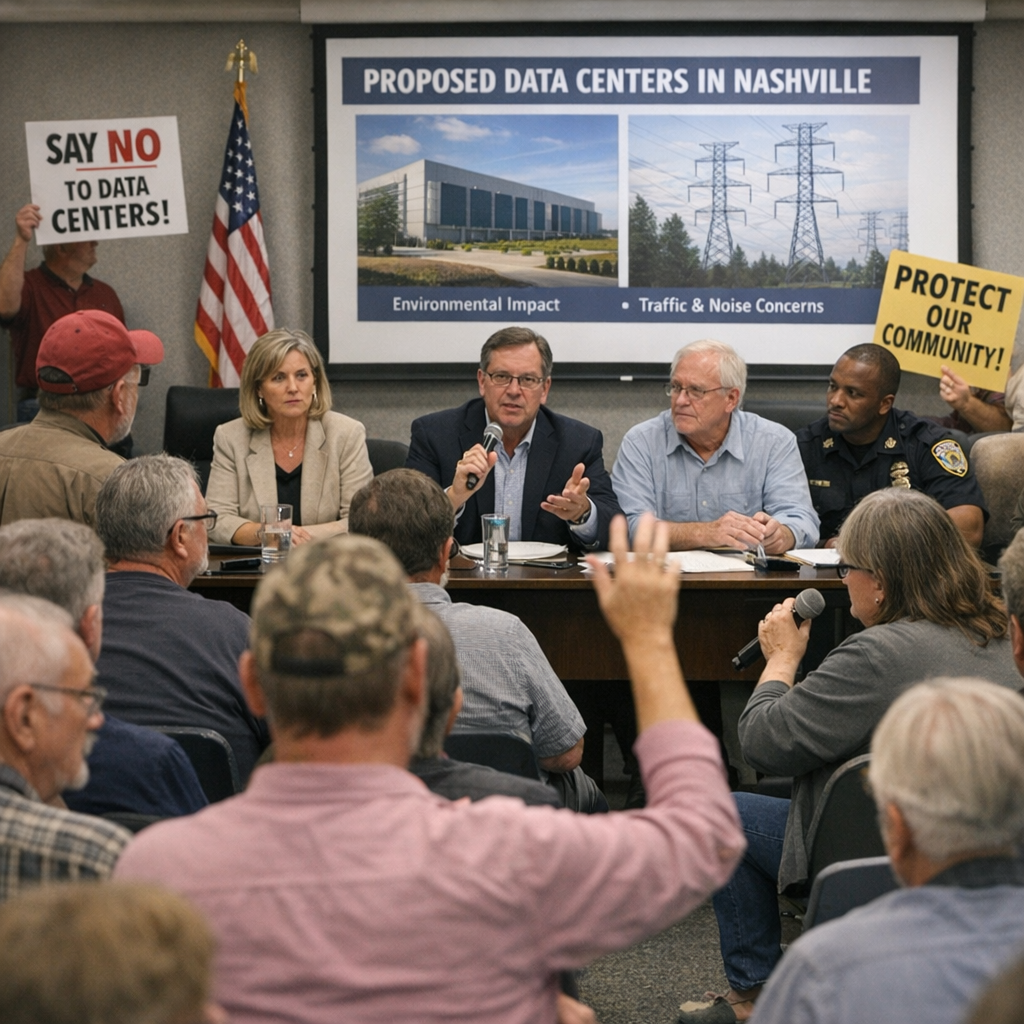
Nashville is currently at the center of a significant debate regarding the expansion of data centers within the city. Two proposed facilities—one adjacent to the Nashville Zoo and another near Fisk University—have sparked discussions about the balance between technological advancement and community well-being.
Proposed Data Centers and Community Response
The Atlanta-based company DC BLOX has proposed constructing a data center approximately 50 yards from the Nashville Zoo. This proximity has raised concerns among zoo officials and animal rights advocates about potential noise and light pollution affecting the zoo’s 3,000 animals, including endangered species like the clouded leopards. In response, the zoo initiated a petition that has garnered over 500,000 signatures, reflecting widespread public apprehension.
Similarly, plans for a data center near Fisk University have elicited community concerns. Residents and university stakeholders worry about the environmental and infrastructural impacts such facilities might bring to the historic institution and its surrounding neighborhoods.
Legislative Actions and Moratorium
In light of these concerns, the Metro Council has taken steps to address the situation. On June 9, 2026, the council passed the first reading of an ordinance imposing a temporary moratorium on the acceptance, processing, approval, and issuance of permits for new data centers across Davidson County. This moratorium aims to provide time for comprehensive evaluation and the development of regulations that balance technological growth with community interests.
Metro Councilmember Rollin Horton emphasized the need for thoughtful growth, stating, “I think it’s important that we provide permanent protections for all of Davidson County from some of the negative effects of data centers.” The proposed legislation includes application procedures, locational restrictions—such as barring centers over 500,000 square feet in size and limiting locations to industrial zones—and emission rules prohibiting on-site power generation that causes emissions.
Broader Implications and Future Considerations
The debate over data center placements in Nashville reflects a broader national conversation about the expansion of AI infrastructure and its integration into urban environments. While data centers are essential for supporting technological advancements and economic growth, their placement requires careful consideration to avoid adverse effects on communities and sensitive ecological areas.
As Nashville continues to grow as a technological hub, city leaders, businesses, and residents must collaborate to establish guidelines that ensure sustainable development. This includes considering environmental impacts, community health, and the preservation of cultural and natural landmarks.
The Metro Council’s proactive approach, including the proposed moratorium and forthcoming regulations, signifies a commitment to balancing progress with the well-being of Nashville’s diverse communities. Ongoing public engagement and transparent decision-making will be crucial in navigating these complex issues and shaping the city’s future.