

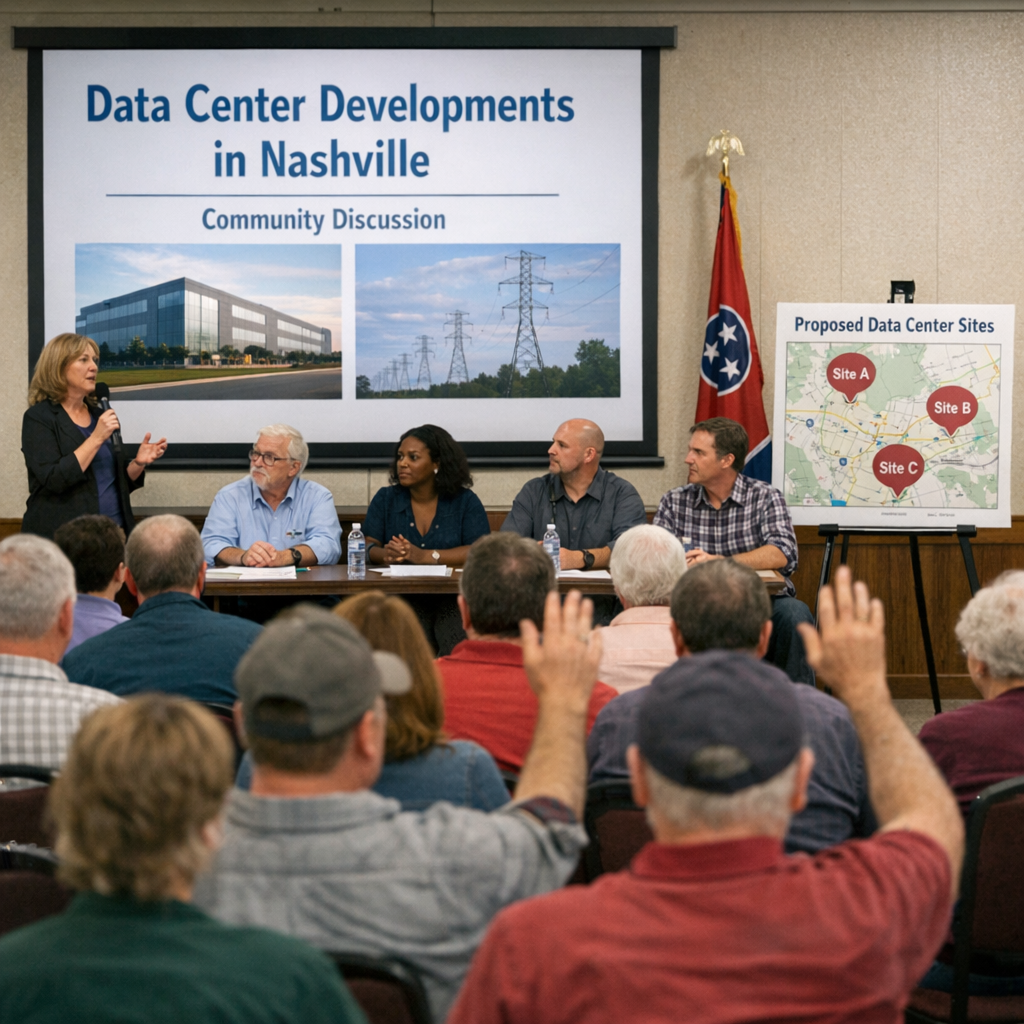
In recent months, Nashville has become a focal point for discussions surrounding the expansion of data centers within the city. Two proposed facilities—one adjacent to the Nashville Zoo and another near Fisk University—have sparked significant community and political discourse.
Proposed Data Centers and Community Response
The data center near the Nashville Zoo, planned by DC BLOX, has been met with substantial opposition. Concerns center on potential noise and light pollution affecting the zoo’s 3,000 animals, including endangered species like the clouded leopards. The zoo has initiated a petition that has garnered over 500,000 signatures, reflecting widespread public apprehension.
Similarly, the proposed data center near Fisk University has raised questions about its impact on the historic institution and surrounding neighborhoods. Community members have voiced concerns regarding environmental effects and the preservation of the area’s cultural heritage.
City’s Legislative Actions
In response to these developments, the Metro Council has taken proactive steps. A temporary moratorium on new data centers has been proposed, aiming to pause the acceptance, processing, approval, and issuance of permits for such facilities across Davidson County. This measure seeks to provide time for comprehensive evaluation and regulation development concerning data center placements.
Additionally, Mayor Freddie O’Connell has introduced legislation to exercise eminent domain over the property intended for the DC BLOX data center near the zoo. This move underscores the city’s commitment to addressing community concerns and ensuring that development aligns with public interests.
Balancing Technological Advancement and Community Well-being
While data centers are integral to supporting the digital infrastructure of a growing city, Nashville’s leadership emphasizes the importance of thoughtful growth. Councilmember Rollin Horton has proposed legislation focusing on application procedures, locational restrictions, and emission rules for data centers. These initiatives aim to balance technological progress with the preservation of community well-being and environmental health.
As Nashville continues to navigate these complex issues, the city remains committed to fostering development that respects both its technological ambitions and the concerns of its residents.