

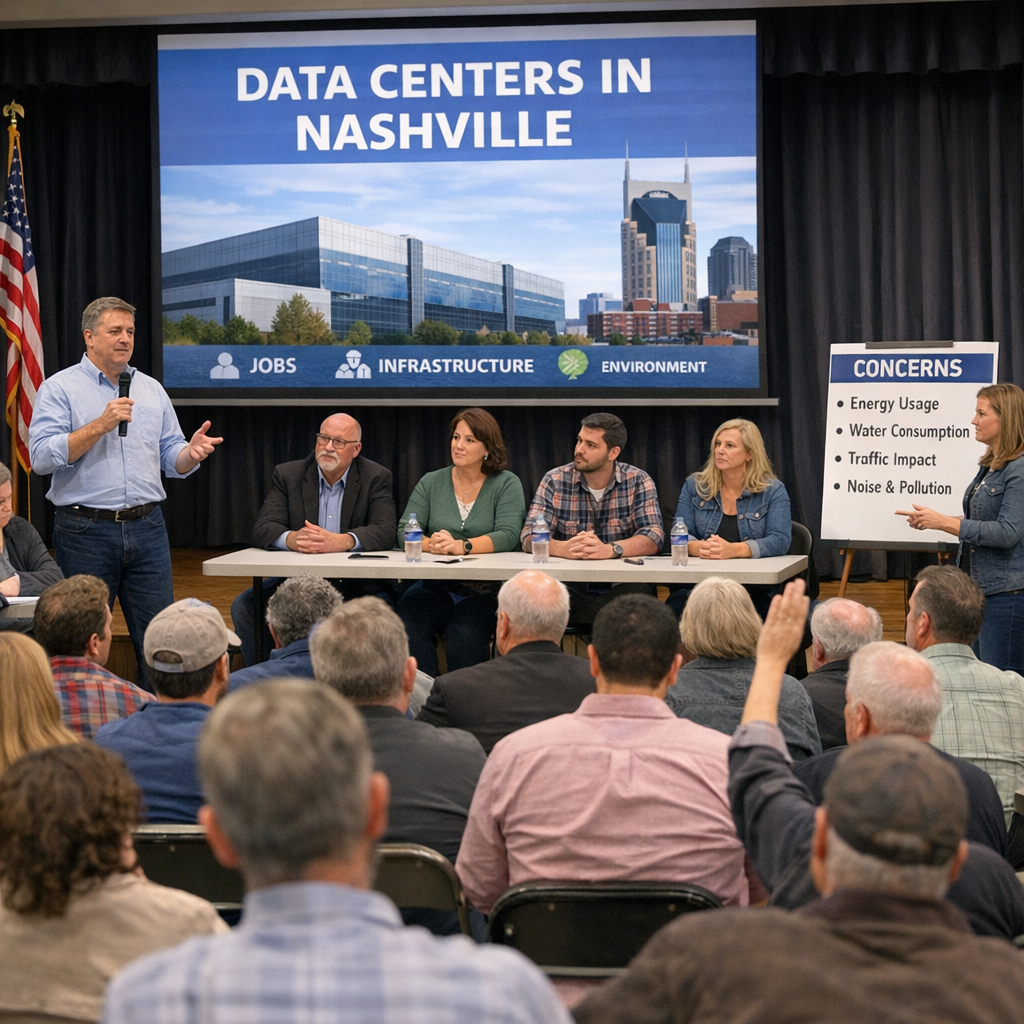
Nashville is currently navigating complex discussions surrounding the expansion of data centers within the city, particularly concerning proposed developments near the Nashville Zoo and Fisk University. These projects have sparked significant community and political responses, leading to actions aimed at balancing technological advancement with the well-being of local residents and institutions.
Proposed Data Centers Near the Nashville Zoo and Fisk University
DC BLOX, a data center firm, has proposed constructing a facility approximately 50 yards from the Nashville Zoo. This proximity has raised concerns among zoo officials and animal rights advocates about potential noise and light pollution affecting the zoo’s 3,000 animals, including endangered species like the clouded leopards. The zoo has initiated a petition opposing the project, which has garnered substantial public support.
Similarly, plans for a data center near Fisk University have elicited apprehension regarding the impact on the historic institution and its surrounding community. Residents and university stakeholders have expressed worries about increased traffic, environmental effects, and the preservation of the area’s character.
City’s Response and Legislative Actions
In response to these concerns, Nashville’s Metro Council has taken several steps:
- Temporary Moratorium: The Council passed an initial reading of an ordinance imposing a temporary moratorium on the acceptance, processing, approval, and issuance of permits for new data centers across Davidson County. This pause aims to allow time for comprehensive evaluation and regulation development.
- Eminent Domain Consideration: Mayor Freddie O’Connell has proposed legislation to exercise eminent domain over the property intended for the DC BLOX data center near the zoo. This move would enable the city to acquire the land for public use, reflecting the administration’s commitment to addressing community concerns.
- Regulatory Framework Development: Councilmember Rollin Horton has introduced legislation to establish clear regulations for data center developments. The proposed rules include application procedures, locational restrictions—such as limiting large data centers to industrial zones—and emission controls to mitigate environmental impacts.
Community and Political Support
The opposition to these data center projects has garnered broad political support. Mayor O’Connell signed an executive order directing city departments to study the potential impacts of large-scale data centers and endorsed the Council’s efforts to pause permits for such facilities. Additionally, Senator Marsha Blackburn has expressed support for the community’s stance, highlighting the bipartisan nature of the concerns.
Looking Ahead
As Nashville continues to grow as a technological hub, the city faces the challenge of fostering innovation while preserving the quality of life for its residents and institutions. The ongoing debates and legislative actions underscore the importance of thoughtful planning and community engagement in shaping the city’s future.
Residents are encouraged to participate in upcoming public meetings and provide input on these developments to ensure that Nashville’s growth aligns with the values and needs of its diverse communities.