

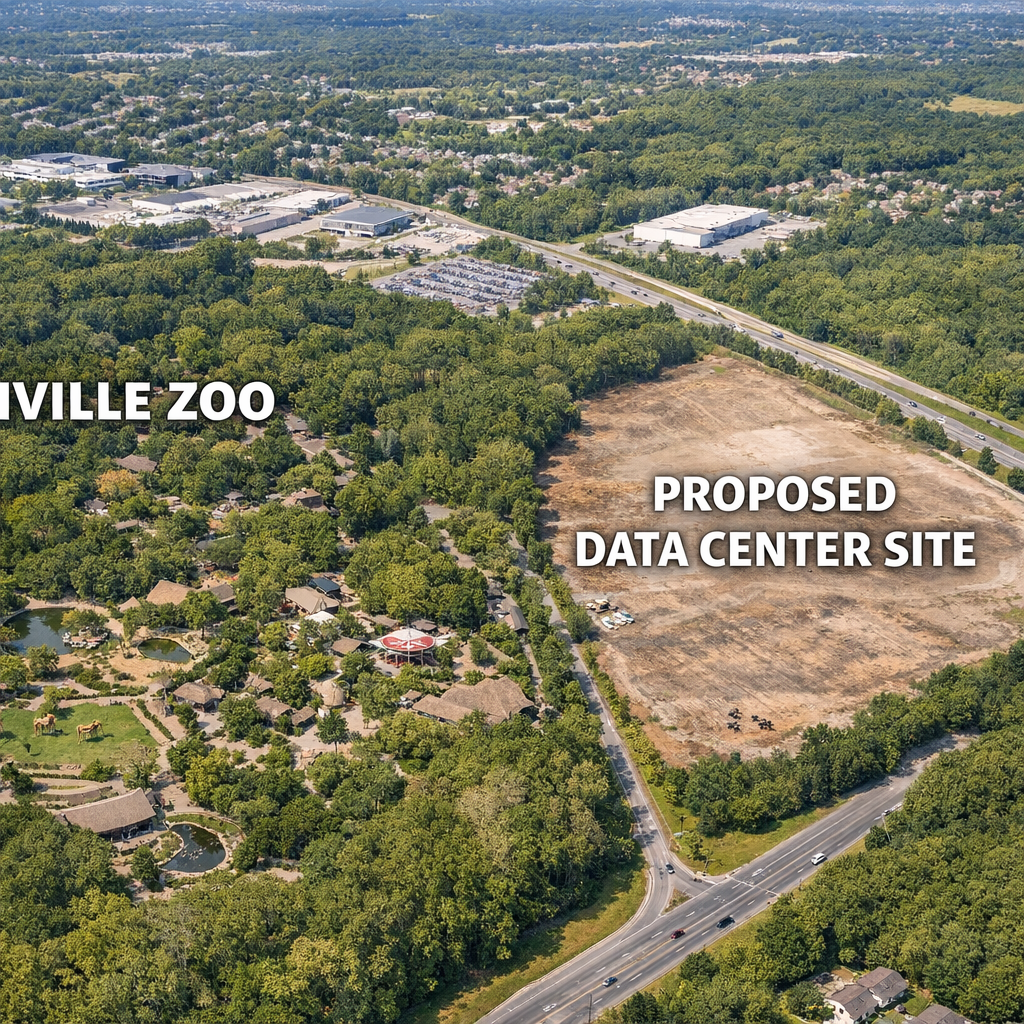
Nashville is at a crossroads, grappling with the rapid expansion of data centers within the city. This growth has sparked a complex debate, balancing technological advancement with community well-being and environmental preservation.
Community Concerns and Environmental Impact
The proposed construction of a data center by DC BLOX near the Nashville Zoo has ignited significant opposition. The zoo’s leadership and animal rights advocates express concerns about potential noise and light pollution affecting the well-being of over 3,000 animals, including endangered species like the clouded leopards. A petition opposing the project has garnered over 500,000 signatures, reflecting widespread public apprehension.
Legislative Response and Moratorium
In response to these concerns, Metro Councilmember Rollin Horton has introduced legislation proposing a temporary moratorium on new data centers. The proposed regulations aim to establish application procedures, restrict locations to industrial zones, and enforce emission rules prohibiting on-site power generation that causes emissions. This initiative seeks to ensure that data center development aligns with community interests and environmental standards.
Broader Implications and Future Outlook
The debate extends beyond the zoo’s vicinity, with nine data centers already operational in Nashville and a tenth under construction. The city’s lack of specific regulations for data centers places it among many U.S. cities grappling with similar issues. The Metro Council is set to review the proposed rules, with public input invited at an upcoming meeting. Councilmember Horton emphasizes the need to balance technological progress with the health and safety of Nashville’s residents and environment.
As Nashville navigates this complex issue, the outcome will set a precedent for how the city manages technological growth while preserving the quality of life for its communities and natural habitats.