

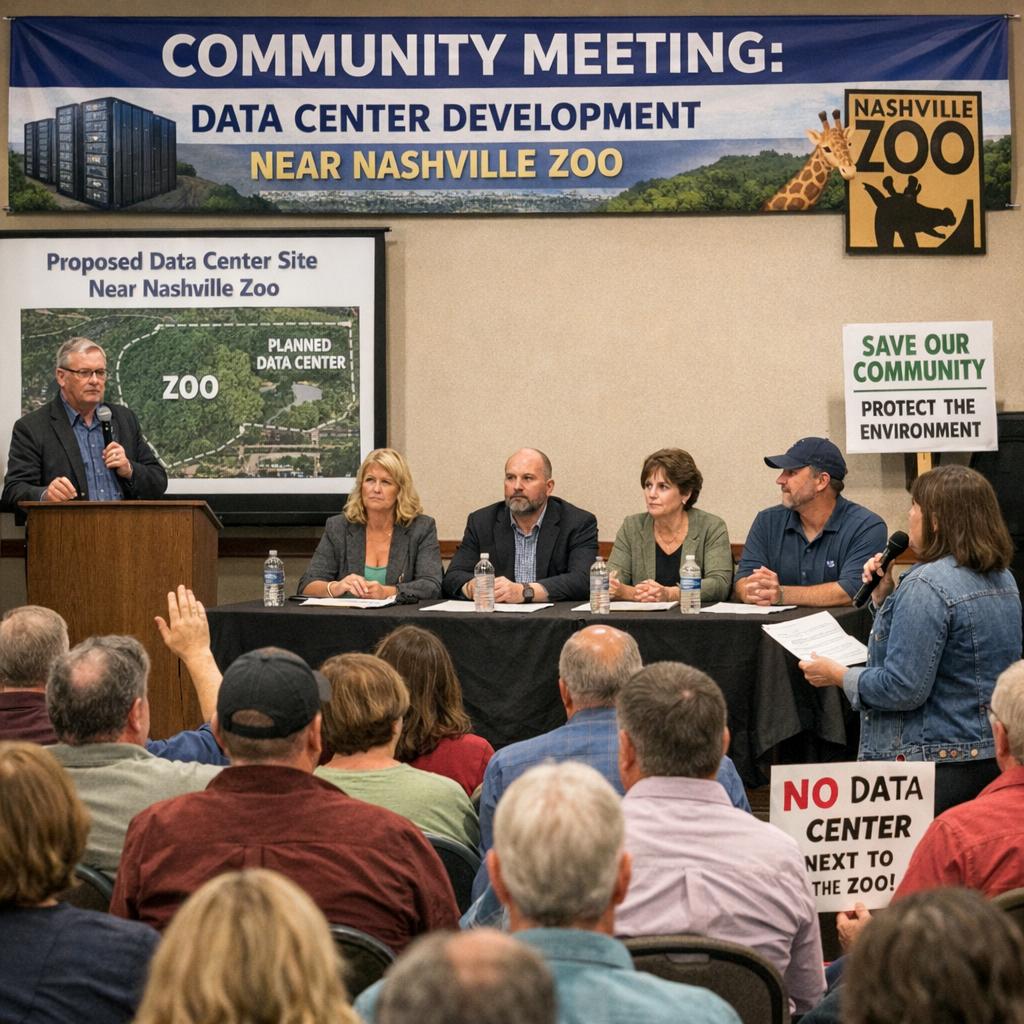
Nashville is at a crossroads regarding the expansion of data centers within the city. The recent proposal by DC Blox to establish a data center adjacent to the Nashville Zoo has ignited a citywide discussion on the implications of such developments.
Community and Political Response
The proposed data center near the zoo has garnered significant opposition from both residents and political figures. Mayor Freddie O’Connell has taken a firm stance by initiating eminent domain proceedings to acquire the land intended for the data center, emphasizing the city’s commitment to preserving community spaces and addressing public concerns. This move reflects a broader apprehension about the rapid proliferation of data centers in Nashville.
Legislative Measures
In response to the growing unease, Metro Councilmember Rollin Horton has introduced legislation aimed at regulating data center development. The proposed measures include stringent application procedures, restrictions on the size and location of data centers—specifically barring facilities over 500,000 square feet and limiting them to industrial zones—and prohibiting on-site power generation that results in emissions. These regulations are designed to ensure that data center growth aligns with Nashville’s environmental standards and community values.
Industry Perspective
Representatives from the data center industry, such as attorney Doug Sloan for DC Blox, argue that public concerns are often based on misconceptions rather than factual evidence. They advocate for a balanced approach that allows for technological advancement while addressing legitimate community and environmental concerns.
Looking Ahead
The Metro Council is set to review the proposed regulations, with public input scheduled for a meeting on July 7. This ongoing debate underscores the need for Nashville to carefully consider how to integrate technological infrastructure without compromising the well-being of its communities and the environment.