

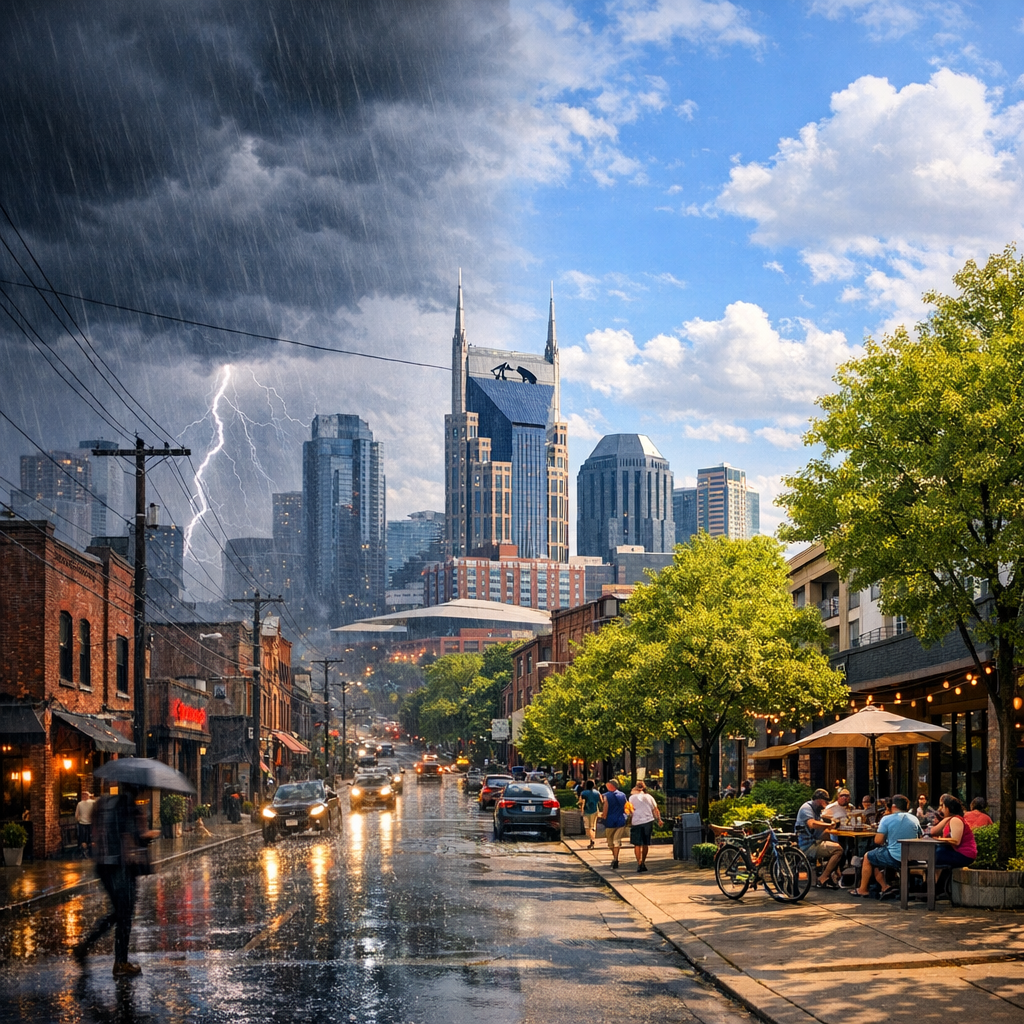
Hi, Nashville readers—this is Mason Martinez with your ongoing guide to how our weather and environment are shifting. If you’ve noticed hotter days, later frosts, or an uptick in rainfall intensity, you’re seeing the effects of broader climate changes already underway. Here’s what’s happening now, why it matters, and what’s being done locally to build resilience.
Key Changes in Nashville’s Climate
Extended growing seasons & allergy impacts
Compared to decades past, Nashville now has about 30 more frost-free days each year. That means plants start growing earlier in spring and linger later into fall. While that might sound nice, it also lengthens pollen seasons—so allergy sufferers are dealing with symptoms over a much longer period. These changes can complicate planting schedules, landscaping choices, and outdoor event planning.
More intense rainfall, especially when it matters most
We’re still getting rain year-round in middle Tennessee—but here’s the shift: rather than consistent moderate showers, recent years have brought more episodes of heavy downpours. These intense rainfall events carry flood risks, especially in neighborhoods with less green space or more impervious surfaces like pavement and roofs. It’s not uncommon for dry soil to absorb less, so flash flooding becomes more likely when rain finally does fall hard.
Heat & who feels it the most
One of the most immediate weather threats locally is rising heat. Wake-up calls to heat danger come from heat maps showing city areas—especially southeast neighborhoods—that stay warmer overnight and cool less during the day. Combined with high humidity and lengthening warm spells, this can put people at risk, especially those without good cooling, shade, or easy access to outdoor green areas.
Why These Shifts Matter
What’s going on with Nashville isn’t just about comfort—it’s about health, safety, infrastructure, and equity. If heat disproportionately impacts certain areas, or if flooding repeatedly hits vulnerable zones, the effects ripple out: increased energy bills, risk of heat-related illnesses, and greater property damage. These changes also affect local ecosystems, agriculture, and wildlife, which depend on seasonal cues that are shifting.
What’s Being Done — And What You Can Do
City & community: adapting and planning
Metro Nashville has introduced a Climate Adaptation and Resilience Plan that examines hazards like flooding, heatwaves, severe storms, and winter extremes. Part of the effort includes neighborhood temperature mapping, updated stormwater planning, and strengthening infrastructure in areas with greater flood risk. There’s also focus on social equity, ensuring communities previously underinvested in are part of climate resilience planning.
Individual actions & preparedness
- Plant native trees and support local green space to help shade neighborhoods, cool air, and absorb rainfall.
- Manage yard care with awareness—mulching, minimizing hard surfaces, and selecting plant species suited for changing seasons.
- Stay informed of weather alerts—flash flood warnings, heat advisories—and have emergency plans ready.
- Reduce your home’s heat exposure such as using lighter-colored roofing, improving insulation, or installing shading where possible.
Looking Ahead
The trends we’re seeing—longer warm seasons, stronger storms, uneven cooling—are likely to continue without meaningful intervention. But that doesn’t mean we’re powerless. By planning thoughtfully, making small changes at home, and ensuring policy and infrastructure keep pace, Nashville can navigate these shifts more safely and fairly. We’ll all benefit when our city is cooler, greener, and better equipped to handle extremes.
Stay tuned for weather updates, environment stories, and tips you can use—this beat is all about our shared home.
– Mason Martinez