

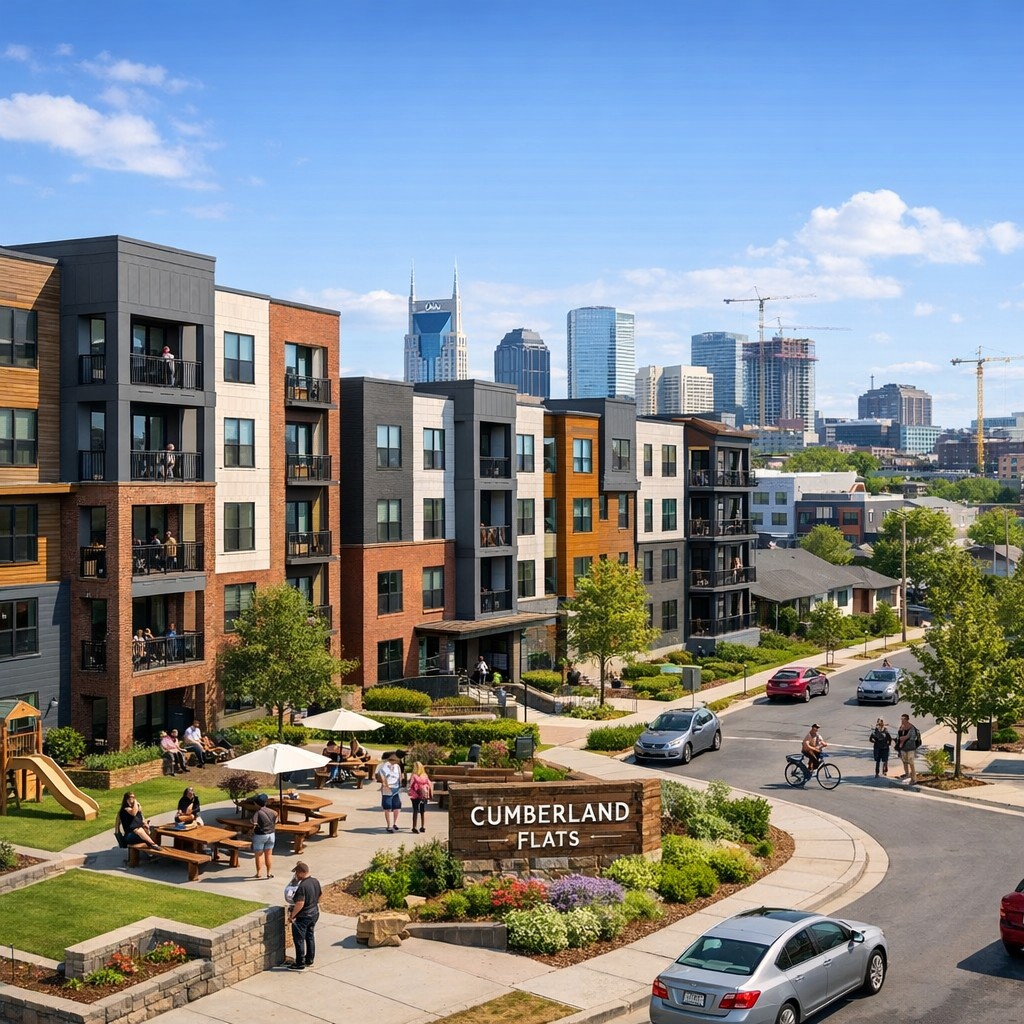
Olivia Williams reports on recent city-level developments in Nashville that are reshaping how residents access housing, move around the city, and influence land use policies.
Major Steps Forward on Affordable Housing
Nashville recently celebrated the opening of Park Point East, a 203-unit development that is part of the Cayce Transformation. Over half of the units are reserved for long-time Cayce Place residents, and the development includes modern amenities like fitness spaces, balconies, and a courtyard. This effort reflects Metro’s push to ensure growth doesn’t displace communities.
The city has also launched several financing tools and programs aimed at expanding housing options for different income levels. The PRO Housing initiative received $5 million in federal funding to tackle deeply affordable housing (0-30% of AMI), provide support to faith-based landholders, and create an Affordable Housing Accelerator for smaller developers.
Additionally, the Nashville Catalyst Fund has supported the acquisition of existing apartment buildings to convert them into limited equity cooperatives. Two such purchases in Madison will preserve long-term affordability for working families.
Affordable Housing Policy and Budget Moves
Nashville’s latest operating budget reflects historic investment in affordable housing. Metro will commit more local funding than ever to the Barnes Housing Trust Fund and introduce a revolving loan program to support housing developments that target middle-income earners. Also, the budget includes a proposed reduction in the local grocery tax.
Transportation Reforms Under “Choose How You Move”
The voter-approved program Choose How You Move has begun delivering concrete infrastructure improvements: 86 miles of new sidewalks, updated traffic signals, expanded bus service, and continuous transit service around the clock. These enhancements target safety, access, and reliability across Nashville.
This push builds on earlier planning frameworks like Access Nashville 2040 and nMotion, helping align land use, mobility, and environmental goals for a more interconnected, equitable city.
Land Use Conflict: The Data Center Debate
A long, contentious Metro Council meeting saw over 200 people speak out against the rising number of data center projects, especially near residential zones and sensitive areas. In response, bills have been approved through initial readings that would impose tighter regulations and a temporary moratorium on new data center construction.
Challenges Ahead and What Residents Should Know
- Even with recent wins, affordability remains uneven: Developers point out that for projects targeting very low incomes, funding remains tight.
- Transit improvements will take time; sidewalks and service expansions often involve long planning and construction processes.
- Land use tensions like those around data centers underscore a growing need for clearer communication and decision-making transparency between Metro, developers, and neighborhoods.
With multiple programs now in motion—housing, transit, land use—Nashville finds itself in a moment of transformation. The effectiveness of these efforts will depend on sustained community input, funding, and oversight.