

Hello, I’m Olivia Williams. Nashville’s city government has a full plate lately — from pushing more reliable transit, to weighing new limits on data center development, to looking for ways to ease housing costs. Here’s a roundup of what’s happening across city hall, community boards, and in neighborhoods.
New Rules & Moratoriums Around Data Centers
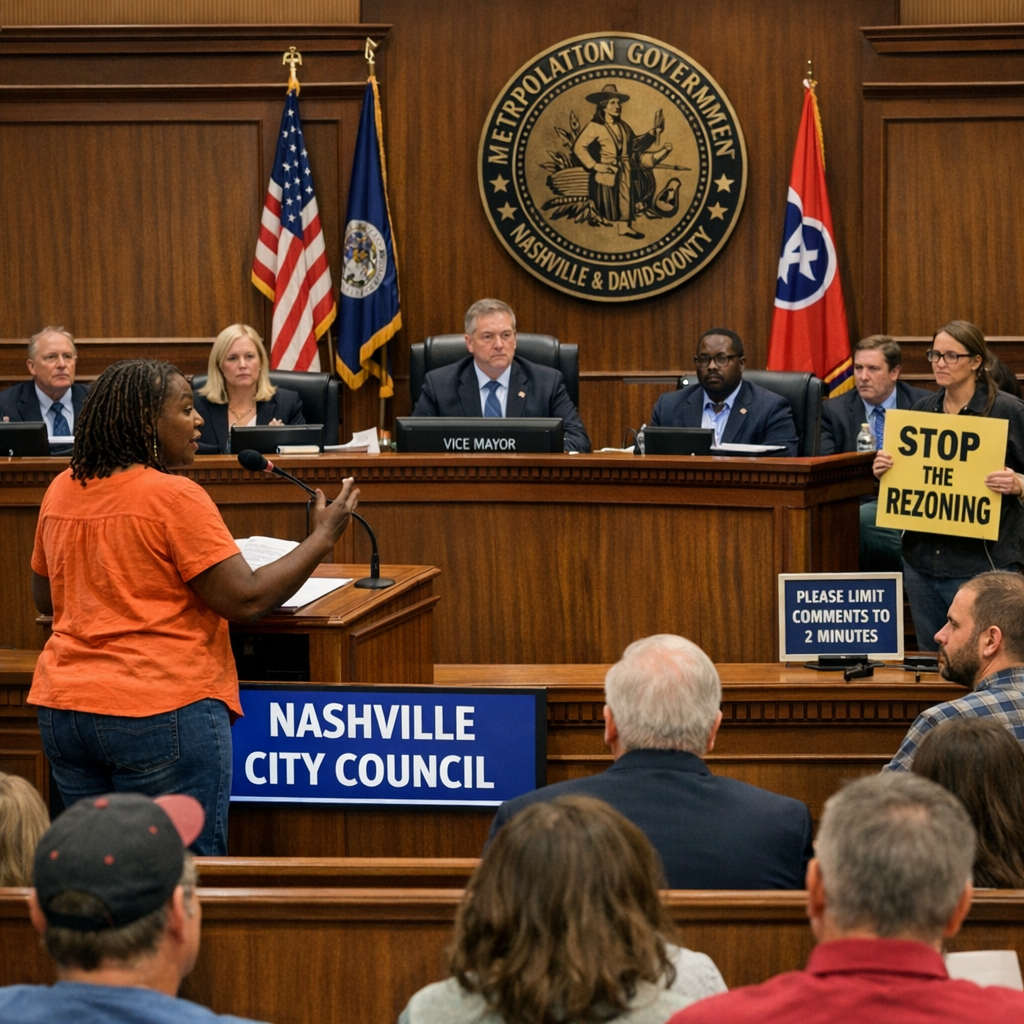
Community concern has been growing over new data center proposals, especially those near sensitive sites like the zoo and university campuses. Metro Council recently approved two bills aimed at stopping or strongly limiting new data centers while more regulations are developed. The measures include stricter land-use requirements and a temporary halt on new projects. Locals who spoke at public hearings cited environmental changes, wildlife impacts, noise and heat, and disruptions to area residents as key worries.
One striking example: more than 200 people signed up to comment at one hearing, stretching the meeting into the early morning hours. That level of turnout shows just how deeply people care — and how complicated the trade-offs are between technological infrastructure and preserving quality of life. Nashville’s working on finding solutions that balance those needs while establishing more guardrails. You’ll also see opposition with broad support: public protests and petitions have mobilized large numbers of residents and prominent figures alike.
“Choose How You Move” Gaining Momentum
The transformative transit and mobility plan known as “Choose How You Move” is starting to turn promises into new sidewalks, safer intersections, and expanded transit service. Since getting voter approval, the city has launched more than $160 million in projects citywide. That includes closing gaps in sidewalks, modernizing traffic signals, and improving bus speed with queue jump lanes on busy corridors.
Some of the named projects underway are along Nolensville Pike and Murfreesboro Pike. The program is also focusing on equity — making it easier to get around for people walking, biking, using wheelchairs, or relying on transit, not just people with cars. Service hours for buses and access routes are expanding, evening and weekend coverage is improving, and the city is actively drawing from neighborhood feedback for future routes and safety features.
Housing Stress and the Budget Balancing Act
Many Nashvillians are feeling squeezed: housing costs are rising quickly, but many luxury units remain vacant, while affordable housing is still scarce. At Metro’s recent public hearings on its roughly $3.8-billion operating budget, housing affordability came up again and again. Residents asked councilmembers to preserve funding for eviction prevention, legal counsel for renters, and trust funds that support affordable housing development.
The substitute FY2027 budget reflects some of those priorities: it boosts funding for housing stability programs, homelessness services, and gives larger grants to nonprofit providers. But councilmembers warn that revenue projections remain tight. Since property tax growth has been modest and some sales tax revenue slowing, finding space to add or expand programs without making cuts elsewhere will require careful strategy.
What to Keep Watching
- How the final decisions play out on data center regulations — whether they become too restrictive for business, or too lax for concerned neighbors.
- The next phases of “Choose How You Move,” especially projects that affect lower-income areas or neighborhoods historically underinvested in mobility infrastructure.
- Whether housing affordability efforts can keep pace with rising costs, particularly for renters and people with fixed incomes.
- How Nashville balances growth with preserving livability — noise, traffic, natural spaces — especially as tech infrastructure and transit expansions accelerate.
The challenges may be big, but so is the conversation. Local voices are being heard — now it’s about turning that input into policies that make Nashville work for everyone.