

By Olivia Williams
Transformative Moves on Nashville Roads and Transit
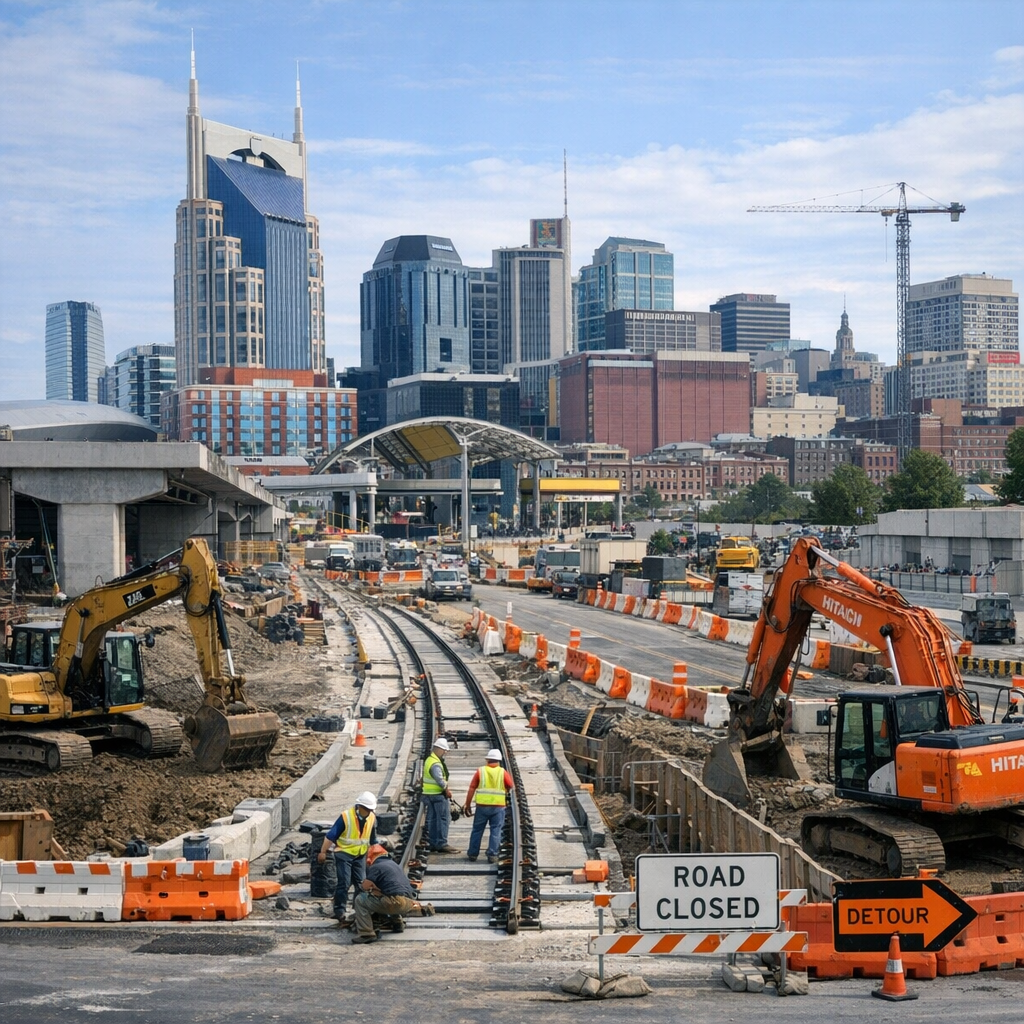
The metro area is seeing several large-scale transportation infrastructure projects, many tied into the voter-approved Choose How You Move (CHYM) program. Sidewalk fill-ins, bus rapid transit improvements, smart signal upgrades, and safer crosswalks are all in progress. CHYM has already launched over $160 million in projects to address walkability, traffic safety, and transit efficiency. A segment of the Murfreesboro Pike corridor now features a bus queue jump lane to improve public transportation reliability. More transit shelter upgrades, expanded fleet, and extended service hours are coming soon. Choose How You Move is delivering visible change.
Looking ahead at wider vehicle corridors, the widening of Nolensville Pike from Old Hickory Boulevard to Mill Creek is underway. That project will add lanes, bike lanes, sidewalks, and paved shoulders, aiming for completion in mid-2027. Meanwhile, the state is seeking public input on “Choice Lanes” along a 26-mile stretch of I-24 between Murfreesboro and downtown. These designated lanes—owned by the state but maintained by a private partner—are designed to improve travel times for commuters and public transit alike.
Airport Changes and The Music City Loop
Nashville International Airport (BNA) is growing fast. Under the New Horizon expansion, the Concourse D extension has opened, adding five gates along with new dining, retail, and art spaces. Construction has begun on a large rental car facility and parking garage that will house thousands of cars and include a substantial parking footprint. The central ramp is being expanded to improve aircraft movement and overnight parking capacity. A major renovation of Concourse A is underway, set to open in 2028 with more gates and enhanced amenities.
Paired with this growth is The Music City Loop, the proposed zero-emission underground connector by The Boring Company. Once approved, it would link downtown Nashville, BNA, Lower Broadway, and West End—all without taxpayer cost. Early approvals for right-of-way and permitting have been granted, putting this ambitious transportation idea into motion.
Water, Parks, and Stormwater: Natural Systems Getting Attention
Nashville’s metro government is also focusing on long-overlooked infrastructure: water systems and green space. The Clean Water Nashville Overflow Abatement Program is aggressively repairing aging sewer lines and manholes in multiple neighborhoods. Alongside that, Shelby Park is undergoing major rehabilitation to fix stormwater issues and reduce overflows into the Cumberland River.
On the land-use front, Metro Planning has launched the Ecological Conservation Strategy (ECS), the first county-wide effort in years to assess natural resources, landforms, waterways, hilltops, hillsides, and green space. Residents and stakeholders are being encouraged to help shape a plan for growth that balances Nashville’s ongoing development with environmental preservation.
Putting It All Together: Why It Matters
What does this mean for Nashvillians?
- Commuters on key corridors may finally see relief from congestion—through quicker transit, managed lanes, and more reliable roadways.
- Walkability and safety are becoming real priorities, not just aspirations—people walking, bicycling, and using mobility aids will benefit.
- The airport expansion will help meet current and projected demand, supporting tourism, business travel, and job growth.
- Investments in water infrastructure and conservation are essential to public health, recreation, and environmental sustainability.
Residents should stay informed and involved—public hearings, surveys, and special engagement portals make it possible for voices to be heard. If you live in an area affected by any of these projects, double-check the latest timelines and plans through Metro Nashville’s websites and your local council member’s office. These are our city’s long-term building blocks—how they’re done matters for decades to come.