

By Ava Brown
Nashville is no longer just home to music and healthcare—it’s becoming a place where artificial intelligence and smart gadgets are part of everyday life. From local startups creating health-tech tools to more people bringing smart home automation into their living rooms, tech here is quietly transforming how we work, live, and care for each other.
What Nashville Startups Are Building
Among the heavy hitters in our local startup scene are AI-focused companies like SiteVue AI, Clovers, and Universal Robotics, all ranked among Nashville’s top emerging AI startups. These companies are tackling everything from image and data analysis to automating tasks in industries like logistics and compliance. Seedtable’s rankings show most are still in seed or early stages—but they’re gaining momentum. These founders are shaping tools that may change how we interact with health systems, real estate, manufacturing and more.
At the same time, Nashville’s long-standing strength in healthcare is fueling innovation. With 17 publicly traded healthcare firms based in the metro area, technology startups that merge health and AI are drawing serious attention from investors. This isn’t just hospital software—it includes home recovery, personalized medicine, remote monitoring and predictive analytics, all aiming to make care more proactive and accessible.
Smart Devices: From Convenience to Necessity
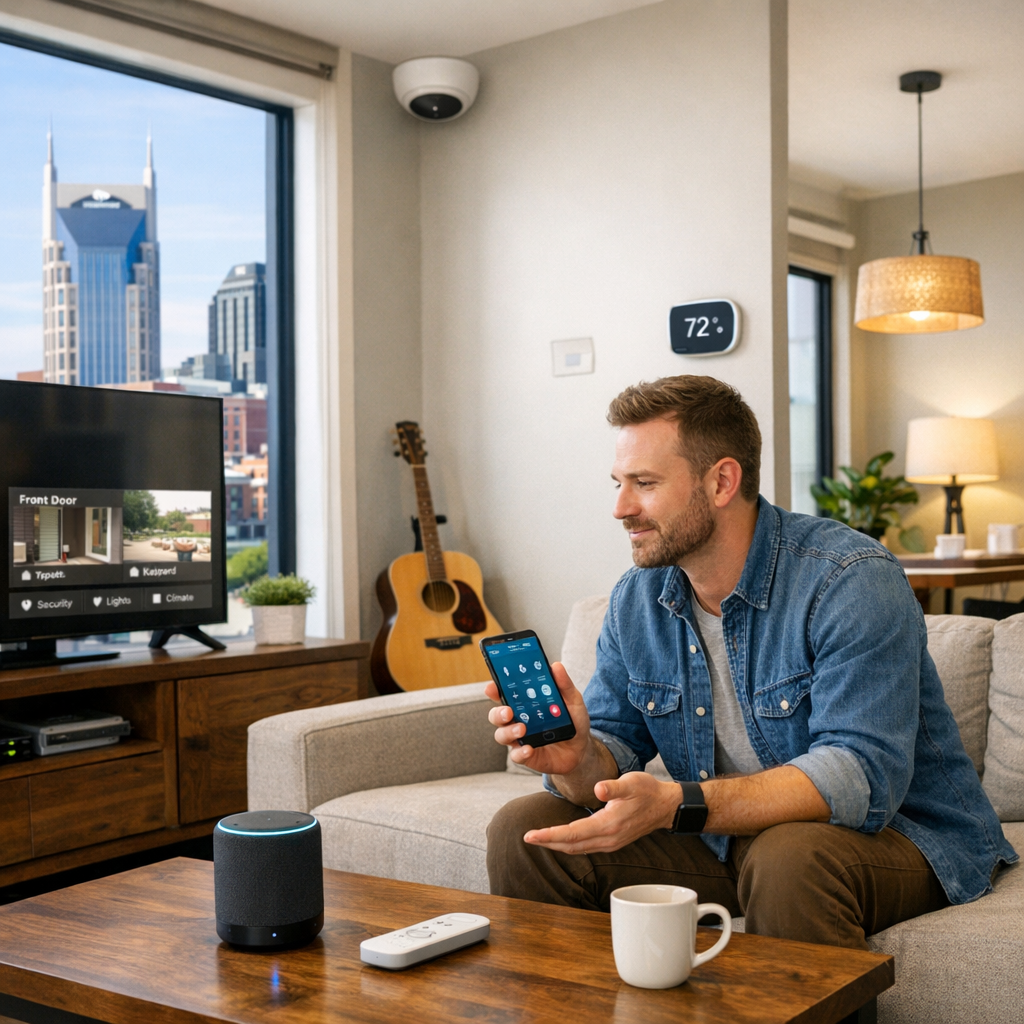
On the consumer side, more Nashvillians are embracing smart devices in the home. Nationally, nearly one-third of U.S. adults now have a smart speaker, about one in five households use AI-enabled devices like smart doorbells, and some are integrating robot vacuums or smart thermostats into daily routines. These tools aren’t novelty anymore—they help with security, energy savings, and freeing up time. (Think: auto-adjusting heat, doors that recognize faces, vacuums that clean while you nap.)
Wearables are also growing in use. Fitness trackers, smart watches, and health sensors are no longer fringe—they’re helpful companions, especially for tracking sleep, fitness goals, alerts, and even stress. But many users say there’s a balance to strike: monitoring health closely can feel like surveillance or pressure, especially when notifications and data alerts become constant.
Trade-Offs We’re All Navigating
Alongside enthusiasm, there’s also more scrutiny. Many people in Nashville, as elsewhere, express concern about privacy. Where is the data stored? Who has access? The AI-tools helping with mental wellness or health can feel empowering—but also expose vulnerabilities, especially for older adults or those less comfortable with technology.
Another trade-off: usability vs complexity. Smart devices can simplify one task while making another more confusing. Setting up health sensors or smart home systems can be frustrating without solid support or clear instructions. Also, while many Nashvillians enjoy the benefits, some neighborhoods don’t have reliable broadband, which can hold people back from fully participating in this tech shift.
Looking Ahead: What Nashvillians Can Do
Support local innovation. Try to follow and invest time or dollars in local AI and health-tech startups—those launched in Nashville have a unique insight into what our city needs. Join meetups, demo days, or even beta-tests if you can.
Be intentional with devices. Think about what problems you’re solving—for example, reducing chores, improving health, or saving on utility bills—before buying the latest gadget. Be sure to check privacy settings, update firmware, and read reviews to avoid surprises.
Advocate for equitable access. As these tools become more common, ensuring all parts of Nashville have dependable internet and tech literacy resources matters. That could mean supporting local libraries, digital inclusion programs, or policy efforts for broadband expansion.
Ultimately, AI and smart tech won’t replace Music City’s heart—but they are reshaping rhythm. When we pay attention to both benefits and costs, there’s real chance for Nashville to lead in technology that improves real lives—not just headlines.