

By Ava Brown
From Chatbots to Business Tools: Technology Working in the Background
In Nashville, AI is no longer a novelty—it’s woven into both business operations and personal routines. Local startups like GetSetup.ai offer hands-on help integrating AI into workflows, helping small business owners and individuals automate tasks like email management, scheduling, or social media outreach. These tools aren’t flashy, but they save hours each week.
Meanwhile, Thinkify—a pair of creatives based in town—are building niche tools aimed at real problems: voice cloning for medical care or automating social media replies while keeping a unique voice. These services show a trend toward tech that feels personal, as well as practical.
Smart Homes, Smarter Homes
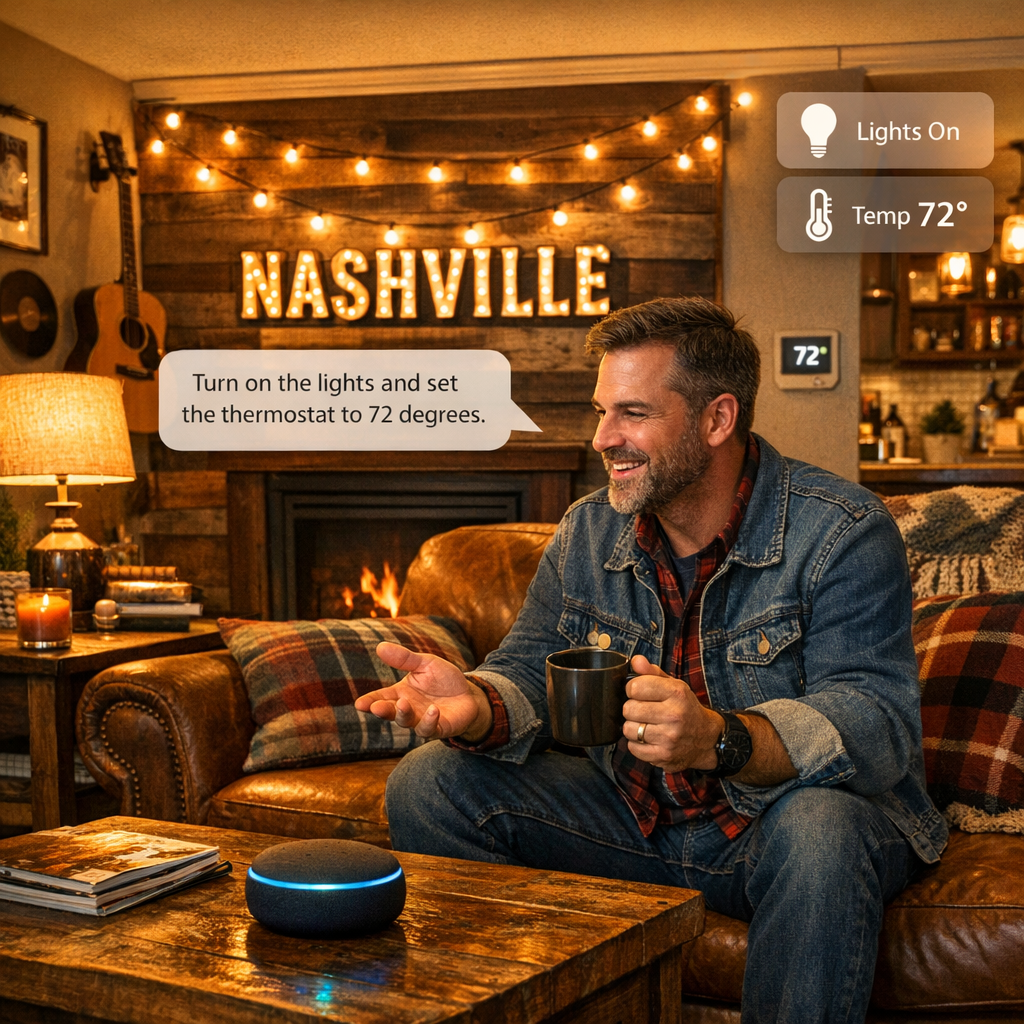
Connected gadgets are gaining real traction in households. Nearly every American home has a smartphone; many now have smart TVs, voice assistants, smart thermostats, or robot vacuums. These devices reduce small daily hassles: adjusting lights, cleaning floors, turning up heat—all without lifting more than a finger. Local adoption reflects national averages.
For many Nashvillians, it’s not about owning a gadget—it’s about what it enables. Whether helping aging parents stay safe with smart smoke detectors or giving busy freelancers more hours in their day via automation, these tools are reshaping expectations of convenience and comfort.
The Trade-Offs: Cost, Privacy, and Trust
As tech becomes more capable, it also becomes more opaque—and more expensive. AI-powered tools often come with subscription models. Some gadgets include sensors that collect personal data. For many people, the balance between convenience and privacy isn’t clear-cut.
Surveys show that as daily use of AI grows—now nearly one in four Americans use AI tools every day—so too do concerns about how that data is stored, who owns it, and what it might be used for. Trust is becoming part of the tech value proposition.
What’s Ahead for Nashville
Expect smarter tools to become even more embedded in work, education, art, and wellness. Local AI boutiques, workshops, and in-person support make swifter adoption possible for people who otherwise feel left behind. On the community level, infrastructure—like reliable internet access and local privacy policy—will shape what features people actually use, or avoid.
Ultimately, technology in Nashville is shifting toward what you don’t notice: tools that make life smoother without being loud about it. And that quiet shift may be more transformative than any flashy launch.