

By Mason Martinez
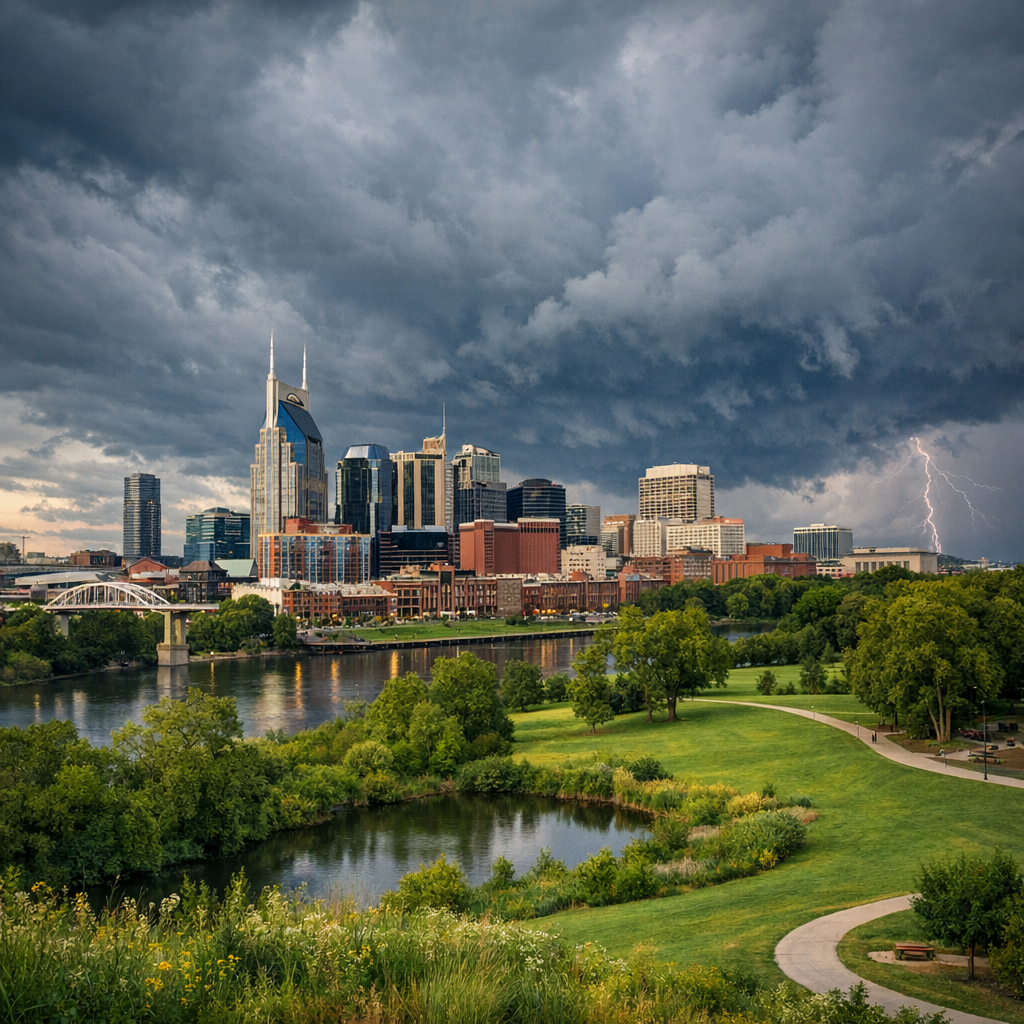
Nashville is changing—not just in skyline and traffic, but in weather and environment. From more humid summers and extended growing seasons to rising rain intensity and efforts to preserve green spaces, our city is experiencing trends that affect us all. Here’s a closer look at what those shifts are, how they’re shaping life here, and what Metro is doing in response.
Warmer Winters, Hotter Summers, Longer Growing Seasons
Over the past half century, Nashville has seen a noticeable warming trend. Winters are getting milder: daytime highs during December-February have risen several degrees. In summer, the heat intensifies—not just in daytime highs, but in how long it stays hot. Frost days (with temperatures below freezing) have dropped significantly, extending the growing season by more than a month compared to mid 20th century averages. These shifts matter for gardeners, farmers, allergy sufferers, and anyone who prefers mild weather over blazing heat.
Precipitation Shifting Toward Extremes
Rainfall in Middle Tennessee is relatively consistent year-round, but the pattern is shifting. Winters and early springs tend to see heavier storms and frequent rainfall. Meanwhile, the summer-to-fall window often sees dry spells punctuated by intense thunderstorms. These heavy downpours increase the risk of flash flooding and strain stormwater systems—not to mention roof and road damage. Nashville’s stormwater management and Clean Water programs are working to manage overflow and protect drinking water sources like the Cumberland River.
Air Quality and Heat Stress
Hotter temperatures paired with humidity contribute to more days with uncomfortable or dangerous heat indices. Heat stress is becoming a public health concern—particularly overnight, when people don’t get relief from high temperatures. At the same time, pollutants like ozone and fine particulates (tiny particles in the air) continue to demand attention. While enforcement, regulatory improvements, and cleaner technologies have reduced many emissions sources, keeping air clean remains essential for vulnerable groups, like children and older adults.
Ecological Threats and Green Solutions
Nashville is growing fast—and that growth affects natural spaces. Forests, waterways, hillsides, and other ecological systems are under pressure from development and fragmentation. In response, the Metro Planning Department has launched a county-wide Ecological Conservation Strategy designed to protect and reconnect natural landscapes. Green infrastructure—like rain gardens, permeable pavements, and better tree cover—is also being used to reduce stormwater runoff, clean the air, and help cool neighborhoods.
What You Can Do Locally
- Plant native trees, shrubs, and flowers that handle heat and moisture better.
- Use rain barrels and install permeable surfaces where you can to reduce runoff.
- Stay informed about ozone alerts and extreme heat advisories—limit outdoor activity when heat or air quality are poor.
- Support conservation plans efforts by engaging in public input sessions.
These environmental trends aren’t all far in the future—they affect us now. By staying aware and acting on small changes, our community helps shape a healthier, more resilient Nashville for everyone.