

By Mason Martinez
Here in Nashville, we’ve always appreciated the land beneath our feet and the skies over our homes. But with shifting weather patterns and growing environmental concerns, understanding how we interact with our weather and environment becomes essential. Here are four essential local issues that affect both day-to-day life and long-term resilience for our city.
1. Air Quality and Our Health
Nashville tracks its air quality daily through the Air Quality Index (AQI), which gauges pollutants that matter—ozone, particle pollution (PM2.5 and PM10), sulfur dioxide, carbon monoxide. Understanding the AQI helps especially if you or loved ones are sensitive to the effects of poor air—children, older adults, or those with respiratory conditions.
While we’ve made progress and often enjoy days with clean air, heat and pollution source combinations during hot months can push the AQI into less healthy zones. That’s why monitoring not just temperature but particulate matter and ozone is something to pay attention to, especially for outdoor plans.
2. Tree Canopy & Urban Green Spaces
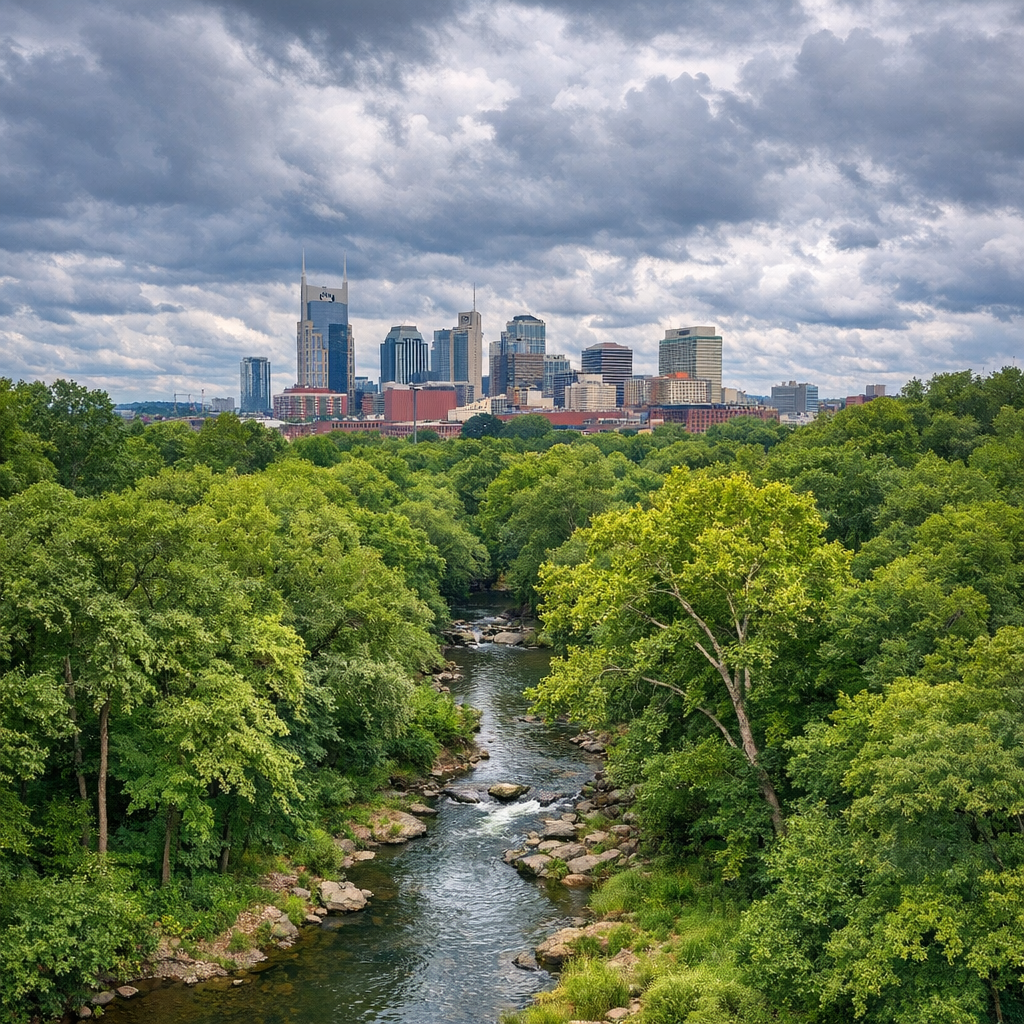
Trees are more than just scenery—they help cool our neighborhoods, reduce stormwater runoff, filter air, and enhance mental health. Metro Nashville’s “Root Nashville” campaign aims to plant and protect trees both in public spaces and on private property. Restoring tree canopy is a way we can all breathe easier and temper rising urban heat.
But existing green spaces and parks aren’t evenly covered by shade. Some parks must wait years for their tree canopy to reach density that provides meaningful relief in summer. Volunteers and neighborhood organizations continue to play a big role in filling that gap, often through planting and maintenance.
3. Stormwater, Flood Risk, and Water Quality
Nashville’s landscape of creeks, streams, and tributaries feeds into the Cumberland River—the source of our drinking water. During heavy rains, water runs off pavements and rooftops, picking up pollutants and trash before pouring into waterways. When storm drains are clogged or infrastructure is under capacity, flooding risks increase.
To help, Metro Water Services enforces rules against illegal dumping, runs pollution-prevention programs, and encourages property owners to keep gutters, grates, and ditches clear. Simple actions—properly disposing of yard waste, avoiding chemical runoff—can help protect both your neighborhood and downstream water quality.
4. Responding to Climate-Related Threats
Heat waves, severe storms, flash floods, even winter storms—we’ve seen how climate-driven hazards affect our city. Nashville’s new Climate Adaptation and Resilience Plan outlines goals for how infrastructure, emergency systems, and public services can prepare for, respond to, and recover from weather extremes.
Resilience isn’t just building for toughness—it’s ensuring that communities most vulnerable to weather risks are supported. That includes awareness of who may be exposed to higher heat, who lives in flood-prone zones, and who may lack resources during extreme events.
What You Can Do
• Check the daily AQI before planning outdoor exercise or activities, especially during summer afternoons.
• Get involved in local tree planting days, and support efforts to preserve existing trees.
• Keep storm drains clear and avoid using harsh chemicals or letting yard waste wash into gutters.
• Be aware of emergency alerts, and consider investing in basic preparedness for heat, storms, or floods.
Weather and the environment shape Nashville—not just how we dress each day, but how we build community, protect public health, and plan for our shared future. The more informed and active we are, the better equipped our city will be to thrive in changing times.