

By Emma Johnson
As the planet grapples with intensifying climate hazards, three interlinked global challenges are rapidly escalating: the strong El Niño, increasing armed conflict, and the unprecedented scale of forced displacement.
El Niño’s Shaking Grip
Scientists have confirmed a strong El Niño event in 2026, a natural climate cycle that magnifies heat and rainfall extremes. Ocean surface temperatures are reaching record highs, propelling global temperatures among the hottest on record. Across continents—from Asia and Africa to parts of the Americas—heatwaves, droughts, and flooding are becoming more frequent and severe.
The forecast suggests El Niño could peak late this year or early next, deepening its effects. Already, ocean heat content and severe heat stress are surging in many regions, intensifying risks to agriculture, water supplies, and public health.
Conflict Zones Amplified by Climate
Conflict, which remains widespread, is putting millions of lives in jeopardy as climate disruption compounds existing vulnerabilities. In many troubled regions, fragile governance and weak infrastructure make it difficult to cope with the added strain of climate shocks. Food and water insecurity are rising where weather extremes destroy crops or displace communities.
Response capacity is stretched thin. As the effects of war and climate merge, pushing communities toward collapse, the need for coordinated peace-building, climate adaptation, and resilient infrastructure has never been more urgent.
The Unfolding Crisis of Displacement
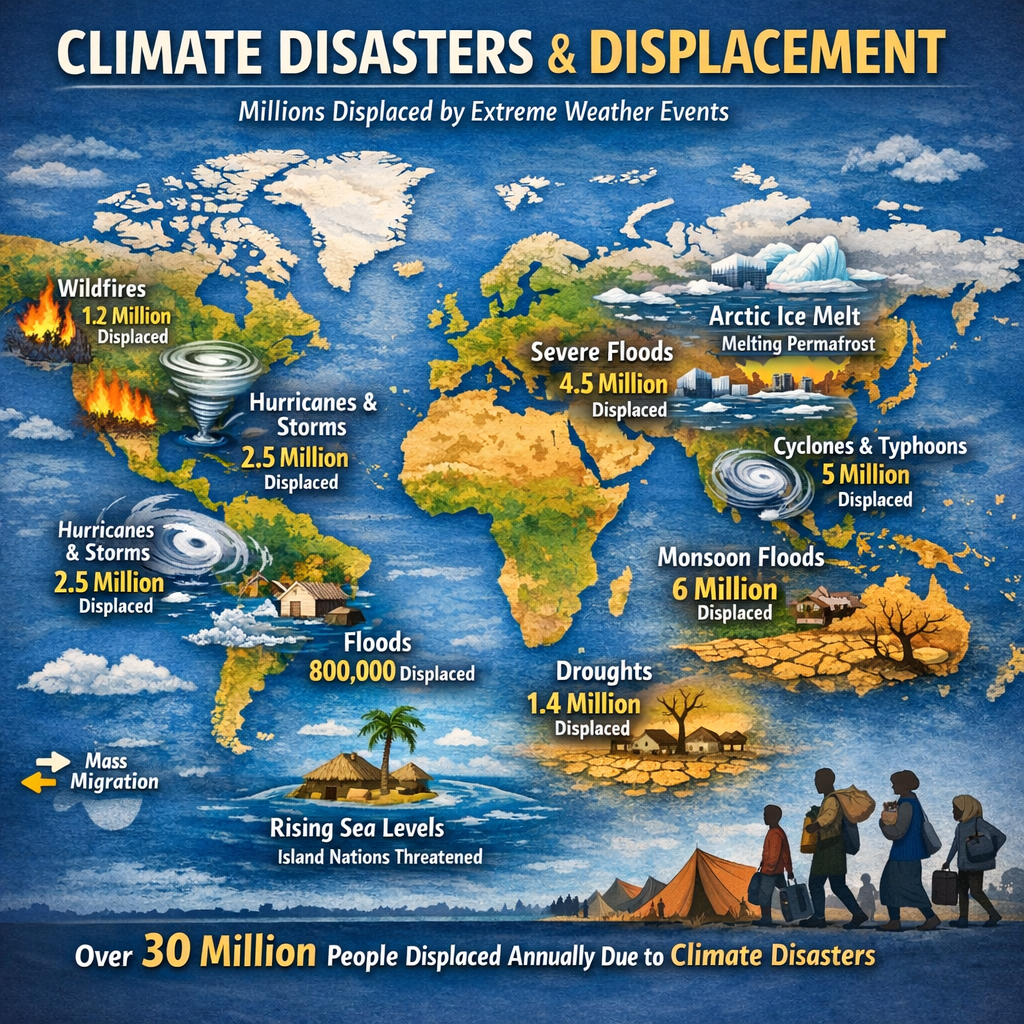
Forced displacement is now a defining humanitarian crisis. Over 40 million people are refugees, with tens of millions more internally displaced due to conflict and disasters. Meanwhile, displacement due to climate-related hazards—droughts, floods, wildfires—is growing sharply. Most of the displaced live in countries facing high-to-extreme exposure to climate events, making their return or resettlement difficult.
Traditional humanitarian aid is overwhelmed. Experts are calling for migration policies that factor in environmental stress, family protection, and long-term resilience strategies—especially for urban settings where many displaced people settle.
What Can Be Done?
- Invest in early warning systems and climate-resilient infrastructure, especially in vulnerable regions.
- Strengthen legal frameworks and international cooperation to protect displaced persons, including refugees and internally displaced people.
- Support renewable energy adoption and emissions reductions to limit further warming, while preparing for the heightened effects of future El Niño cycles.
- Integrate climate risk into peace-building and development programs, recognizing that conflicts are increasingly climate-amplified.
These issues aren’t isolated, and their effects are already felt far from the global frontlines—in our supply chains, in rising food and energy prices, and in the weather extremes we experience closer to home. Understanding the scale and interconnectedness of these global crises is a key step toward meaningful collective action.