

By Emma Johnson
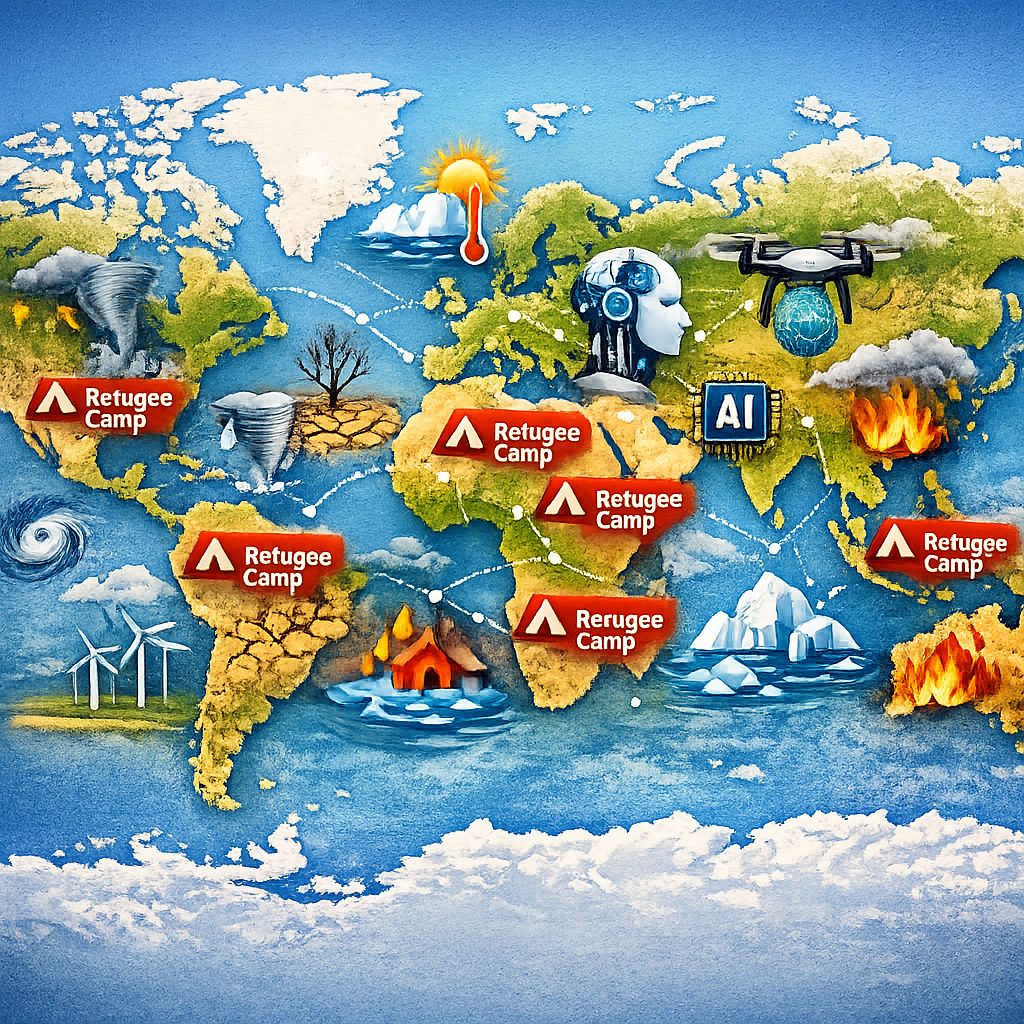
1. Forced Displacement: A Global Crisis with Local Echoes
At the close of 2025, the world saw more than 117 million people displaced due to conflict, persecution, or disaster. That’s combinations of refugees, internally displaced people, asylum-seekers, and stateless persons. Although the number of refugees slipped slightly—the first drop seen in over a decade—it remains near historic highs.
Sudan stands out as the epicenter, with more than 9 million people internally displaced and millions more fleeing abroad. Syria and Afghanistan also rank among the countries with the largest numbers of people seeking safety elsewhere.
What does this mean even here in Nashville? Though thousands of displaced folks eventually arrive in U.S. states, many remain far from home. Understanding the scale of these global displacement crises can deepen our support for organizations aiding refugees, improve local policy on resettlement, and remind us that human crises abroad ripple through economies, communities, and identities everywhere.
2. Climate Commitments: Progress and Gaps
Global climate governance hinges on commitments under the Paris Agreement and related mechanisms like nationally determined contributions (NDCs). As of early 2026, over 130 countries submitted updated climate pledges covering emissions through 2035, representing much of the world’s energy consumption.
Still, the latest analyses suggest even full implementation of current NDCs leaves global warming on track for 2.3–2.5°C by 2100—well above aspirational targets. 주요 issues include missing reports by many countries under the Enhanced Transparency Framework and delays in turning high-level pledges into concrete actions.
For Nashville residents, tighter climate policy globally means a push toward cleaner energy, better infrastructure, and increased support for climate adaptation. Even if we’re not writing national climate law, this global momentum affects local planning, business investment, and community health.
3. Governing Artificial Intelligence: New Rules, Old Challenges
AI remains one of the most consequential technologies of our era, with promise for innovation and peril. Countries are responding variedly. For example, South Korea passed its AI Framework Act, strengthening transparency and safety, while Japan leaned more toward promotion and guideline-based oversight. In the EU, the AI Act remains a benchmark for more comprehensive regulation.
The challenge lies in aligning rules across borders. AI systems operate globally, but legal regimes—and the ethical standards they enforce—often differ sharply. Some governments prioritize economic growth, others human rights, while many struggle with balancing both. Ensuring safety, privacy, and equity in AI is not just a technical issue—it’s a bridge-builder across varied values.
In Nashville and across America, this translates into questions about workforce training, education, data privacy, and whether local companies can work internationally without getting caught in differing regulatory rules. Local regulation and community norms may soon feel the weight of decisions made thousands of miles away.
Looking Ahead: What We Can Do Locally
- Support local nonprofits that welcome refugees—through volunteering, donations, or advocacy for policies that ease resettlement and integration.
- Push for greater transparency in climate policy at state and city levels—encouraging actionable plans, not just promises.
- Stay informed and engaged as debates around AI regulation evolve—especially around privacy, employment impacts, and ethics.
Our world is interlinked. When people are displaced, when climate promises hang in the balance, when technology evolves faster than law, it tests us—not only as global citizens but as members of communities like Nashville. These global challenges may feel distant, but their effects are playing out in our neighborhoods. We can insist that global progress be matched by local action.