

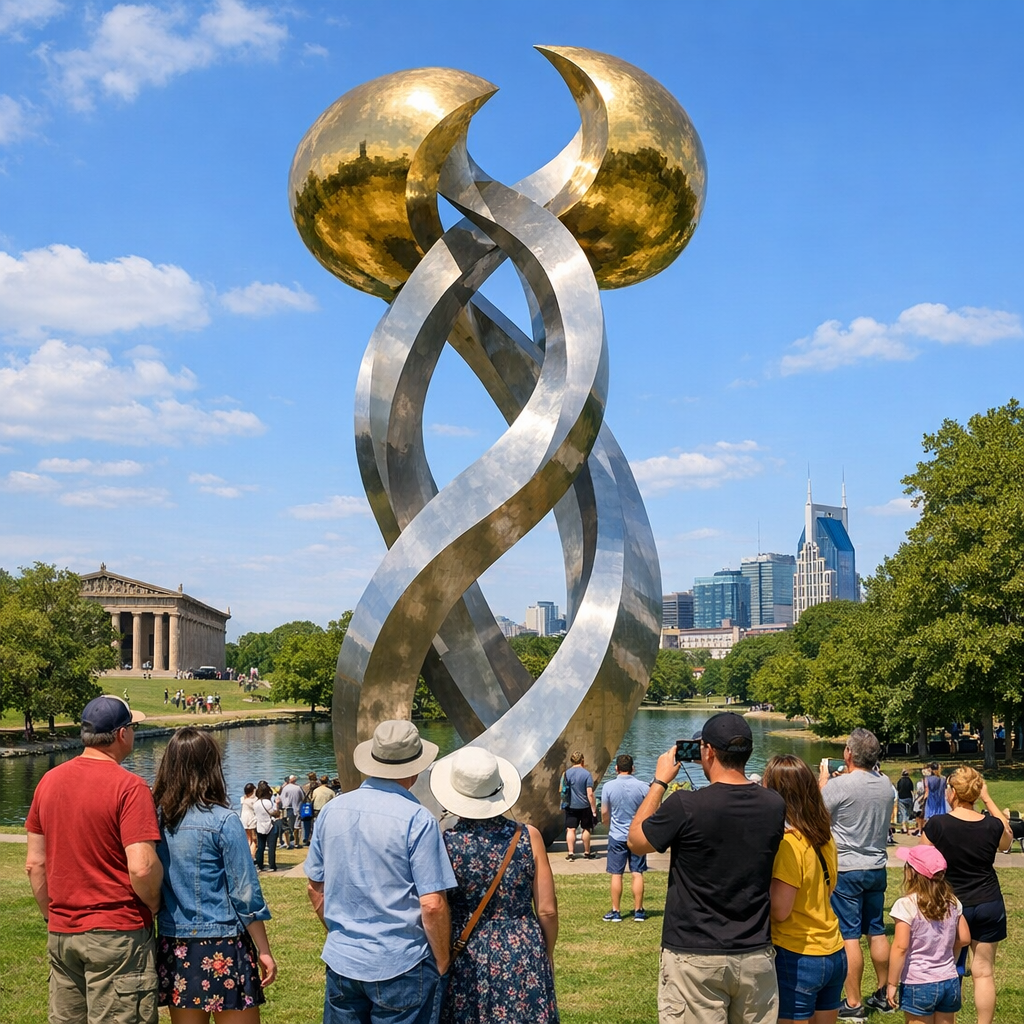
When visitors come to Nashville, they often think of music and honky-tonks. But for those of us who live here, public art—sculptures, murals, benches, and hidden installations—is part of our day, shaping how we move and feel in this city.
More Than Statues: Art That Touches the Everyday
Across Davidson County, Metro Arts maintains a public art collection with over 200 permanent works. You see them at libraries, community centers, parks, even on bus shelters. Each one was created by local or regional artists, and many were made with funds required by city-building projects. Because it’s built into development, art becomes woven into the fabric of neighborhoods rather than tacked on.
From Big Statements to Small Gestures
Some installations are impossible to miss: “Ghost Ballet” floats along the east bank of the Cumberland River, evoking both industrial history and futurist movement. Then there’s “Stix,” a series of tall wooden poles at Korean Veterans Boulevard and 8th Avenue—less flashy, maybe, but striking for its scale and patience, and its transformation over time. Others are quiet—artist-designed bike racks, marble benches, or colorful treatments on public seating.
Why Public Art Matters for Local Culture
These pieces are more than pretty photos for visitors. They proclaim that art isn’t just for galleries—it belongs in our parks, our libraries, underpasses, down the street. When you walk past a painted underpass or rest on a sculpted bench on your lunch break, that’s art interrupting life in the best way: present, accessible, human. Locals see themselves in the subjects, styles, and materials—stories that might otherwise be forgotten.
How We Can Talk Back—with Your Voice
City programs now invite public participation: community panels review proposals, neighbors help select designs, artists are embedded in planning teams. Projects like the Bordeaux Gateway green space, or lighting under Arthur Avenue underpass, show how local voices steer what ends up in our shared spaces. You can watch a sketch become sculpture, or a blank wall become a mural, because people spoke up.
Seeing Public Art—What to Keep an Eye Out For
- Check the Metro Arts website for a map of public art. It’s handy for planning walks or choosing lunch spots.
- Walk neighborhoods—East Nashville, North Nashville, Germantown and others—many smaller murals or installations are off main roads.
- Go beyond photos. Pause at a piece. Read the plaque. Think about the artist. Imagine the lives intersecting with that piece.
Public art isn’t a backdrop to our lives—it’s part of our story, in our own neighborhoods. As Nashville grows, how we include art in public spaces says something important about who we want to be.