

By Noah Davis
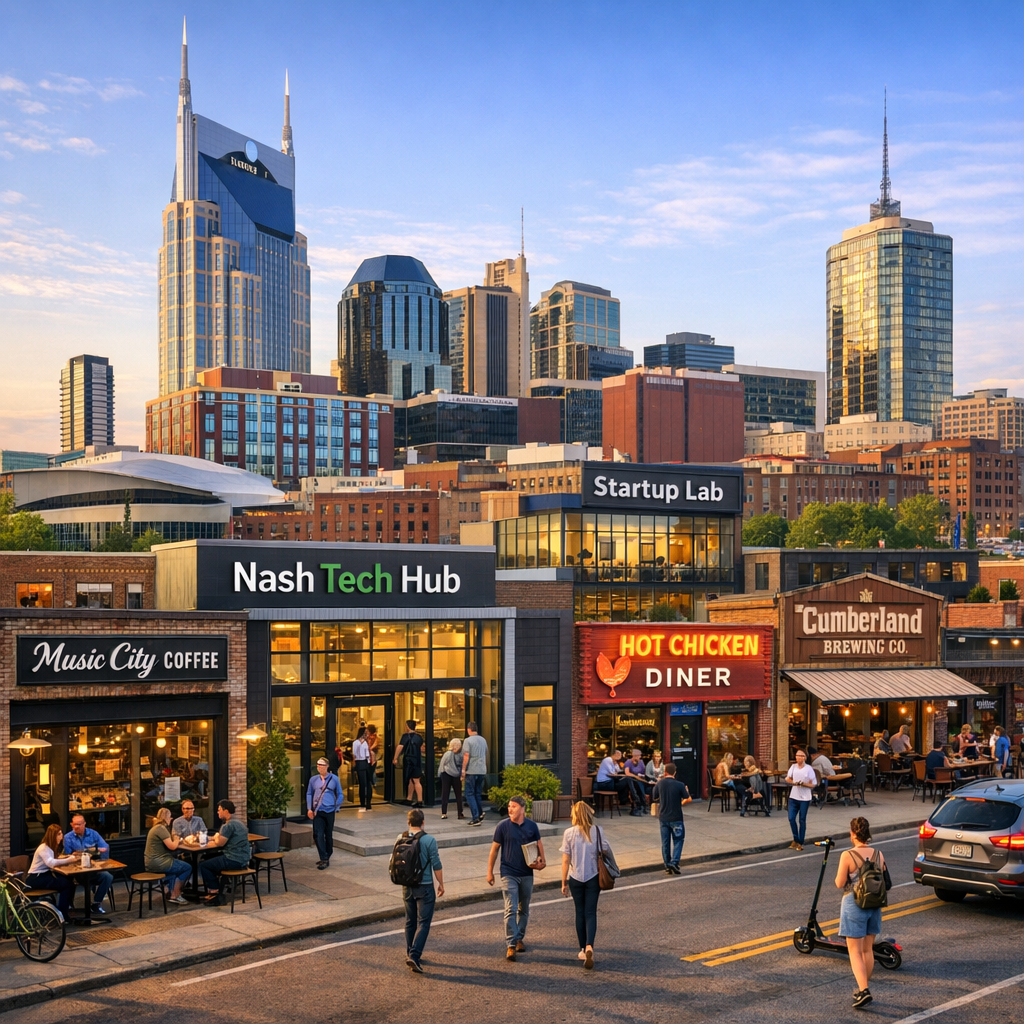
Nashville is in many ways the poster child for a city on the rise. Its economy has become more diverse, its innovation ecosystem is expanding, and its number of businesses—particularly small ones—is surging. Yet as with any fast-growing place, this success brings both promise and pressure. Local entrepreneurs, workers, and city leaders are now navigating the challenge of turning momentum into sustainable prosperity.
The Engines of Growth
Healthcare remains one of the foundation industries in Nashville, including health-tech and insurance. Established companies and startups alike leverage the city’s strong university linkage and research funding to experiment and scale new health innovations. At the same time, sectors like technology, logistics, and fintech have gained ground as complementary sources of economic activity—making Nashville less reliant on tourism or music alone.
The startup ecosystem here is increasingly vibrant. Greater Nashville commands growing early-stage funding for seed and Series A rounds, and state programs now support entrepreneurs in accessing capital, commercialization opportunities, and training. University invention disclosures and spinouts are on the rise, adding fresh businesses to the community. Infrastructure—from coworking spaces to research labs—is following closely, giving founders physical options to grow.
Economics That Pull—and Push
Part of what draws people and businesses here is a relatively appealing cost of living compared to many coastal metros. Tennessee’s lack of a state income tax, competitive regulatory climate, and favorable incentives for relocation all help. Nashville’s influx of new residents, including skilled workers, reflects that attractiveness.
However, that growth is creating strains. Housing costs are increasing rapidly, and many households—especially those with stagnant incomes—are finding it hard to access affordable options. Wage pressures are mounting, especially in service sectors and small businesses that must balance rising overheads. Talent gaps are also real: meeting the demand for skilled workers, especially in STEM and specialized tech roles, remains a key hurdle.
Strategies for Sustainable Development
To address these challenges, local leaders are experimenting with several promising approaches. Workforce development programs tied to both technology and health care help train people for growing careers. Public-private collaboration—particularly between universities, capital partners, and civic entities—can help scale up research, commercialization, and innovation district infrastructure.
Policies that offset the cost pressures facing small businesses—such as grants, targeted tax relief, or workforce advancement incentives—can improve resilience. Ensuring access to affordable housing and childcare are also critical, not only for lowering costs for workers, but for keeping local neighborhoods vibrant and maintaining a diverse local workforce.
The Road Ahead
Overall, Nashville’s business and economic trends look strong, with room for optimism. The task now is to make growth inclusive—ensuring that opportunity spreads throughout the region and that costs don’t overwhelm the economic gains. When entrepreneurs, institutions, and policymakers align around long-term goals, the city stands to move from fast growth toward durable prosperity—one business, one worker, one neighborhood at a time.