

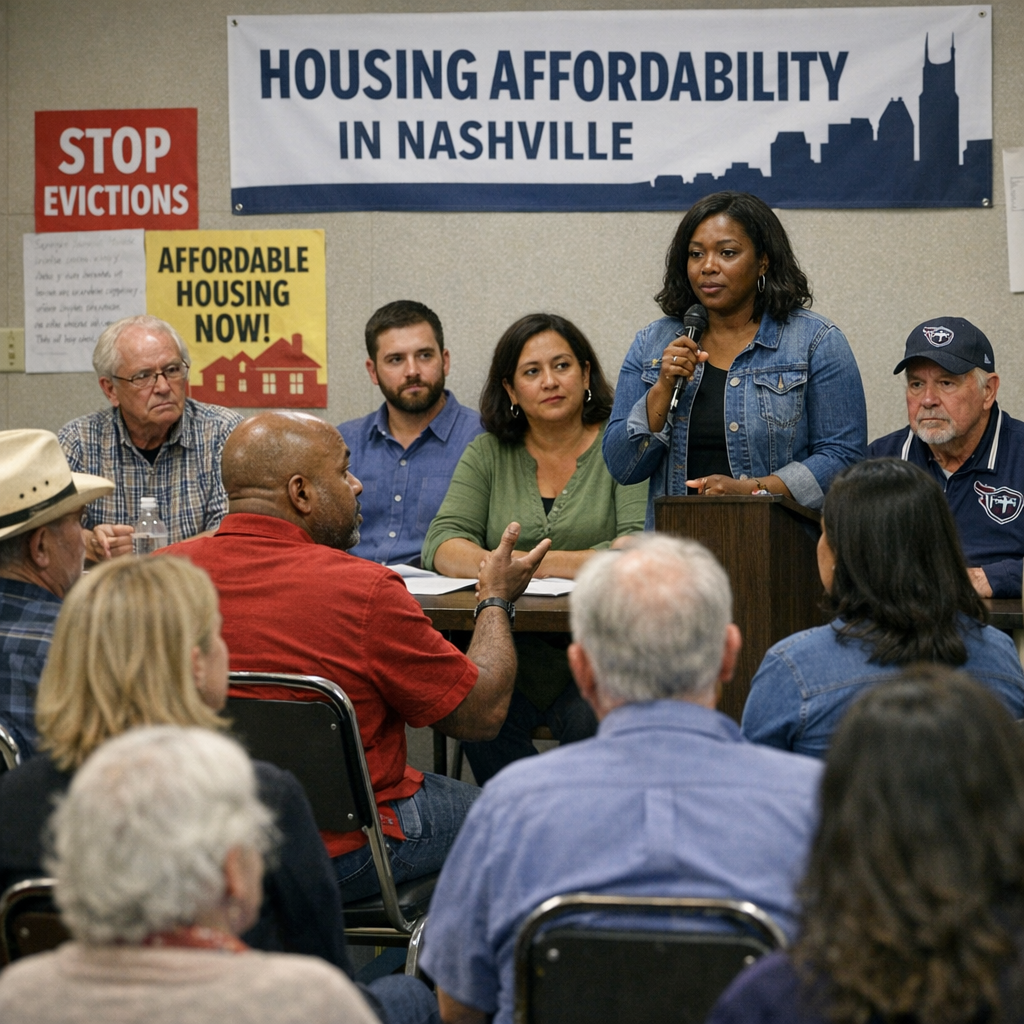
Nashville is grappling with a significant housing affordability crisis. A recent Vanderbilt University poll reveals that 82% of residents feel they cannot afford to purchase a home in Davidson County. This concern is echoed by 73% of Nashvillians who identify affordable housing as a top priority.
The crisis disproportionately affects Black and Hispanic families. A housing and infrastructure study indicates that these families can afford median-valued homes in less than 1% of Nashville’s 481 neighborhoods. Historical discriminatory practices, such as redlining, have contributed to this disparity.
In response, local leaders are implementing initiatives to increase affordable housing. Mayor Freddie O’Connell’s Unified Housing Strategy aims to boost the supply of affordable units. In fiscal year 2025, city funding supported the construction and preservation of nearly 1,800 affordable housing units.
Community organizations are also stepping up. The Nashville People’s Budget Coalition advocates for participatory budgeting to allocate funds toward housing solutions. Additionally, Metro Social Services has released interactive maps highlighting areas affected by gentrification and economic shifts, providing valuable data to inform policy decisions.
While these efforts are underway, the housing affordability crisis remains a pressing issue. Continued collaboration between government agencies, community organizations, and residents is essential to ensure that all Nashvillians have access to affordable housing.