

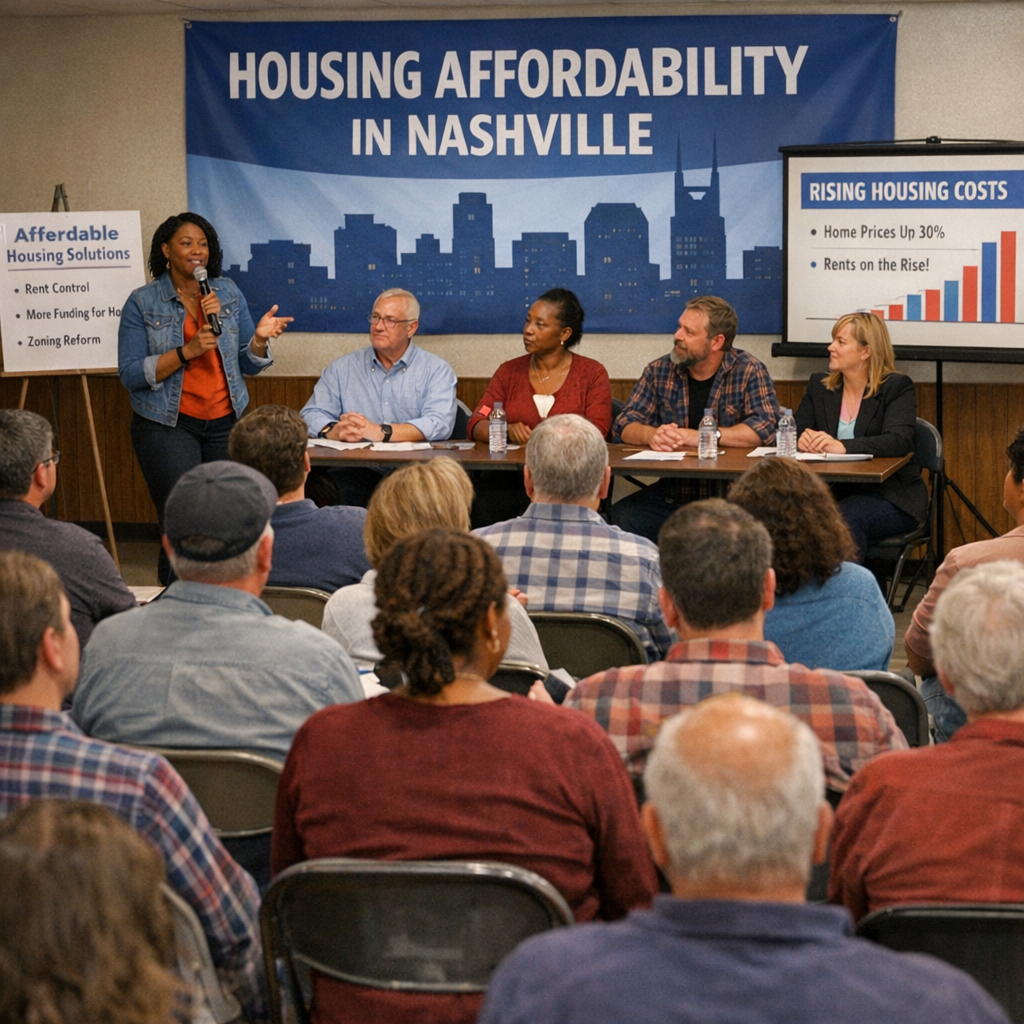
Nashville’s rapid growth has brought prosperity to many, but it has also intensified challenges related to affordability and economic disparity. Recent studies and community initiatives shed light on these pressing issues and the collective efforts to address them.
Housing Affordability Concerns
A Vanderbilt University poll revealed that 82% of Nashville residents feel they cannot afford to buy a home in Davidson County. This sentiment underscores the city’s escalating housing costs, which have outpaced median household incomes. Despite city-funded initiatives supporting the construction and preservation of nearly 1,800 affordable housing units in fiscal year 2025, many residents remain concerned about being priced out of their communities.
Economic Disparities Among African American Residents
Metro Social Services’ 17th annual Community Needs Evaluation highlighted that Nashville’s African American residents face significant affordability challenges compared to other demographics. The report identified historic and contemporary causes of the city’s wealth gap, emphasizing the need for targeted interventions to address these disparities.
Community-Driven Solutions
In response to these challenges, local organizations and residents are taking proactive steps. The Nashville Food Project, in collaboration with Metro government, launched the FeedBack Nashville initiative to combat food insecurity affecting over 80,000 residents. This program aims to provide reliable access to nutritious food, particularly in areas identified as food deserts.
Additionally, residents are fostering community connections to build resilience. Initiatives like neighborhood gatherings, book clubs, and shared activities have emerged as grassroots efforts to strengthen social bonds and support networks, countering the effects of economic strain and social isolation.
Looking Ahead
While the challenges are significant, Nashville’s community-driven initiatives offer hope. By addressing affordability issues through collaborative efforts and inclusive policies, the city can work towards a future where all residents have the opportunity to thrive.