

By Mason Martinez
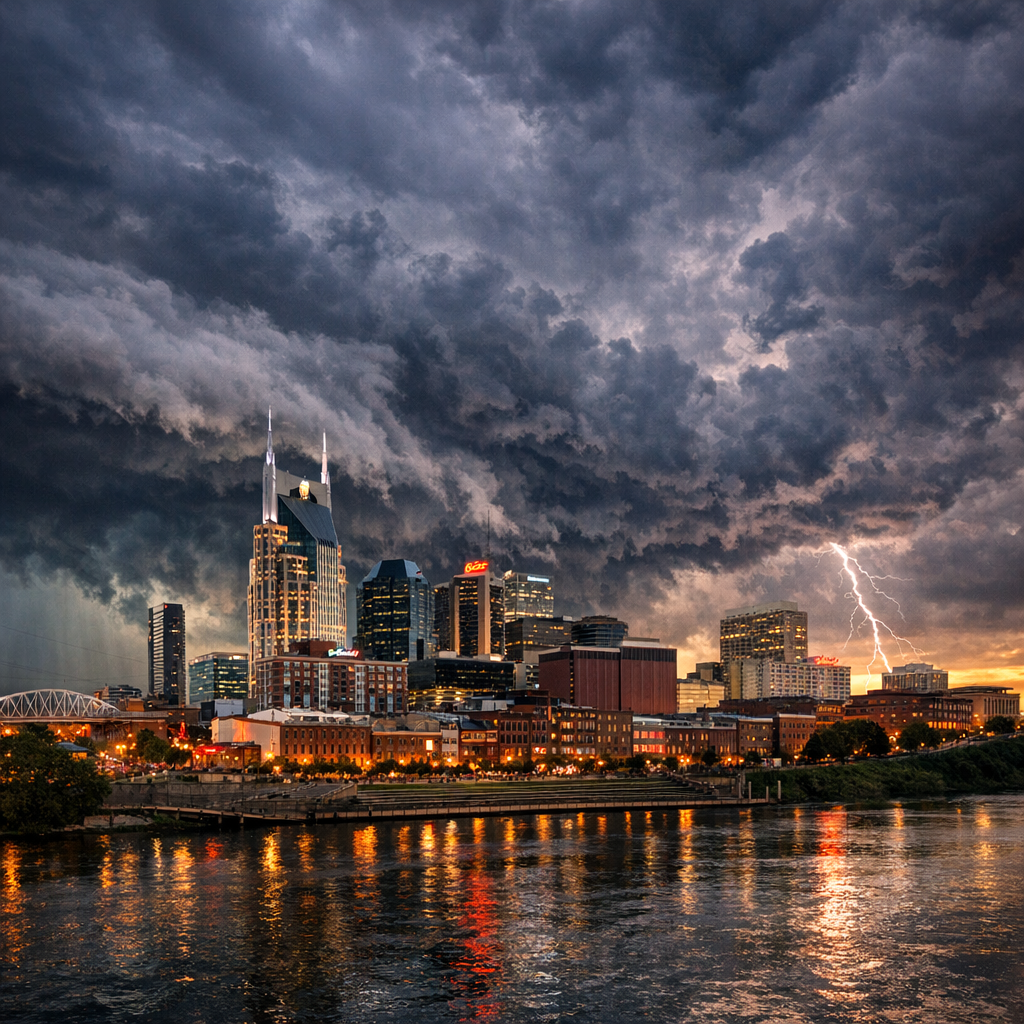
Nashville’s weather isn’t just what we talk about over coffee—it’s something we live every day. From rising summer heat to heavier rainfalls and shifts in winter mildness, our climate is changing, bringing both familiar rhythms and unexpected turns. Here’s a breakdown of what Nashvillians should know now and into the future.
Seasonal Shifts: The New Norms
Our city has long followed the classic four-season cycle. Summers are hot and long, winters cool and briefer. But in recent years, those boundaries have shifted. Nashville’s average annual temperature has risen about 3.4°F, altering how—and when—we experience heat and cold. Freezing nights have become fewer and shorter, and fall foliage appears later and fades out quicker.
Rainfall patterns have also changed. Though precipitation is still spread throughout the year, heavier downpours are now more common, especially during spring and fall. Late spring and early summer remain wettest, while late summer through autumn tends to be somewhat drier—but intense storms can still sneak in. In short, seasons feel less predictable.
Big Weather Risks: What the City and Community Face
- Heat waves and extreme temperature swings: With warmer baseline temps, heat waves hit harder—posing risks for vulnerable populations, especially where tree cover is thin or air conditioning is a challenge.
- Flooding and storm damage: Heavy precipitation and powerful storms aren’t new, but their frequency is increasing. Urban flooding and overwhelmed stormwater systems are growing concerns.
- Winter storms and cold snaps: While winters are milder overall, when cold or ice storms strike they can still pack a punch—especially given how quickly our systems struggle in rare freezing events.
- Air quality woes: The region’s ozone smog has worsened recently, leading to health warnings. While fine particle pollution is better in some respects, smog remains a persistent hazard, particularly in summer.
Community Action & What You Can Do
Nashville leaders have been stepping up. The city’s Climate Adaptation and Resilience Plan lays out strategies for flood prevention, heat mitigation, and strengthening infrastructure. Another ongoing effort, the Davidson County Ecological Conservation Strategy, aims to protect natural spaces and connect green areas amid rapid growth.
At the community level, some of the best responses are rooted close to home. Planting trees, using shade-producing landscaping, supporting green roofs, and even just keeping storm drains clear all help. At the same time, staying informed—following air quality alerts, being ready for sudden storms, and adapting daily routines when heat or severe weather hits—can make a big difference for your health and safety.
Looking Forward
We’ll need to live with more fluid seasons. That means updating how we build, how we shelter, and how we think of “normal” weather. The future lies in being adaptable—making our homes, neighborhoods, and city resilient so that we don’t just endure these changes, we thrive through them.