

By Sophia Anderson
Nashville’s Market Outlook: More Supply, Softer Prices
After years of intense competition and fast appreciation, Nashville’s housing market is tilting in favor of buyers. Over the past year, typical home values have dropped modestly—Zillow reports a 2.5% decline in average home value, currently sitting around $425,889. Homes are spending longer on the market and more listings are getting price cuts. Sellers are now more likely to negotiate.
Renting vs Buying: The Trade-Offs
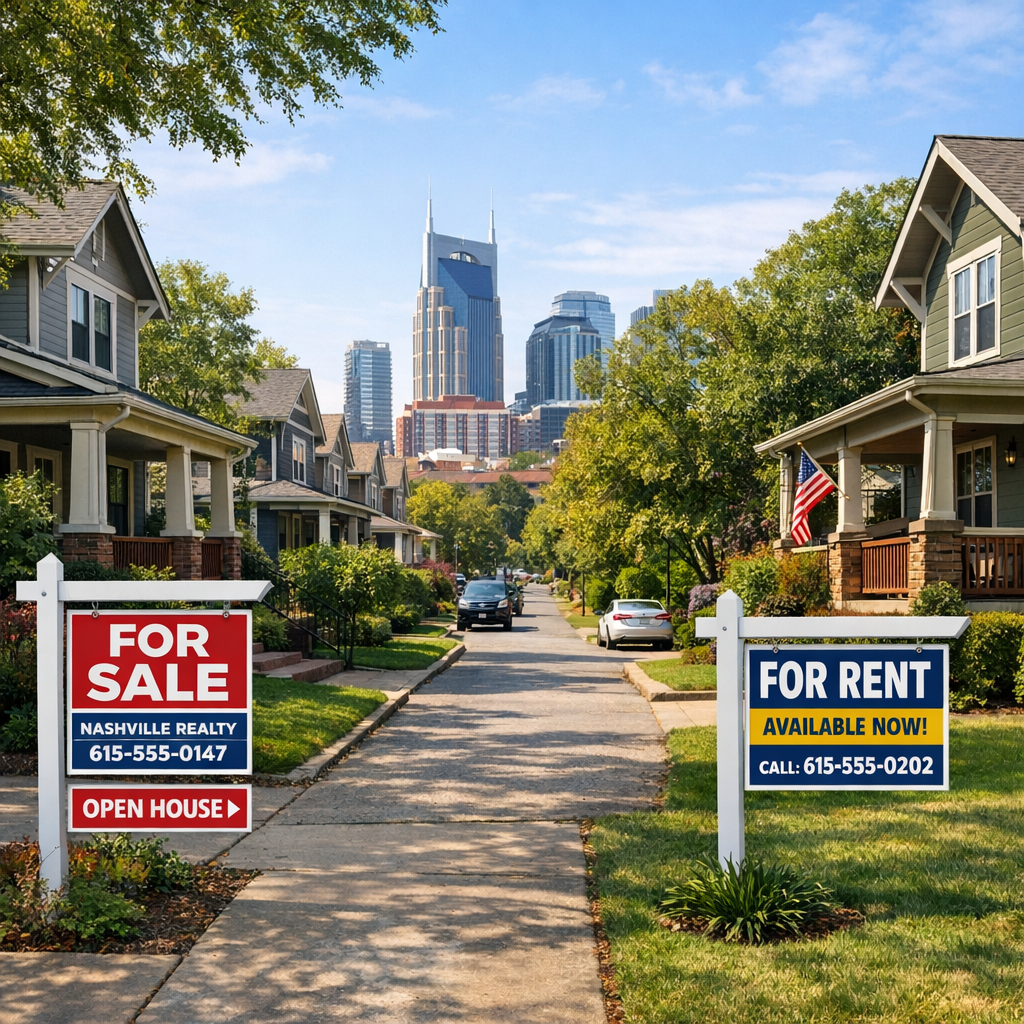
If you’re weighing whether to rent or buy, you’re not alone. Recent studies place Nashville in a “toss-up” zone for price-to-rent ratio, meaning neither option is clearly cheaper in all cases. Renting usually costs less per month than owning, but owning may offer long-term benefits depending on your plans.
Currently, median rent in Nashville hovers around $2,395/month—while the median listing price for homes is close to $598,000. Active housing inventory has climbed, giving renters more options, though affordability remains stretched for many.
Where Housing is Easiest—and Hardest—to Find
Some neighborhoods offer relatively affordable housing and are welcoming to a mix of housing types; others, especially high-opportunity areas, are slower to change. Factors like zoning, transit access, and development approvals make a big difference. One recent Metro study recommends broader adoption of townhomes, duplexes, accessory dwelling units, and other non-single-family home options to meet diverse needs.
Cost burdens are widespread: nearly half of renter households struggle with housing costs, and at income levels near or below the median, options are thin. The city’s recent Unified Housing Strategy aims to expand affordable housing supply while addressing displacement and zoning constraints.
Tips for Buyers, Renters, and Stakeholders
- Buyers: Start your search with a clear ceiling on monthly costs. With mortgage rates higher than in recent years, factor in taxes, insurance, and maintenance beyond just principal and interest payments.
- Renters: Negotiate when possible. More inventory means landlords may be open to concessions—especially in older or larger buildings. Also, keep an eye on neighborhoods likely to see greater development, including near transit corridors.
- Community & Planning: Support policy changes that diversify housing types and improve infrastructure near transit. Streamlining zoning and approvals can help lower construction costs and make affordable housing more feasible.
What to Watch Next
Mortgage rate trends will play a big role in whether buying regains strength. So will the pace of new housing construction—especially for lower-cost units. Zoning reforms and city planning studies like Nashville’s Housing & Infrastructure Study, underway through Metro government, will also signal where opportunities (and resistance) lie.
For now, Nashville’s housing market is entering a more balanced phase—but that balance still favors those with flexibility, savings, and willingness to explore non-traditional options.