

By Olivia Williams
Transit gains with “Choose How You Move”
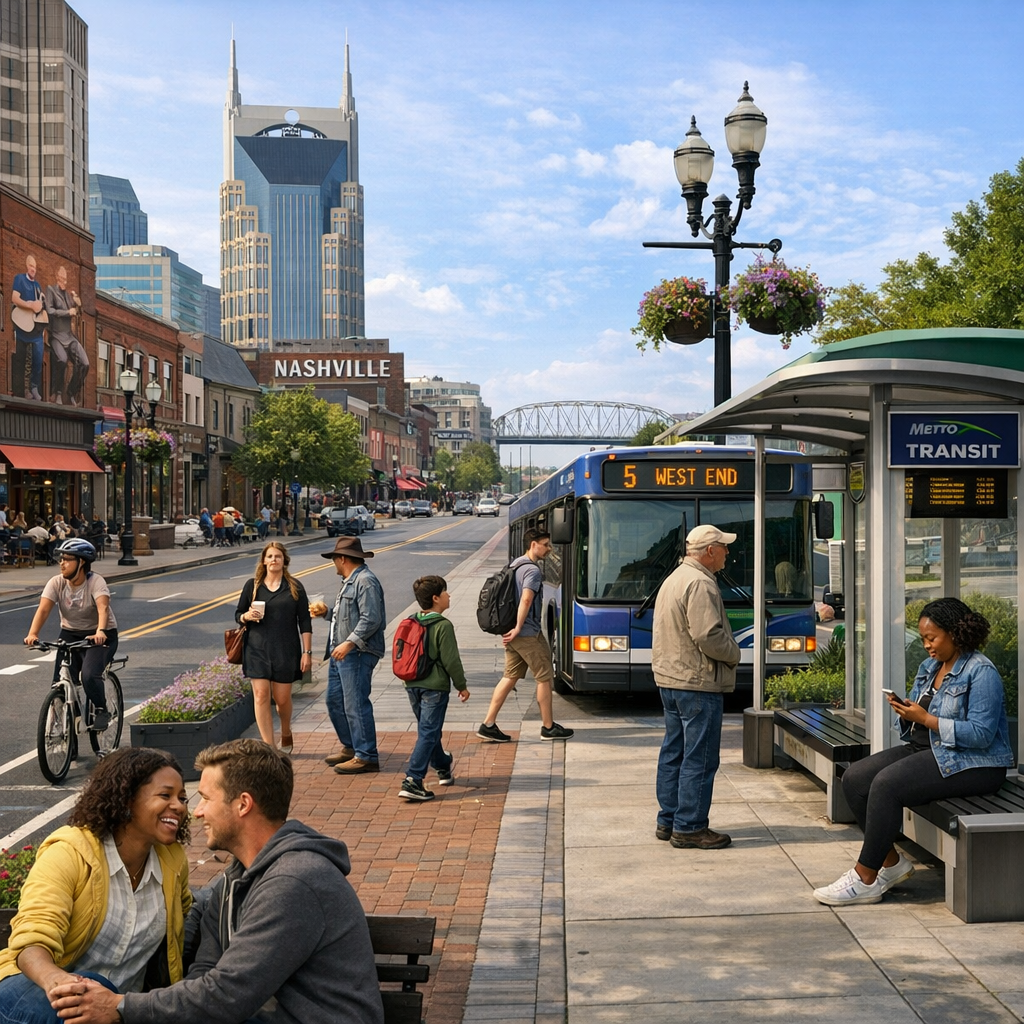
The “Choose How You Move” plan, approved by voters in late 2024, is seeing real implementation across Nashville. Investments are now underway in sidewalks, signal upgrades, transit shelters, expanded service hours, and complete street projects.
Smart signals have been put up on major corridors, reducing delays. Sidewalk projects are bridging critical gaps. Expanded evening and weekend service for WeGo Access helps riders with disabilities. And the fare-free Journey Pass program is already connecting thousands of low-income Nashvillians to work, school, and vital services. These are changes people can see and use.
Affordability and equity remain central challenges
Nashville’s Community Needs Evaluation spotlighted persistent affordability gaps, especially among African American residents. Higher poverty and unemployment rates, disproportionate housing cost burdens, and lower life expectancy compared to White residents indicate two divergent experiences of city life.
Affordability is far from just housing—it touches food access, job training, child care, and transportation costs. The city’s Community Health Improvement Plan (CHIP) picks four priority systems: housing, resource access, food insecurity, and economic opportunity. These interlinked areas are critical to improving health outcomes and quality of life.
The tension between growth and preservation
Rapid development around downtown and major corridors has brought new amenities and traffic, but many Nashvillians worry that infrastructure isn’t keeping up. Key concerns: congestion, walkability, lack of affordable housing, and missing transit connections in underserved neighborhoods. Nearly 50% surveyed say traffic is one of the most pressing problems facing city life.
Meanwhile, Metro’s Ecological Conservation Strategy is seeking to balance growth with preservation—protecting waterways, forests, ridgelines, and green space while accommodating the expanding needs of the city. Community input is driving its priorities.
What to look for going forward
- Improving transparency and accountability. Ensuring residents have clear, timely access to project timelines, impacts, and decision-making processes—especially in neighborhoods historically overlooked.
- Strengthening affordability commitments. Beyond programs and applications, Nashville will need meaningful affordable housing preservation and expansion, and cost-mitigation strategies for everyday expenses—from food to transportation.
- Durable community engagement. As programs like CHIP, CHYM, and ECS (Ecological Conservation Strategy) move ahead, ongoing feedback loops will be crucial so that plans stay responsive to residents’ lived experiences.
- Aligning infrastructure to match growth. Fixing bottlenecks, completing missing sidewalks and bikeways, expanding transit hubs and connections—especially in high-need corridors—will help reduce inequities in mobility.
Nashville is in a moment of possibility. The framework for equitable, well-planned growth is in place. With intentional follow-through, investment in transparency, and a commitment to affordability, what’s now visible progress can become lasting change.