

Hello Nashville readers—Sophia Anderson here breaking down where we stand in real estate, rentals, and housing development in Music City.
Home Prices & Buyer Landscape
The median price for a single-family home in the Nashville metro crossed roughly $537,000 in June, marking a modest year-over-year gain. Condo prices have also crept upward, averaging around $350,000 in many parts of middle Tennessee. While prices remain elevated, recent trends suggest the market is cooling—homes are staying listed longer, and buyers can find more inventory than during the most frenzied pandemic-era chapters.
Rental Market: Signs of a Shift
After a period of falling rents, we’re seeing early signs of a turnaround. Median rent in Nashville as of July 2026 sits around $1,368 per month, down from its previous peak but rising again month-over-month. Vacancy rates have gradually declined from recent highs, putting pressure back on landlords and developers to balance supply and demand. For renters, this easing could bring fewer vacancy incentives and a gradual increase in price pressure moving forward.
Affordable Housing & New Developments
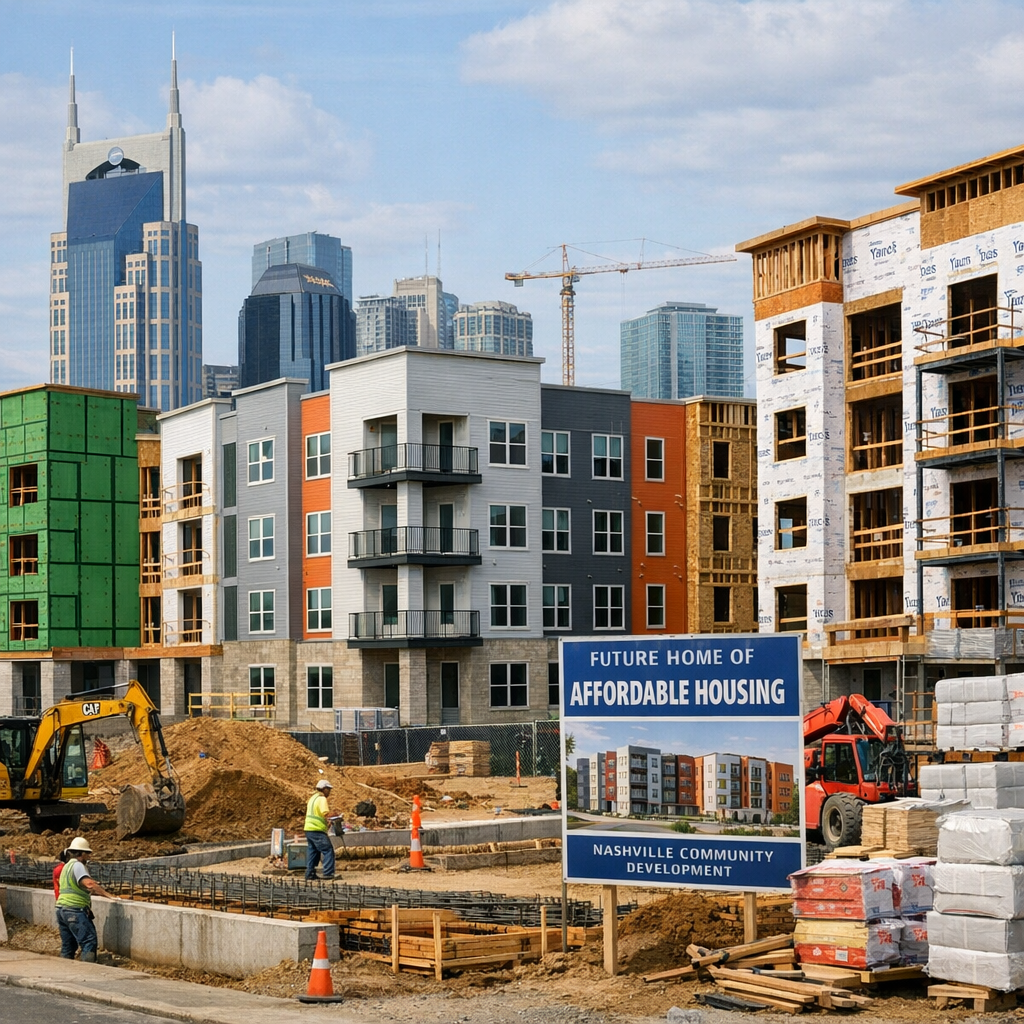
Addressing affordability has been a growing concern. One major step forward is the break ground on Eastpoint Flats—323 units entirely income-restricted, placed under a 99-year ground lease to secure long-term affordability. This building, in the East Bank’s larger Eastpoint development, also includes retail space and childcare, expanding beyond just housing.
That project is part of a broader push under Nashville’s Unified Housing Strategy, which seeks to address the lagging supply of moderately priced rentals (those affordable to households earning 30–60% of Area Median Income). Over time, many of these units have transitioned upward in price, intensifying affordability gaps.
Tips & Takeaways for Buyers and Renters
- Get pre-approved before shopping. Strong offers with pre-approval are still favored by sellers.
- Watch where inventory is increasing, especially in suburbs and new developments—these may offer more options and value.
- Rent vs. Buy: Don’t just compare monthly costs. Factor in insurance, taxes, maintenance, and long-term stability.
- For renters, timing moves when vacancy is higher or at just-opened complexes may offer better deals.
- Stay informed about affordable housing projects—new units like Eastpoint Flats may have waiting lists or eligibility criteria.
What’s Ahead
The storyline for Nashville is one of balance: demand remains solid, economic indicators look strong, and development continues. But the balance between supply, price, and affordability is delicate. As rental vacancies tighten and homes take longer to move off market, affordability pressures will continue—especially for first-time buyers and moderate-income residents.
Still, there is space for hope and smart strategy. Homebuyers with patience, strong financial prep, and a wide-area lens will find opportunity. Renters who keep a pulse on supply and take advantage when the market softens will benefit. And new affordable housing projects offer relief—though more will be needed for lasting impact.
If you’re navigating this market—whether buying, renting, or simply staying put—reach out! I’m always collecting tips and tracking what’s happening ground-truthed in neighborhoods across Nashville.