

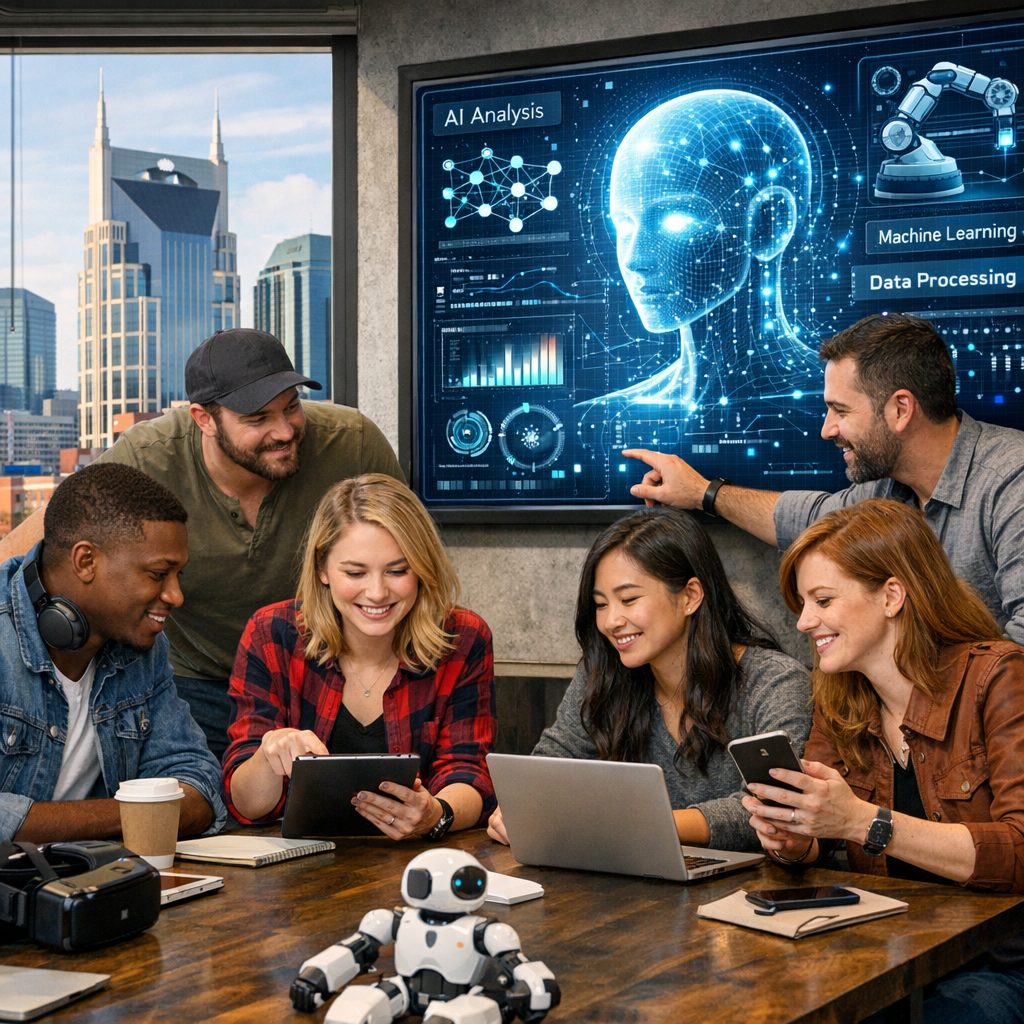
Hey Music City—tech isn’t just playing a riff in the background anymore. It’s part of our daily mixtape. From AI in classrooms, to startups making power smarter, the innovations here in Nashville are changing the beat of everyday life.
Classrooms: Early Adopters, Real Impact
AI tools have already made their way into Tennessee’s schools. A majority of school districts report teachers using AI to manage administrative tasks and personalize student learning. Educators are seeing the benefit—not just in lesson planning, but in restoring time for teaching itself. Still, leaders emphasize caution, with concerns ranging from privacy to how these tools affect classroom culture.
Startups: From Health Tech to Home Energy
Nashville’s startup ecosystem is busy building products that hit home. One local health-tech company is developing an AI-powered platform to predict patient deterioration—helping hospitals catch red flags earlier. In East Nashville, a startup crafting a home energy management device aims to make switching between grid power and solar storage affordable and automatic. These innovations aren’t just futuristic—they’re being designed with real Nashville needs, like healthcare cost constraints and increasing interest in sustainable energy.
Gadgets and Mom-and-Pop Reality
Beyond labs and clinics, AI is working its way into everyday gadgets: caution lights that adjust to traffic flow, voice assistants helping folks manage schedules, smart thermostats learning our routines. These devices may seem small—but combine them over time, and they change how families budget energy, schedule doctor’s visits, or even stay safe in neighborhoods. For many Nashvillians, these gadgets are less about novelty and more about saving time and money.
Challenges & Local Conversations
All that tech innovation comes with friction. Data centers are sprouting up in and around Nashville—raising debates over land use, energy impact, and who has final say about zoning. Meanwhile, in public policy and nonprofits, demand for digital skills training is rising. The city is responding: libraries offer free tech classes, and local programs strive to bridge gaps for adults or new immigrants getting online. Choices made now around how we regulate, train, and include will count for a long run.
Looking Ahead: What’s at Stake for Everyday Nashvillians
- Equity: If only certain neighborhoods get reliable broadband or access to AI-enhanced services, inequalities could deepen.
- Workforce: Jobs will shift—some change, some disappear. But as trends suggest, skillful use of AI may matter as much as the ability to do the work itself.
- Transparency: How decisions are made about smart infrastructure, devices in public spaces, or health data—Nashvillians want clear answers.
- Practicality: Hardware, energy, affordability—these still shape whether a smart gadget or platform is truly useful in a home or a business.
Tech in Nashville isn’t looming off in some future. It’s here—improving navigation, helping kids learn, offering energy savings, and provoking tough questions. Our challenge is to make sure the laughably cool stuff actually works for everyone.