

By Sophia Anderson
Nashville’s real estate landscape continues to shift—home prices wiggle, rental rates level off, and fresh development is sprouting, especially in areas primed for growth. Whether you’re buying, renting, or following local development, here’s what you need to know about where the market stands and what’s ahead.
Current Trends in Home Values & Listings
The typical home value in Nashville hovers around $430,000 to $440,000, with a slight decline of around 3% over the past year. Median asking prices are somewhat higher, especially in popular neighborhoods, often approaching or exceeding $600,000, depending on location. Active listings are increasing, giving buyers more options, though many homes still sell within a couple of months.
Rental Market Snapshot
Rent prices in Nashville average around $2,200 to $2,400 per month for all types of rental housing. Year over year, there’s been little movement—slightly down or flat—in many parts of the city. While rentals remain costlier than the national average, the small shifts suggest a cooling in demand or some easing of pressure after years of rapid growth.
Where Development Is Heading
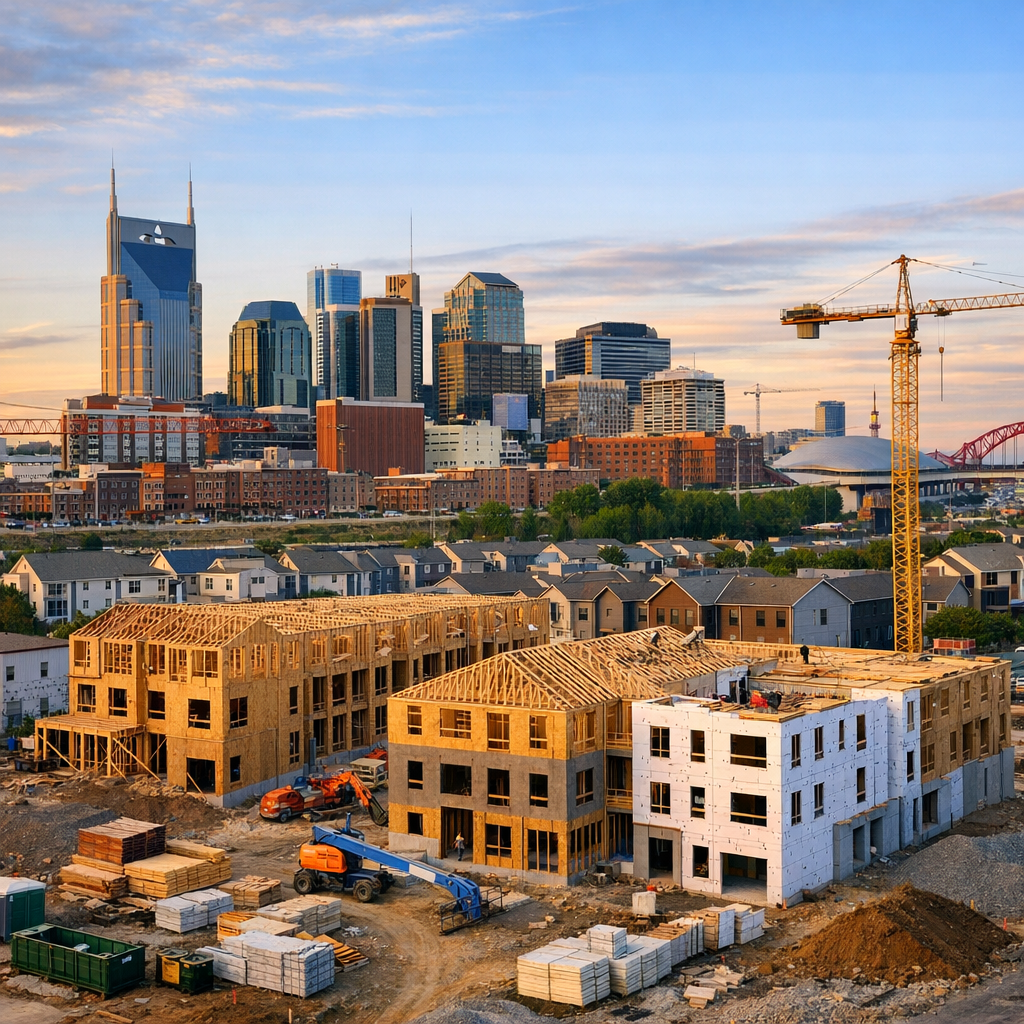
Residential development is busy, with dozens of projects moving through approvals or under construction in Davidson County. Key initiatives include mixed-use sites and infill housing, affordable workforce housing, and neighborhood subdivisions. Major properties—converted former motels, church sites, and larger parcels—are being repurposed or built out to meet demand for both for-sale and for-rent housing.
What Buyers & Renters Should Watch
For Buyers
- Start with pre-approval—it’s expected in competitive Nashville offers.
- Understand full costs beyond the price tag: taxes, insurance, maintenance, and possible homeowner association fees can add up.
- Consider value over trend-driven neighborhoods—areas with good transit, infrastructure, schools, and amenities likely offer heavier long-term gains.
For Renters
- Negotiate where possible—leases in some areas are offering concessions or short-term deals as competition shows signs of softening.
- Explore areas just outside the core city—older communities often offer better rates for similar square footage.
- Keep an eye on new construction projects—they may include rental units that are more modern and efficient, which may come with higher or lower cost depending on location and amenities.
Development Spotlight: East Bank, Novel Richland Creek, & More
Several standout projects illustrate where Nashville’s growth is headed. The Novel Richland Creek mixed-use development in West Nashville just received permits; it’s positioned near major retail anchors and aims to offer both housing and services in one place. Meanwhile, the City’s East Bank area is seeing transformative work—between a new stadium, arts center headquarters, and large-scale mixed-use developments that include public amenities and affordable housing components.
Balancing Growth & Affordability
Despite harder pricing at both ends of the spectrum, Nashville still faces tight supply for housing that’s affordable to moderate-income households. Many of the new development approvals are for higher-end homes or mixed-use zones—not always with guaranteed affordable or workforce units. Cities and local nonprofits are increasingly involved—through grants, conversions, and zoning—to preserve or increase housing options for lower-income residents.
Final Thoughts
For those buying or renting now, patience and preparation are your allies. It helps to have clear priorities and flexibility about neighborhood or home type. For community advocates, the challenge remains: how to funnel Nashville’s investment into projects that promote both growth and equity. Keep tabs on zoning changes, public infrastructure plans, and affordable housing developments—they often tip the balance in where value goes next.