

By Mason Martinez
What Nashville’s Seasonal Rhythms Look Like
Nashville enjoys all four classic seasons, each bringing its own patterns. Winters are cool with average highs around 47–50°F and lows near 30–33°F. Snow appears most often in January and February, though accumulations are light—usually just a few inches annually. Spring and fall are the “shoulder seasons” when conditions are often most comfortable, marked by moderate precipitation and gradual shifts in temperature. Summer, by contrast, delivers consistent heat and high humidity: July and August regularly see highs near 90°F.
Rainfall Patterns & Storm Risks
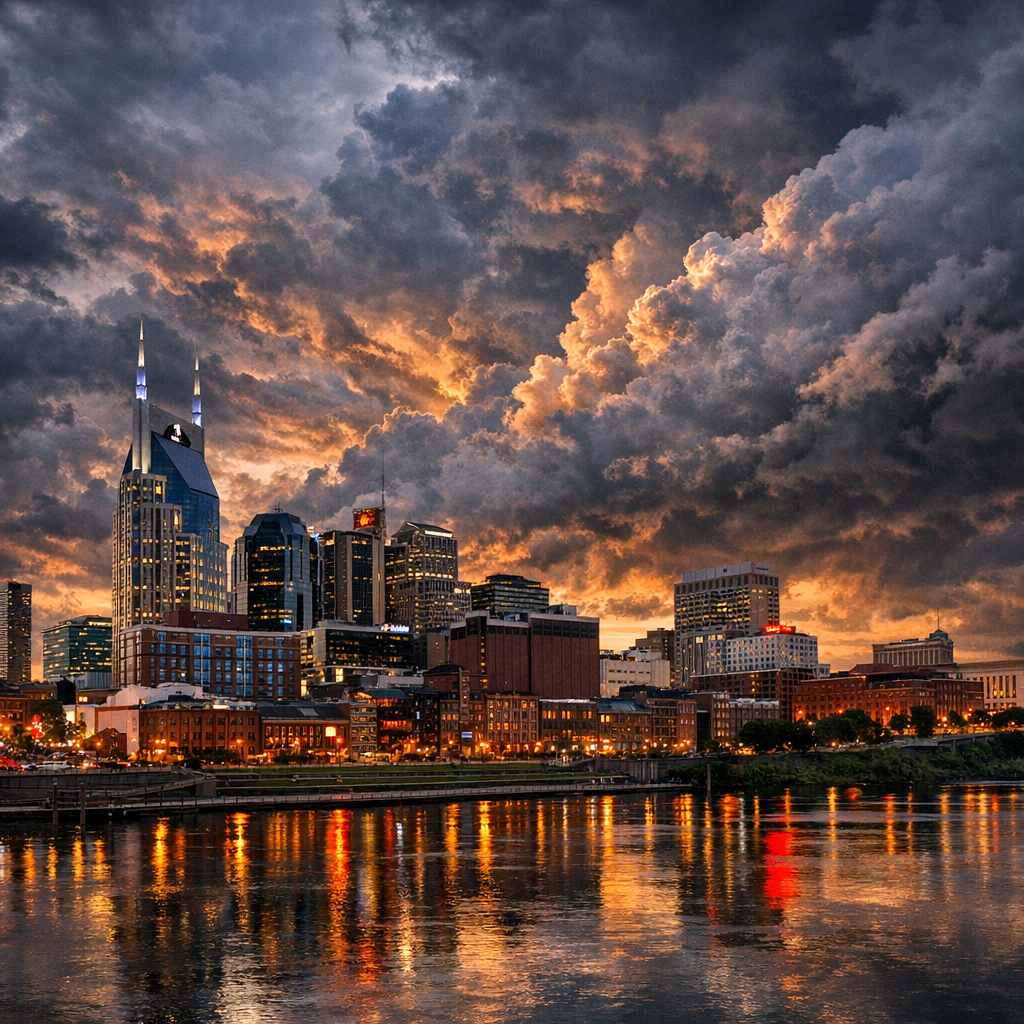
Rainfall is fairly steady throughout the year, but amounts vary by month. Spring—especially March—tends to be wettest, followed by early summer. Fall and early winter are generally drier. Severe thunderstorms are a common risk during spring and fall, sometimes growing into damaging storms with high winds or hail. Flooding remains a serious concern, especially in low-lying neighborhoods and along waterways.
Longer-Term Environmental Shifts
Nashville has seen its climate warm gradually over recent decades, with average temperatures rising and hot-day stretches growing longer. The city has developed an urban heat island effect: densely built areas tend to retain more heat than greener, less developed outskirts. These shifts heighten risks during summer—especially for vulnerable populations—and intensify issues like air quality.
Planning for Resilience & Health
Local authorities are responding. The Metro Nashville Climate Adaptation & Resilience Plan outlines steps to address heat waves, stronger storms, and risks like flooding. There’s also a county-wide Ecological Conservation Strategy underway to protect green spaces, restore natural waterways, and better integrate nature into city growth. On the individual level, residents can support tree canopy preservation, stormwater-friendly landscaping, and energy efficiency in buildings.
What You Can Do & Expect
Know Thy Forecast: track local heat-index alerts, severe weather watches during storm seasons, and stay ready for quick changes. Planting native trees especially helps combat heat and improve stormwater absorption. Use shade, ventilation, and proper cooling to stay safe during peak summer months. And in colder seasons, weather tends to be mild—but occasional cold snaps or snowfall happen, so keeping preparedness basics always close by helps.
Nashville’s weather isn’t static. Our seasons still show familiar patterns—but they’re being reshaped by warming skies, shifting rainfalls, and growing urban density. Understanding what’s changing—and how to adapt—matters for our comfort, our safety, and our shared natural future.