

By Emma Johnson
As communities in Nashville track global developments, a trio of interconnected issues—food security, climate cooperation, and forced displacement—has emerged in recent reports. These trends don’t just shape distant headlines; they influence migration, international policy, and economic stability everywhere.
Growing Fragility in Global Food Security
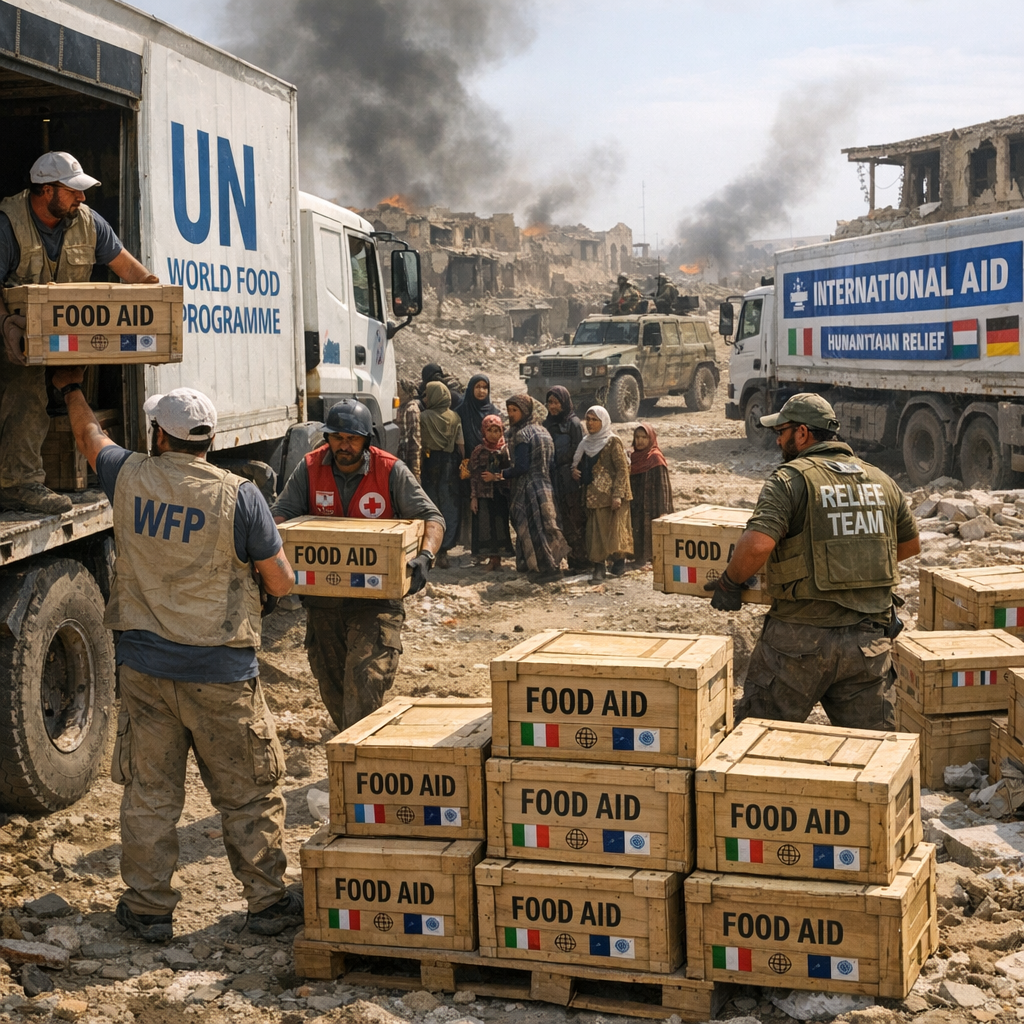
The latest Global Report on Food Crises confirms that acute hunger remains widespread across dozens of countries. In 2025, two famines were officially confirmed—in parts of Gaza and Sudan—the first time that has occurred in the report’s ten-year history. The risk of famine remains high in those regions and also in South Sudan.
Contributing to the rise in food insecurity are ongoing conflicts and disruptions in energy and fertilizer markets. Together, these elements are pushing up costs, straining supply chains, and threatening nutrition, especially in vulnerable regions.
Forced Displacement Sees a Slight Decline—But Challenges Persist
Global displacement figures dipped slightly in 2025—about 41.6 million people are refugees, asylum-seekers, or in refugee-like situations, and around 68.7 million are internally displaced within their countries. While the overall number went down a bit from 2024, returns to home regions have often happened under difficult conditions.
The majority of asylum-seekers and refugees come from just a handful of nations. And even when people do return home, the journey toward rebuilding—reintegrating, restoring infrastructure, securing livelihoods—remains steep.
Climate Cooperation: Progress and Uneven Pace
Efforts to combat climate change are accelerating in some areas. Reports show that solar and wind energy deployment doubled from 2022 to 2024. Emerging economies saw major increases in climate finance during that same period.
Yet, despite these gains, global outcomes remain insufficient to match the ambitions of the Paris Agreement. Key gaps exist around deforestation, fossil fuel reduction pathways, and adaptation indicators, which are essential to preparing vulnerable communities for future climate impacts.
A promising development is the launch of the Belém Technology Implementation Programme at COP30, which aims to strengthen the transfer and scaling of climate technologies to developing countries. Such initiatives offer hope—but their effectiveness will depend heavily on timely funding, political will, and accountability.
What This Means Locally
While Nashville may feel far from the frontlines, these global shifts matter here too. Rising food costs and supply disruptions ripple through every import chain. Displacement crises can influence migration patterns and refugee resettlement. And climate policy developments shape national regulations, energy costs, and investment decisions.
Looking Ahead
- More robust international cooperation will be essential to close gaps in climate outcomes—especially on finance, adaptation, and fossil fuel use.
- Humanitarian aid alone won’t solve displacement or food insecurity; long-term strategies for resilience and equitable development are needed.
- Tracking mechanisms—like adaptation indicators and climate data platforms—must mature and become standard tools to measure real-world progress.
The world is at a crossroads. One path leads to continued incremental advances. The other, if nations act decisively, opens the possibility of meeting our shared goals—ending hunger, safeguarding people displaced by conflict, and stabilizing our climate. Nashville and cities everywhere have both a stake and a role in what comes next.