

By Sophia Anderson
Homebuyers Have More Leverage Than They’ve Had in Years
The Nashville housing market has been shifting steadily toward buyers. A recent report places Nashville among the strongest buyer’s markets in the U.S.—there are now more homes for sale than in recent years, and fewer buyers competing over each property. Sellers are advised to price competitively and ensure homes are in move-in condition to attract attention. Buyers have more room to negotiate on price and terms. Local builders are also starting to offer incentives like assistance with closing costs especially on newly built homes.
Prices & Rentals: Stability with Subtle Shifts
The typical home value in Nashville is around $430,000, and over the past year values have declined slightly. Homes are generally going to pending status in about 30 days. On the rental side, average rents hover near $1,800 per month. Month-to-month rent changes are modest, and year-over-year growth has slowed or flattened in many areas.
Vacancy & Incentives
Downtown and urban-core rental projects are seeing higher vacancy rates, particularly among newer luxury units. In response, landlords and developers are offering concessions—shorter leases, free parking, or one month free rent—to fill units. Cost of construction, high land prices, and financing challenges continue to constrain new rental supply.
Planning and Zoning Reforms Aim for More Housing Options
City planning efforts are underway to update zoning codes and development processes. Nashville’s Housing & Infrastructure Study is pushing for more—and smaller—housing types so the city can meet diverse residents’ needs. Another major effort, the Design & Development Strategy (D&DS), looks at how zoning, design standards, and permit review can be modernized to support predictability, cultural preservation, and walkable communities.
Large Scale Local Development: Downtown & East Bank
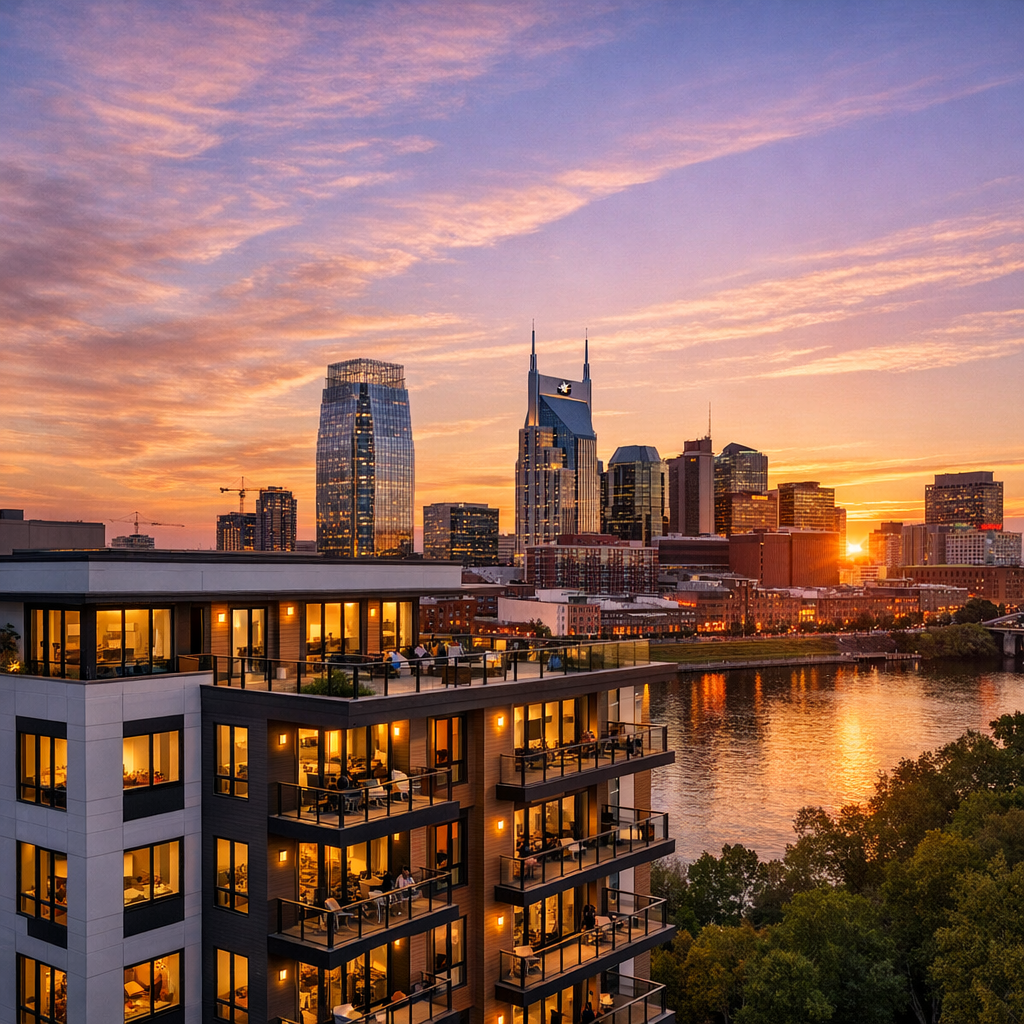
Significant development projects are reshaping Nashville’s urban core and riverfront neighborhoods. The East Bank area, once largely parking lots and warehouses, is being transformed with mixed-use housing, corporate campuses, greenways, and public spaces. Downtown continues to see major residential towers, mixed-use buildings, and retail spaces going up, many with ground-floor commercial components and in some cases hotel/residential combinations.
What This Means for Buyers & Renters Locally
- If you’re buying: don’t rush—wait for well-priced, well-maintained homes. Inspection matters. New builds may bring bundled perks.
- If you’re renting: explore beyond luxury units—older rentals or neighborhoods just outside the core may offer better value and fewer concessions.
- Stay aware of zoning changes and transit projects—they can shift what neighborhoods deliver in walkability, amenities, and long-term value.
- For both: keep financing costs and upkeep in mind. Interest rates are still high, and older homes often have maintenance surprises.
Whether you’re aiming to buy, planning to rent, or simply curious about your neighborhood’s trajectory, Nashville is in a moment of measured transition—less of a sprint, more of a course correction toward balance and sustainability.