

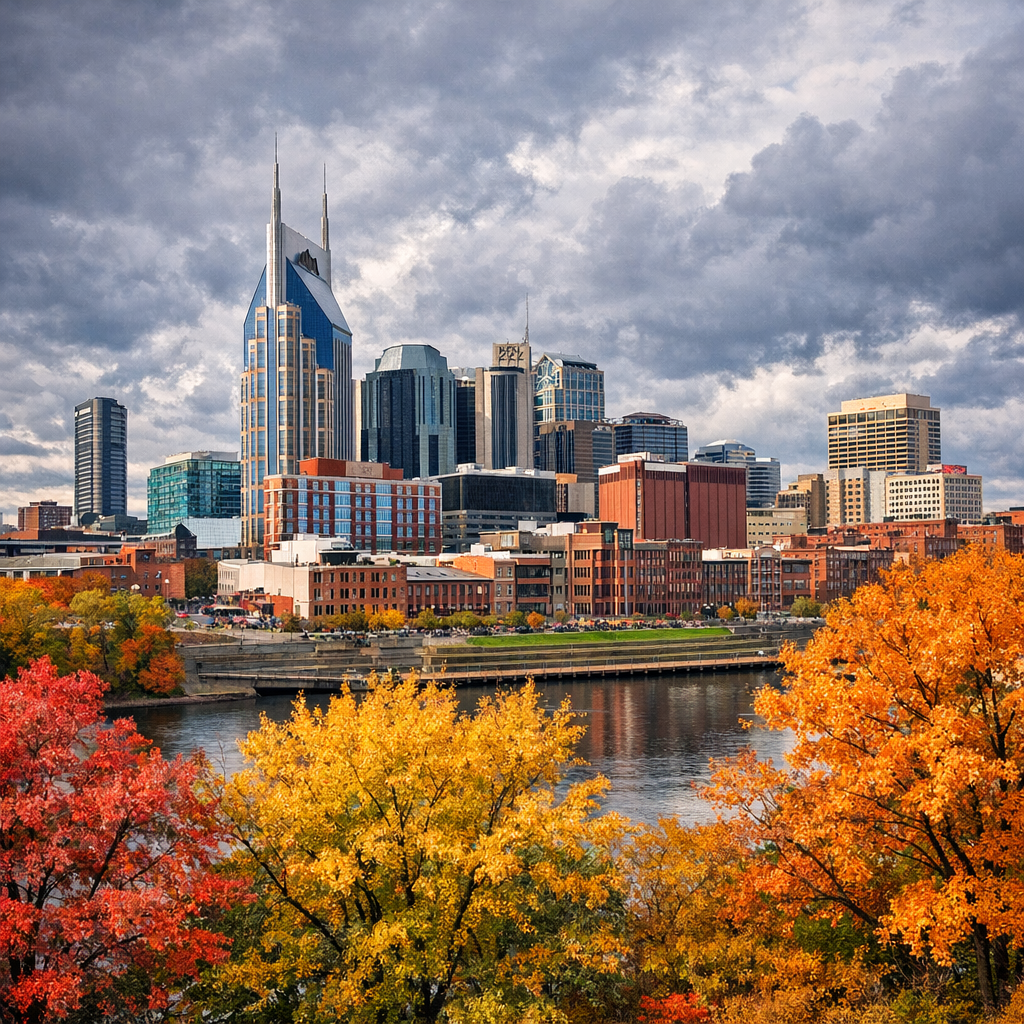
Greetings Nashville! I’m Mason Martinez, here to walk you through our city’s weather patterns, environmental challenges, and what’s being done to make our home more resilient.
Seasonal patterns and what to expect year-round
Nashville experiences pretty clear four-season weather with a humid subtropical twist. Summers are hot and humid — think highs in the upper 80s to low 90s (°F) and warm nights. Winters are milder, with daytime highs in the 40s~50s and overnight lows occasionally falling below freezing. The city’s normal annual mean temperature sits around 60-61 °F. Spring and fall bring major swings: one week you’re enjoying 70s, and the next a cold front pushes things down into the 40s. Rainfall is fairly evenly spread, though August tends to be one of the wetter months. Snow is rare and light when it comes, mostly in January or February.
Climate shifts and environmental stressors
Over recent decades, our winters have warmed slightly — fewer prolonged freezes, more moderated cold snaps — yet severe cold events still happen. Meanwhile, summers bring a growing risk of extreme heat, especially early and late in the warm season. Also in the mix: heavy storms and flash flooding, which test Nashville’s stormwater systems and infrastructure.
We’re in USDA Plant Hardiness Zone 7a, which helps guide gardeners and farmers here. But even that is being tested by erratic temperatures, shifting freeze dates, and weather extremes. Observed changes in rainfall patterns — occasional downpours, longer dry stretches — affect urban tree health, flood risk, and soil moisture.
City efforts: planning for resilience
Nashville’s government is working on several fronts. The Climate Adaptation and Resilience Plan aims to strengthen systems — from the built environment to public health — to cope with threats like heat waves, severe storms, and flash flooding. Key goals include better mapping of vulnerable areas, improving green infrastructure, and protecting our waterways.
Another big push is the Ecological Conservation Strategy, which lays out a vision for conserving forests, hillsides, waterways, and green spaces even as our city grows. The idea is to thread protection and connectivity into development so our ecosystems stay intact.
What residents can do
You don’t have to wait for city hall to act. Here are some small-scale steps we can all take:
- Plant native trees and shrubs — they tolerate local swings and help cool neighborhoods.
- Install rain barrels or rain gardens to manage runoff and ease pressure on storm drains.
- Use shading, ventilation/humidity control, and energy-efficient windows to deal with heat without pushing utility bills sky-high.
- Support local conservation efforts and vote for policies that protect waterways, urban forests, and green space.
By understanding how weather and environment come together in Nashville — and by taking action — we can make our city healthier, more resilient, and more beautiful.