

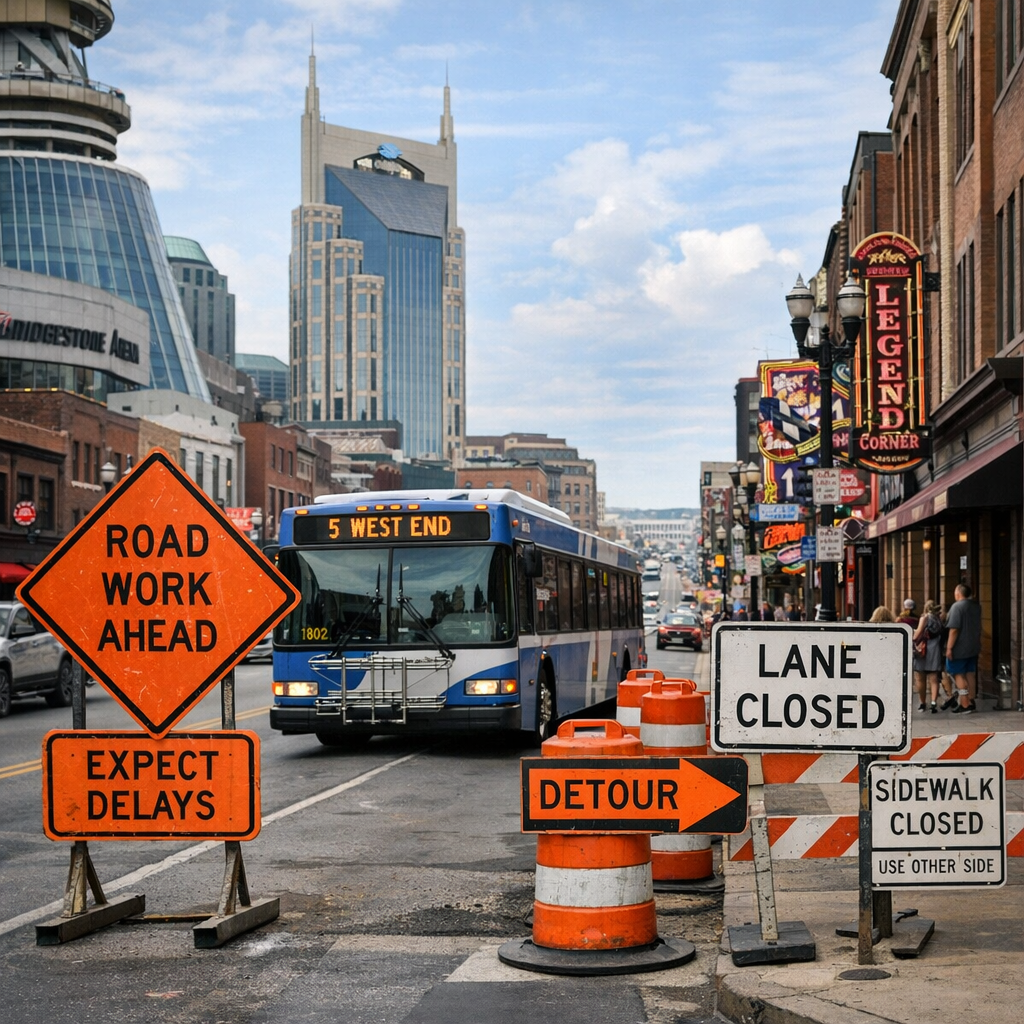
Over the last several months, Metro Nashville has moved forward on numerous local initiatives that touch everything from transit to development, infrastructure to public health. With real progress coming after the passage of Choose How You Move and growing community concern over land use, here are the major changes Nashvillians should know about.
Upgrading How We Move Around the City
Nashville’s Choose How You Move (CHYM) program is now in active implementation. The voter-approved transportation plan is funding improvements in sidewalks, traffic signals, transit service, and safety. For example, the first sidewalk projects are completed, smart signals are being added to downtown and along key pikes, and transit service has already expanded, including more frequent buses and extended evening hours for accessibility services. The program’s All-Access Corridors—such as the Nolensville Pike route from Downtown to South Nashville—are now entering design and planning phases.
Signal Upgrades & Smart Traffic Systems
Behind major corridors, fiber infrastructure is being laid to enable improved traffic signal coordination and priority for buses. These upgrades aim to reduce rush-hour delays and improve safety for drivers and pedestrians alike.
Infrastructure Projects & Street-by-Street Changes
The city’s transportation arm (NDOT) has a full roster of ongoing capital projects: pedestrian-enhancing initiatives like the Church Street Complete Street, sidewalk improvements along Dickerson Pike and Harding Place, intersection work at Hillsboro Pike and Crestmoor Road, and others. A major street lighting retrofit in partnership with Nashville Electric Service targets energy savings and emission reductions, while enhancing nighttime safety.
Development & Zoning: East Bank’s Evolving Character
The East Bank, long a spot of heavy industrial use along the Cumberland River, is seeing significant change. The city recently rezoned the East Bank Scrapyard site under Downtown Code—a move that supports high-density development, mixed-use buildings, and public access. This is part of a broader move to transform River North, support an Oracle campus, and create a more walkable, connected waterfront neighborhood.
Protecting Community & Environment in Land-Use Debates
As Nashville grows, the city is grappling with how to balance development and public welfare. A controversial data center proposed near the Nashville Zoo at Grassmere was recently blocked through a vote that empowered local government to use eminent domain. Under proposed regulations, future data centers will be prevented from using on-site, emissions-generating energy sources, reflecting growing concerns over pollution and land use.
What This Means for Residents
- Improvements to transit and pedestrian infrastructure will reduce delays and offer more reliable travel.
- New developments, especially along the riverfront, may reshape neighborhood character and wildlife access.
- Land-use decisions indicate rising sensitivity to environmental impact and community voice in planning.
- Many of the transportation and infrastructure projects are phased—expect ongoing construction and incremental changes over several months to years.
Nashville’s future is being built not just in boardrooms or city halls, but on our streets, bridges, zoning maps, and neighborhoods. Even if progress sometimes feels slow, the scale of change underway is one that will touch many lives—for better or worse—depending on how it’s managed from here.