

By Emma Johnson
The world today faces two deeply entwined crises: forced displacement on a massive scale, and the urgent push for climate action. These aren’t distant issues—they ripple into communities everywhere, including here in Nashville. Here’s an overview of what’s happening globally and why it matters:
Forced Displacement: What the Latest Reports Reveal
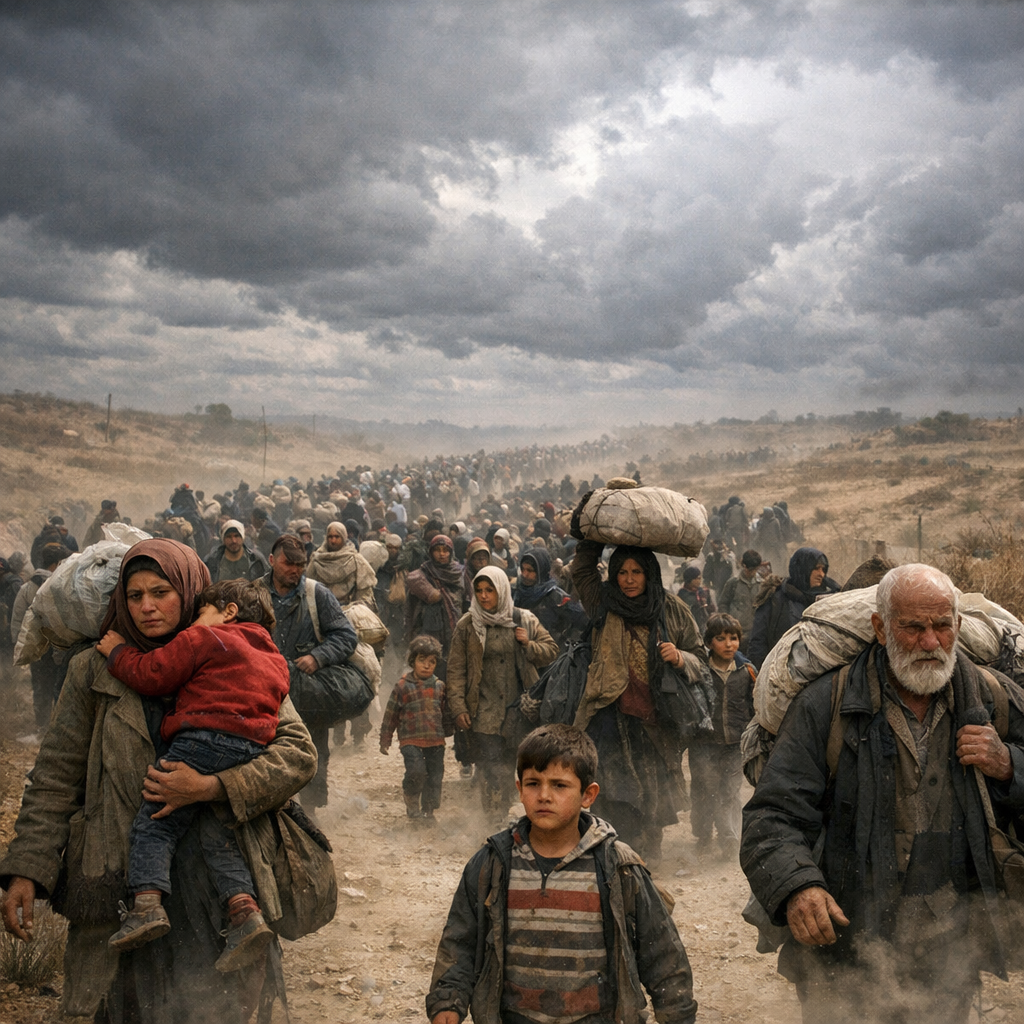
According to the UN High Commissioner for Refugees, by the end of 2025 the global number of refugees stood at about 41.6 million. That number includes both those who’ve fled abroad and refugees under UN protection, along with nearly 69 million people displaced within their own countries by conflict or violence. Many of them come from just a handful of nations facing protracted crises. The data shows a modest decline in numbers compared with the year before, largely due to more returns—though many of those returns have happened under difficult conditions.
Still, these gains are fragile. More than 117 million people worldwide were forced from their homes by the year’s end—some staying in camps, others caught between borders without clear protection, and many facing severe resource shortfalls.
Refugee Host Countries and Emerging Risks
Most refugees today remain close to home: neighboring countries host around two-thirds of them. Low- and middle-income nations carry most of the burden.
Meanwhile, new risks loom. Iran, once a major host country, is now facing internal economic collapse and political unrest that could force large numbers of its population to move or seek asylum elsewhere. That could lead to shifts in migration flows we haven’t yet fully anticipated.
Climate Agreements and International Cooperation: Key Developments
On the climate front, multilateral efforts continue to evolve. The Paris Agreement—with nearly all nations as parties—still anchors global policy. Commitments submitted by countries (called “nationally determined contributions,” or NDCs) are being reviewed and updated to push for more aggressive emissions cuts and stronger resilience efforts.
At COP 29, held recently, countries reached significant breakthroughs: strong financial targets for supporting developing nations, steps toward operationalizing loss and damage funds, and rules for high-integrity carbon markets. These tools are now seen as essential to closing gaps between what’s pledged and what’s needed to avoid the worst impacts of climate change.
What This Means Beyond the Headlines
For people in Nashville, these global trends matter. Climate change and forced migration aren’t abstract—they affect supply chains, insurance costs, weather extremes, global markets, and even the demographic makeup of communities. Awareness and policy at local, state, or national levels can help better prepare us for downstream effects.
Also: while international treaties are crucial, local action—heat emergency plans, equitable housing, community-based support for newcomers—will be what many people see every day. Global ambition is one piece; implementation close to home is what counts.
Tensions to Watch in Months Ahead
- How receiving nations handle rising numbers of refugees, especially as key host countries confront internal challenges.
- Whether climate finance pledges reach the scale promised, especially to support adaptation and loss and damage.
- The effectiveness of diplomatic efforts in places like Sudan and Ukraine, where conflict drives displacement and stresses humanitarian systems.
These aren’t just global archives—they’re unfolding stories every community, every city, must tune into. Nashville’s connections to the wider world mean what happens thousands of miles away may show up here in surprising ways. The test now is whether international will can be met by sustained action—both far away and right here.
— Emma Johnson, reporting for Local Voices