

By Emma Johnson
Melting Glaciers & Rising Risks
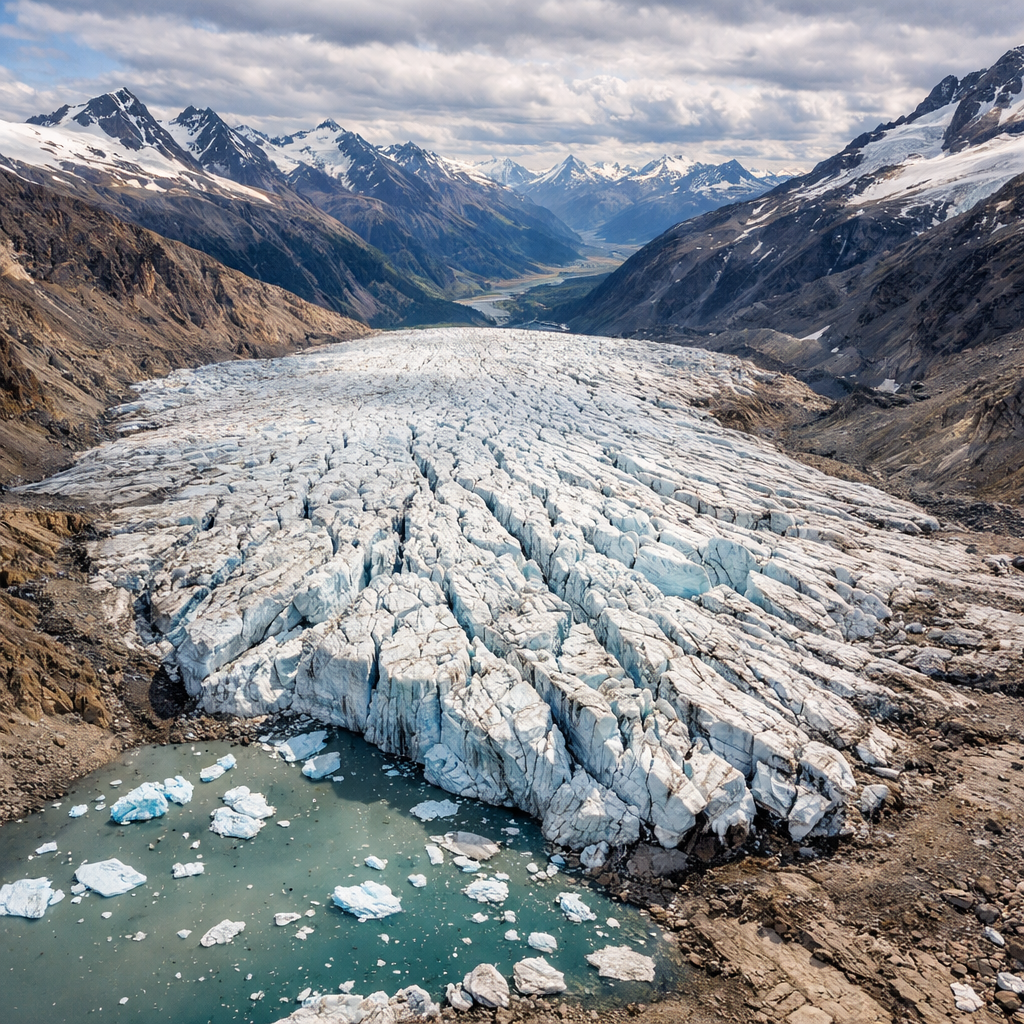
Across high-mountain regions like the Himalayas and the Alps, glaciers are vanishing faster than before. These massive ice reserves help regulate river flows, feed agriculture and hold off sea-level rise. But scientists warn that if current warming trends persist, many of these glaciers—including those in Switzerland and Austria—could lose much of their ice by mid-century. For communities downstream, that means greater flood risk now, and shrinking water supply and increased drought later.
Global Economy Under Strain
Trade growth has slowed sharply this year. Rising geopolitical tensions—especially conflicts in the Middle East and Ukraine—are disrupting freight routes, energy flows and industrial inputs. Developing countries, reliant on imported energy, fertilizer or electronics, are feeling the squeeze hardest. Inflation, volatile currency exchange rates, and higher costs are the new normal in many places.
Supply Chains: Rewiring For Resilience
Business leaders and governments are increasingly breaking away from depending on single sources or distant suppliers. The shift toward regional or “near-shore” manufacturing is accelerating. Companies are investing in stronger data systems, diversified inputs, and safety stocks. Yet even with all that, risks—ranging from component shortages to shipping delays—are not just episodes, they are becoming structural.
A World More Fractured—but Also More Interconnected
National priorities and protectionist policies are rising, weakening long-standing multilateral frameworks. Still, some responses are increasingly global: climate pledges, climate science, humanitarian relief, trade forum partnerships. The choices governments make today—how they balance competitive positioning with cooperation—will help determine whether shared challenges like climate change and economic instability can be addressed collectively.
Why This Matters to Us in Nashville
While it might seem far removed, these global trends touch Nashville. Energy costs driven by international supply strains affect utility bills here. Rising food prices from disrupted global agriculture impact what we pay at the grocery store. Our industries that rely on international supply chains—whether manufacturing, health care, or technology—face risks from scarcity of parts, longer transit times, or tariff changes. And climate-related disruptions hint at broader consequences: whether for displaced migration, increased demand for disaster relief, or broader social and economic shifts.
The world is in flux. Understanding the interconnected risks—and demanding both local and global resilience—is no longer optional.