

By Sophia Anderson
Home Prices & Sales: Slower Climb, Still High
Nashville’s housing market remains active, though it’s cooling compared to past years. In midsummer 2026, the median home price in the metro area was near $537,000 for single‐family homes—higher than a year ago—but the year‐over‐year gains are small. Homes are taking longer to sell: one tracker reports an average of 61 days on the market—four more days than last year. These indicators point to a market shifting toward balance between buyers and sellers rather than intense competition.
Rentals & Affordability: Mixed Signals for Renters
Rental prices in Nashville are stabilizing. The average rent across the city hovers around $1,834 per month, holding mostly steady year over year. That said, many renters continue to feel squeezed. Nearly half of renter households spend more than 30% of their income on housing, and about a quarter are deeply cost‐burdened—especially households earning up to 80% of the area median income. The gap between what people can afford and what’s available remains a concern.
Housing Supply: New Developments Aren’t Enough… Yet
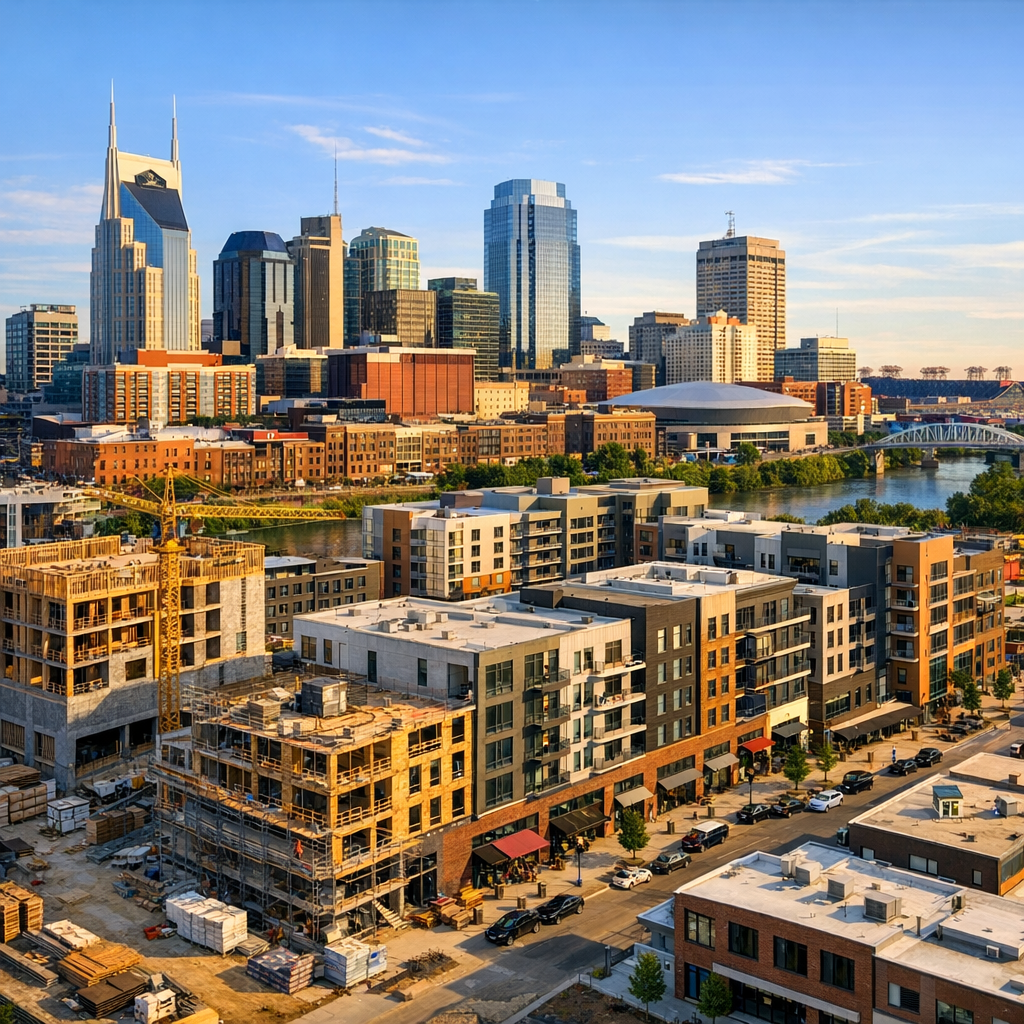
Nashville is in the midst of an ambitious building boom. There are over two dozen large housing projects underway or planned, bringing more than 12,000 residences over the next few years—mixed‐use, multifamily, and high‐rise buildings are leading the charge, especially in downtown, East Bank, and urban corridors. But even with this pipeline, projections warn the region could fall short by at least 20,000 homes in the next decade unless zoning reforms and infrastructure upgrades keep up.
Affordable Housing Moves Forward: Eastpoint Flats & Local Strategies
Among noteworthy efforts: Eastpoint Flats, a 100% affordable housing development, recently broke ground on the East Bank. It will have 323 income‐restricted units plus retail and childcare, backed by a historic 99-year lease ensuring long‐term affordability. Also, the Metro’s Housing & Infrastructure Study is pushing for changes like more density along major transit corridors and reforms to residential zoning to allow diverse housing types.
What It Means for You: Buyers, Renters & Neighbors
- If you’re buying: interest rates and months on market are a little more forgiving than during the frenzy, but prices are still elevated—look closely at neighborhoods further from the urban core.
- If you’re renting: there might be more options and slightly less pressure to bid, but affordability remains tight—seek out income-restricted housing or developments participating in subsidy programs.
- For neighbors and city planners: preserving neighborhood character while allowing gradual density—via duplexes, infill, and mixed‐use projects—could help close the housing gap sustainably.
Nashville’s housing story is now one of moderation: growth remains real, opportunities exist—but solutions for affordability and supply need continued focus.