

Shifting Balance: A Buyers’ Market Emerging
After years of rapid price growth and frantic competition among buyers, Nashville is tilting toward favoring those shopping for a home. Listing inventory has climbed, giving buyers more options, more room to negotiate, and time to make decisions without the frenzy from earlier in the decade. Homes tend to linger longer before selling than in recent years. Sellers are being advised to emphasize move-in readiness and realistic pricing.
Mid-market and newly built homes are among the properties providing more leverage for buyers. Some new construction offers include assistance with closing costs or more flexible mortgage rate terms. Those moving often find fresh homes offer better value or negotiable conditions.
Price Trends & Rent Dynamics
Home Prices
The median home value in Nashville is currently in the range of about $430,000-$500,000, depending on neighborhood and type. Values have edged down slightly year-over-year, reflecting cooling from prior highs. This has opened opportunities for buyers who may have sat out during the peak. Existing and newly listed homes are selling closer to their list prices these days—less overbid than in previous years.
Rent Costs & Vacancy
Average rent in the city now runs in the vicinity of $1,800-$2,000 monthly, with only small fluctuations month-to-month. Vacancy rates have increased in many apartment buildings, giving renters more options. Some properties are offering perks—free rent months or move-in specials to attract tenants. That said, affordability remains a stretch for many renters, especially for family-sized units or desirable neighborhoods closed to downtown.
New & Upcoming Developments Reshaping Supply
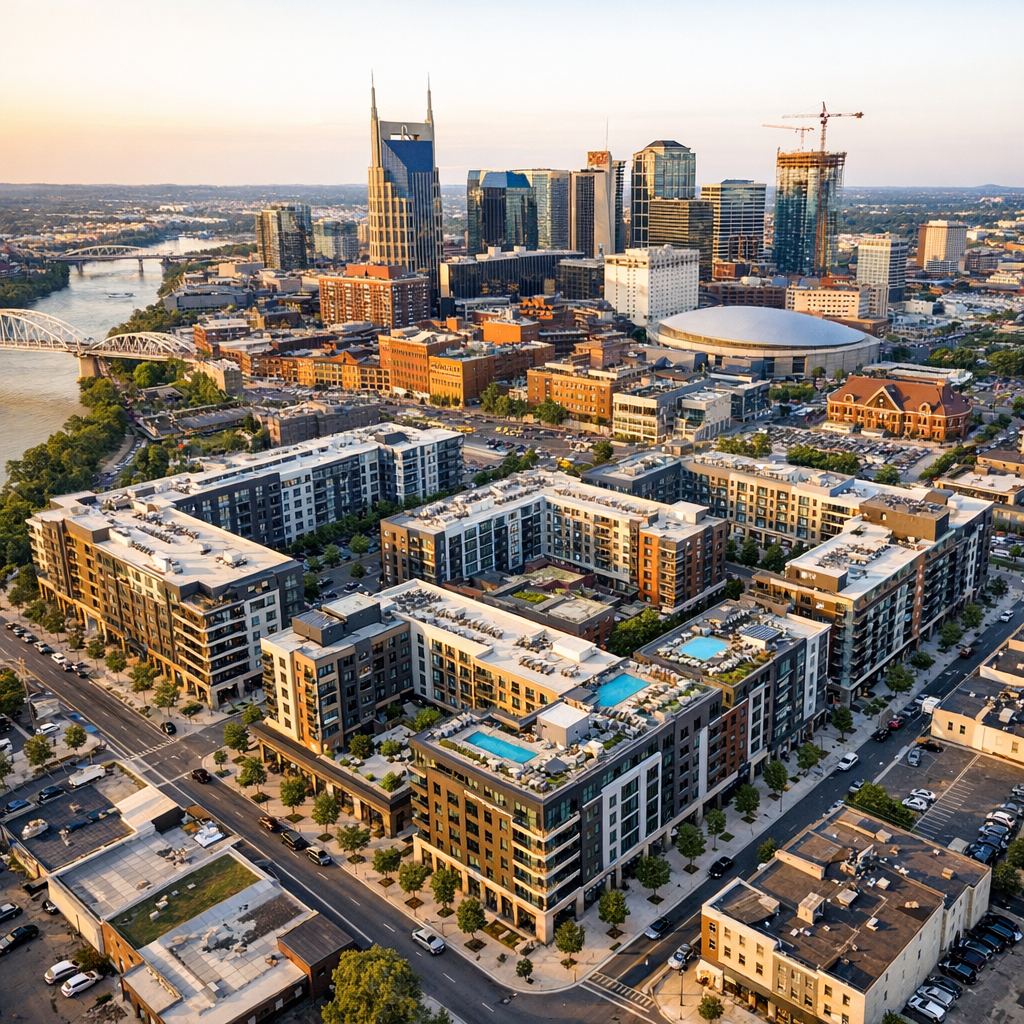
Nashville’s pipeline of development is robust. In the near-term future, dozens of mixed-use and residential projects are underway or in planning. Major investments include the East Bank redevelopment, which is transforming 550 acres along the Cumberland River with housing, public space, retail, and cultural amenities.
Other notable projects include the Paramount tower, poised to be Tennessee’s tallest residential building at 60 stories, and Wedgewood Village in Wedgewood-Houston launching with hundreds of new units.
In addition to large towers, there’s a growing interest in smaller scale solutions—townhomes, cottage housing, accessory dwellings, and infill developments—that can help diversify supply and preserve neighborhood character. Authorities are also considering zoning updates that allow for more housing types and reduce development barriers in established areas.
Practical Takeaways for Buyers & Renters
- Buyers: Inspect homes carefully, push for clear-title and minimal deferred maintenance. Prepare to ask for seller concessions. Watch emerging neighborhoods near transit or upcoming infrastructure improvements.
- Renters: With some incentives returning, it’s worth comparing properties not just by location but by fees, included utilities, and move-in specials. Lease flexibility can save you thousands.
- Watch affordability zones: As big developments roll out, affordable housing components are often part of project plans—but demand may outstrip supply. Early involvement in community hearings or information sessions can help.
- Know your financing: Interest rates remain a critical factor. Buyers who are pre-approved and informed may have an edge. Builders of new homes sometimes offer rate buys-downs or other sweeteners.
What Lies Ahead: What to Watch
How quickly housing supply can match demand in transit-friendly and infill areas will shape future affordability. Policies around zoning reform, incentives for affordable housing, and infrastructure capacity (roads, water, public transportation) are likely to drive which neighborhoods grow fastest—and which remain out of reach for many residents.
For now, the shift toward a more balanced market offers breathing room—for those ready to move, negotiates—rather than race. Nashville continues to grow; the key question is how inclusively it will grow, and who gets to call it home.