

By Mason Martinez
Warming Summers, Milder Winters
Over past decades, Nashville has seen a noticeable shift: spring and summer temperatures are edging upward, while winters are growing milder. Since the 1970s, average daytime highs during peak summer months have risen by about 0.7 °C, and winter days once commonly frigid enough to freeze are far less frequent. What this means for daily life: longer growing seasons, fewer hard freezes—great for some plants, challenging for ecosystems adapted to cold.
Wind, Storms, and Floods: Greater Risks in Rain
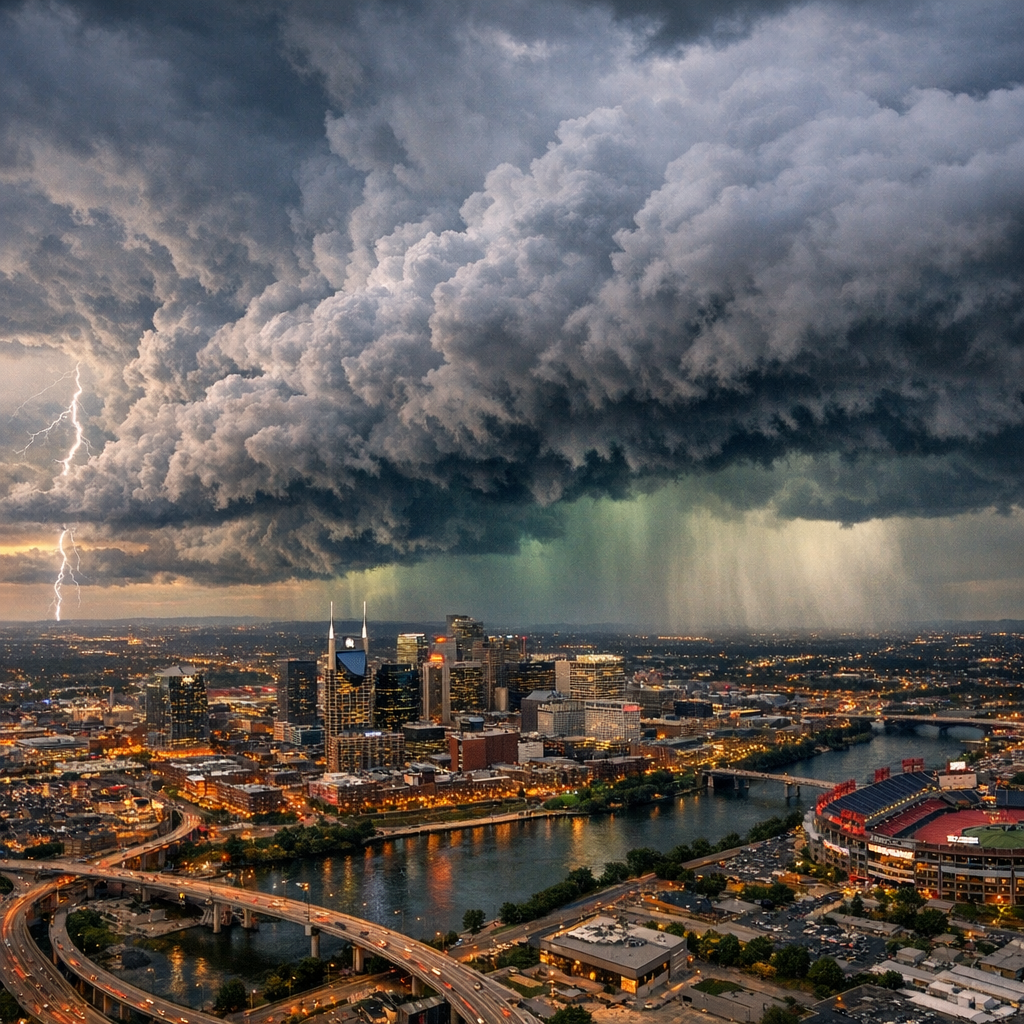
Nashville is seeing heavier downpours and more intense storms. The frequency of multi-day heavy rains is increasing, worsening flood risk, especially in areas with lots of pavement and limited green infrastructure. Tornadoes and severe thunderstorms are becoming more common and more powerful in recent decades.
A Dry Spell That Soaks Up Our Yearly Average
Despite dramatic storms, the overall pattern is telling: recent data reveals one of the driest 12-month stretches since the late 1980s. Nashville has collected far less rainfall than normal—by nearly 14 inches over a year—leaving soil parched, small waterways low, and local greenery stressed. Even when storms deliver heavy rain, much runs off rather than soaking in and replenishing groundwater.
Urban Heat Islands and Unequal Impacts
Concrete, asphalt, and dense development are making parts of the city significantly hotter than others. The “urban heat island” effect intensifies heat exposure—especially during humid summer nights—often affecting neighborhoods with fewer trees or less green cover. These hot zones pose elevated health risks, particularly for elderly residents and those without reliable cooling.
What Can Nashvillians Do?
Some practical steps can help us adapt and stay resilient as climate trends evolve:
- Strengthen green infrastructure: planting trees, preserving parks, encouraging green roofs to cool neighborhoods and absorb stormwater.
- Update drainage and zoning: increasing green spaces, restricting impervious surfaces in flood-prone areas.
- Plan for heat-smart building: using materials and designs that reflect heat or allow for natural cooling.
- Raise public awareness: sharing climate trends and localized forecast info helps people stay prepared for intense weather changes.
Looking Ahead
Nashville’s climate is no longer static—it’s shifting in ways that affect health, infrastructure, ecosystems, and daily life. By recognizing trends now—rising heat, changing rain patterns, and uneven impacts—we can shape resilient paths forward. Our weather beat isn’t just about today’s storms—it’s about preparing for the seasons, years, and decades ahead.