

By William Lopez
What are community gardens doing for Nashville neighborhoods?
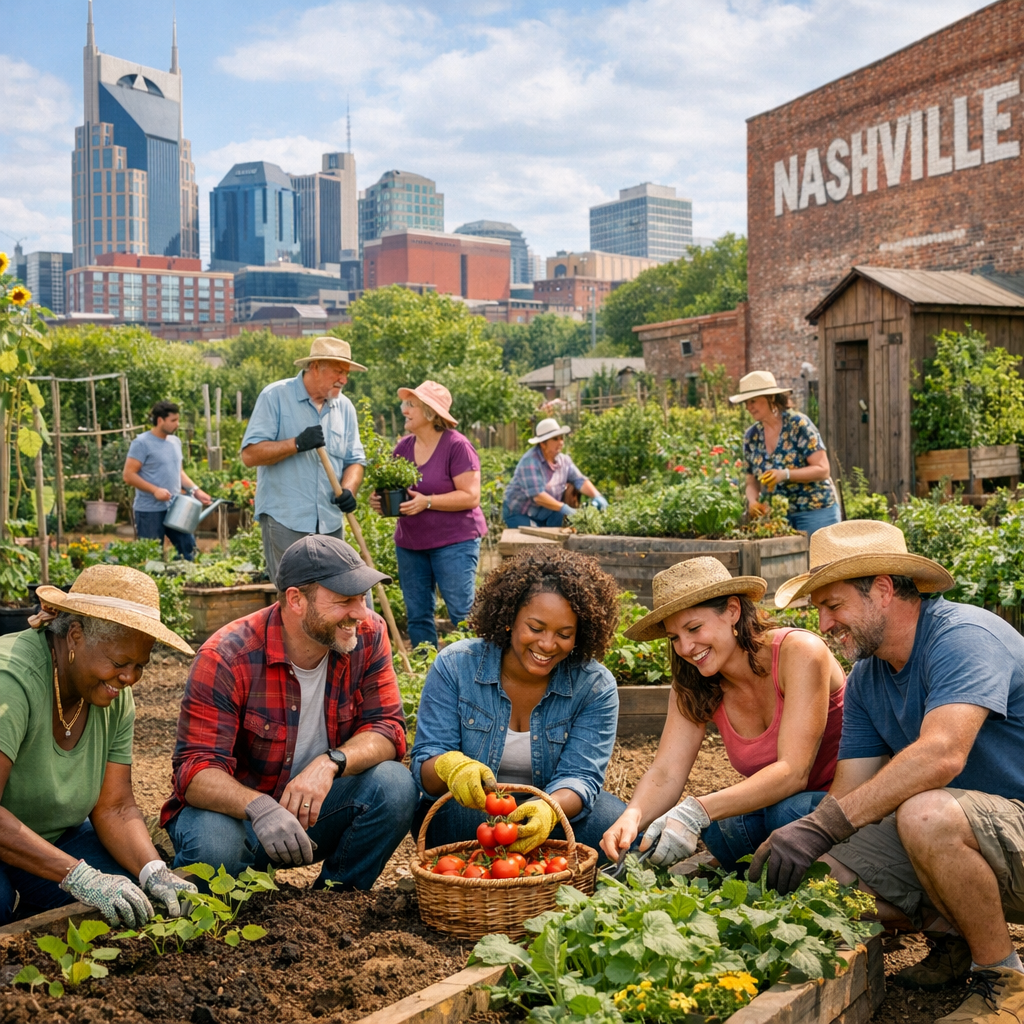
Community gardens are quietly thriving in various corners of Nashville—McGruder, Bellevue, Donelson, Edgehill, and beyond. Led by organizations like The Nashville Food Project, these spaces aren’t just about growing fresh produce; they’re about building connection, resilience, and shared ownership.
A recent study found that in low-income neighborhoods especially, gardening projects help ease food insecurity and provide vital nutrition education. They also offer spaces for gentle exercise, mental decompression, and learning in a hands-on way.
Stories from people who plant and connect
Once a week at McGruder Garden, seniors and teens plant side by side—sharing stories while pulling weeds. One gardener told me this space is “where my bones soften, and my heart opens.” For families whose nearest grocery might be miles away, harvesting okra, tomatoes, or greens changes what’s on their table that week.
And when neighbors bring extra produce—zucchini, peppers, squash—they leave them in shared baskets along the fence. Anyone walking by is welcome. It’s a small act of community care, but it translates into big relief for those stretching every dollar. It’s also where immigrant gardeners replant traditions—spicing beans just like home, leaving soil rich with cultural memory.
Challenges & what’s holding us back
Even with their promise, community gardens face steep obstacles. Land for gardens is expensive or zoned in ways that complicate planting. Volunteers dwindle when summers hit their peak. And funding for tools, water infrastructure, or soil testing often comes in small bursts—if at all.
Some folks say that while gardens help, they can’t alone fix systemic gaps in access to healthcare, housing, or job training. That doesn’t reduce their value—it highlights that gardens are part of a larger tapestry of care, not a one-stop solution.
Where we go from here
The most powerful gardens I’ve visited are the ones deeply anchored in their communities: matching gardens to local food preferences, offering gardening classes, or partnering with libraries or schools to support learning. Programs like The Nashville Food Project’s Agriculture Network show how intentional structure—tools, planning, outreach—can make gardens sustainable.
Imagine this: every neighborhood has its patch of green where folks grow, gather, and heal together—where children learn where carrots come from and elders tend soil that outlasts their steps. When we support community gardens, we’re investing in health, belonging, and care.