

By Ava Brown
Walk through East Nashville on a Saturday morning and you’ll likely spot a few familiar scenes: folks glance down at smart watches, parents using chatbots to help with homework, delivery drones—or at least apps—for groceries. It’s not sci-fi—it’s AI, startups, and gadgets subtly integrating into daily life. Here’s a look at how Nashville is adapting, some benefits residents are noticing, and what challenges lie ahead.
Startups bringing AI home
Nashville’s startup scene is stepping up in the AI space. Seedtable, a startup tracker, lists six early-stage AI companies based here—SiteVue AI, Clovers, Universal Robotics, Medalogix, among others—working on everything from automation to health tech. These fledgling firms aren’t just for tech hubs on the coasts; their work has real impact on neighborhoods, behind dashboards, medical appointments, and whether the kids get help with tutoring services. More founders are joining Innovation Studio and LaunchTN, helping build products that reflect local needs.
AI in the day-to-day
National studies show that U.S. households using generative AI save time on routine tasks—everything from online research to paying bills—and gain extra hours for leisure or creative work. In homes like those in Nashville, this means less time hunting for information and more time enjoying the city, whether that’s exploring a new park, attending a music set, or just catching up with friends. But the gains are not shared equally: younger, higher-income households tend to adopt faster and see more benefit.
Smart gadgets, assistants, and added ease
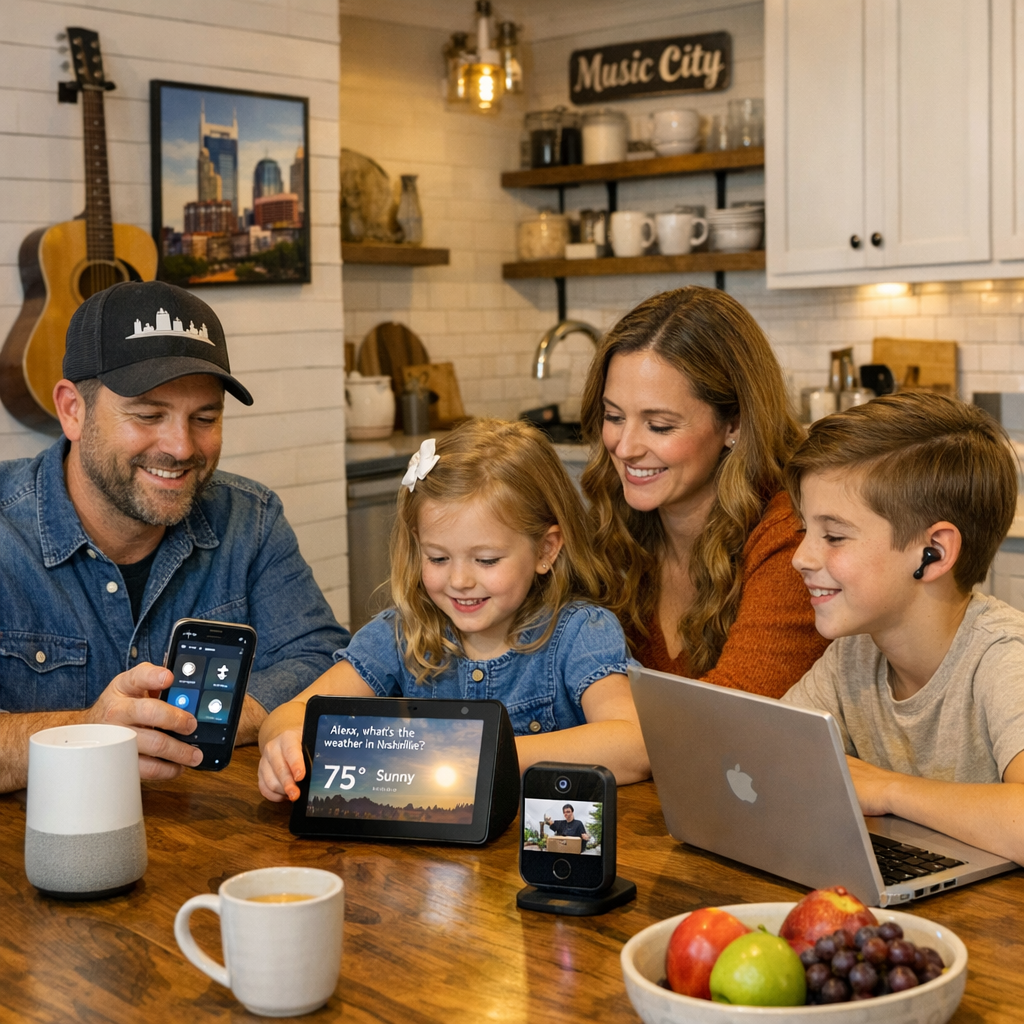
Smart speakers, thermostats, and chatbots are no longer luxury curiosities—they’re part of everyday life. Pew Research finds many Americans now use AI chatbots for work or search, and more than a third of households have smart devices with AI features. For Nashville residents, that may mean voice-controlled lights, apps that anticipate your commute timing, or home security systems that flag more than just motion. These tools can reduce mental load—helping organize tasks, remind you about bills, or manage groceries automatically.
Challenges: equity, privacy, and control
With opportunity come legitimate concerns. First, reach: households without reliable high-speed internet or newer devices often miss out. Digital inclusion efforts—including metro initiatives and nonprofit programs—are pushing to bridge that gap. Second, questions around data privacy and how much control people have over AI inside homes persist. Many Americans report feeling uncertain about the pace of AI’s spread and whether regulations are keeping up. Finally, there’s a social side: when tools automate chores or tasks, what changes in how people connect, share responsibilities, or even parent remain open questions.
Looking ahead: what residents might expect
Over time, expect more localized AI tools from Nashville startups—tools that understand the city, local norms, and community needs. Planning apps that pull in Metro schedules, healthcare reminders tied to local clinics, smarter transit suggestions tuned for traffic in downtown and beyond. Also likely: increasing integration of assistive AI in elder care, school tutoring, and community health spaces. Ideally, these tools will come with good governance: transparency, fairness, and respect for privacy built in.
AI isn’t coming—it’s already here. What matters now is how Nashville harnesses it so that everyday tech serves us all, not just those already ahead of the curve.