

By Ava Brown
In Nashville—amid rising startups, growing tech clusters, and a vibrant creative scene—artificial intelligence and connected gadgets are weaving into everyday routines in subtle but significant ways. They’re boosting convenience, expanding access, and raising fresh questions about privacy and inclusion.
Wearables, Health Apps, and Quiet Productivity
Most of us here already track steps, monitor heart rates, or use sleep apps. Across the U.S., 71% of adults use health-related apps and 64% use health devices, and demand is steadily rising for “always-on” monitoring tools. These go beyond fitness—now suggesting when to rest, detecting unusual health patterns, and helping users manage stress and wellness without manual effort.
For Nashvillians, this trend intersects with local health infrastructure—public health campaigns and community clinics are starting to reference data from wearables when educating on preventive care. Still, access remains uneven; gadgets are only part of the solution when broadband, device cost, and tech literacy are involved.
Home Automation: More Time, Fewer Frustrations
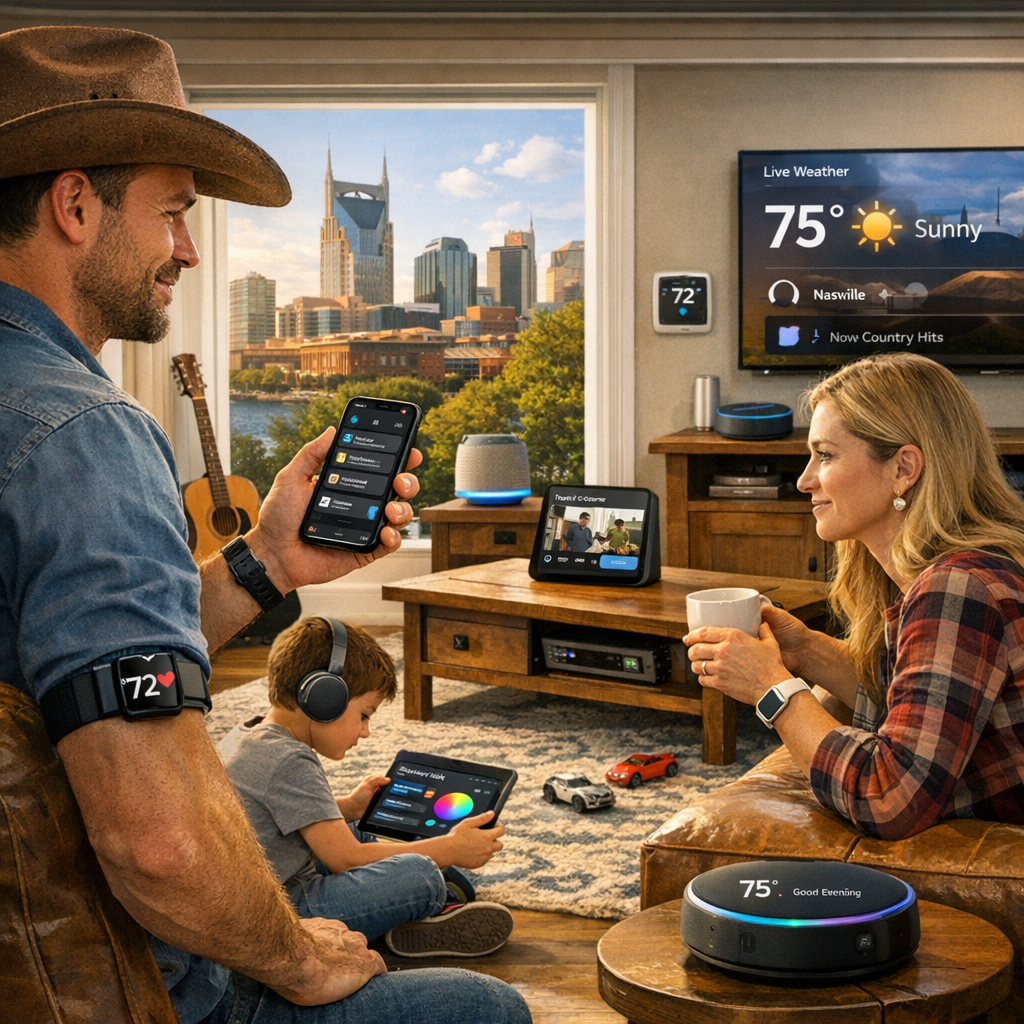
Smart home devices are no longer novelties—they’re tools many households depend on. Nearly one in four Americans report using robot vacuums, and similar numbers have adopted smart thermostats, voice-activated lights, and smart plugs to take daily chores off their plates.
In Nashville neighborhoods like East Nashville and The Nations, smart security cameras, video doorbells, and smart lighting are becoming popular. These tools offer peace of mind and comfort, but they also tie back into ecosystem compatibility and reliable internet—something still patchy in parts of the city without high-speed fiber.
AI, Startup Energy & Local Impact
Startups in Nashville are diving into AI not just for flashy products, but to support sectors like music, logistics, and healthcare. AI tools help musicians streamline workflows, enable predictive analytics in supply chains, and personalize care in health apps.
But while the city is preparing for an AI boom, job growth hasn’t caught up. That mismatch means many residents may benefit from AI tools, but may not yet access opportunities to build or work with them. Local digital inclusion efforts are critical: equipping people with skills, ensuring devices are available, and making internet reliable.
Everyday Trade-Offs: Privacy, Trust, and Digital Equity
With all this tech comes concern: who owns your health data, how secure are connected devices, and what happens when algorithms make decisions? Many users embrace AI without fully realizing which features depend on it, yet express skepticism about false information or bias.
Nashville has steps underway: the government’s digital inclusion plan seeks to bridge skills gaps; state-level policies are being crafted to protect musicians and creators from certain harmful AI applications. Transparency and regulatory guardrails are still catching up, but demand is loud and growing.
What to Watch as Technology Moves Forward
- Greater integration between devices and services—smartphones, wearables, and smart home gear working together seamlessly.
- Emergence of voice and ambient interfaces—less screen-time, more spoken or contextual prompt interaction.
- Expansion of local startup hubs offering AI training, internships, and mentorship for underrepresented communities.
- Policies that prioritize data privacy, algorithmic fairness, and ethical AI deployment.
In Nashville, tech isn’t just a sector—it’s becoming part of how people move, create, care, and live. And as those threads knit tighter, it’s both empowering and essential to stay engaged, informed, and thoughtful about what’s gained—and what’s at risk—in the connected life.