

By Sophia Anderson
Market Moves: More Power to Buyers
Recent data show Nashville is gradually transitioning from a red-hot sellers’ market toward one that offers more breathing room for buyers. As of mid-2026, there are ~129% more sellers than buyers in the active market—a marked shift in competition. Sellers are extending patience, and many are reducing listing prices by ~3–4% to facilitate sales. Homes are also staying listed longer than in recent booming years. Offers have slowed, but buyers now have more options and fewer rush decisions.
Price Trends & Inventory Mean Caution for First-Time Buyers
The median sale price for single-family homes across greater Nashville has crossed $530,000, up slightly year over year. Condominiums and townhome options show steadier growth around 3%. Meanwhile, listed inventories have increased compared to last year, giving prospective buyers more leverage. But even with the softening, affordability remains a challenge: wages have not kept pace in many neighborhoods, and housing costs continue to outpace income growth for many residents.
Affordable Housing: A Core Priority for the City
Nashville’s Unified Housing Strategy is a comprehensive roadmap aimed at expanding access to affordable, stable housing. It’s guiding policies, funding, and partnerships among nonprofits, developers, and government agencies. One highlight: Eastpoint Flats, the first 100% affordable building in the East Bank’s Eastpoint development, which will include childcare and retail and operate under a 99-year ground lease to preserve affordability long term.
Development & Zoning: Building the Future—With New Rules
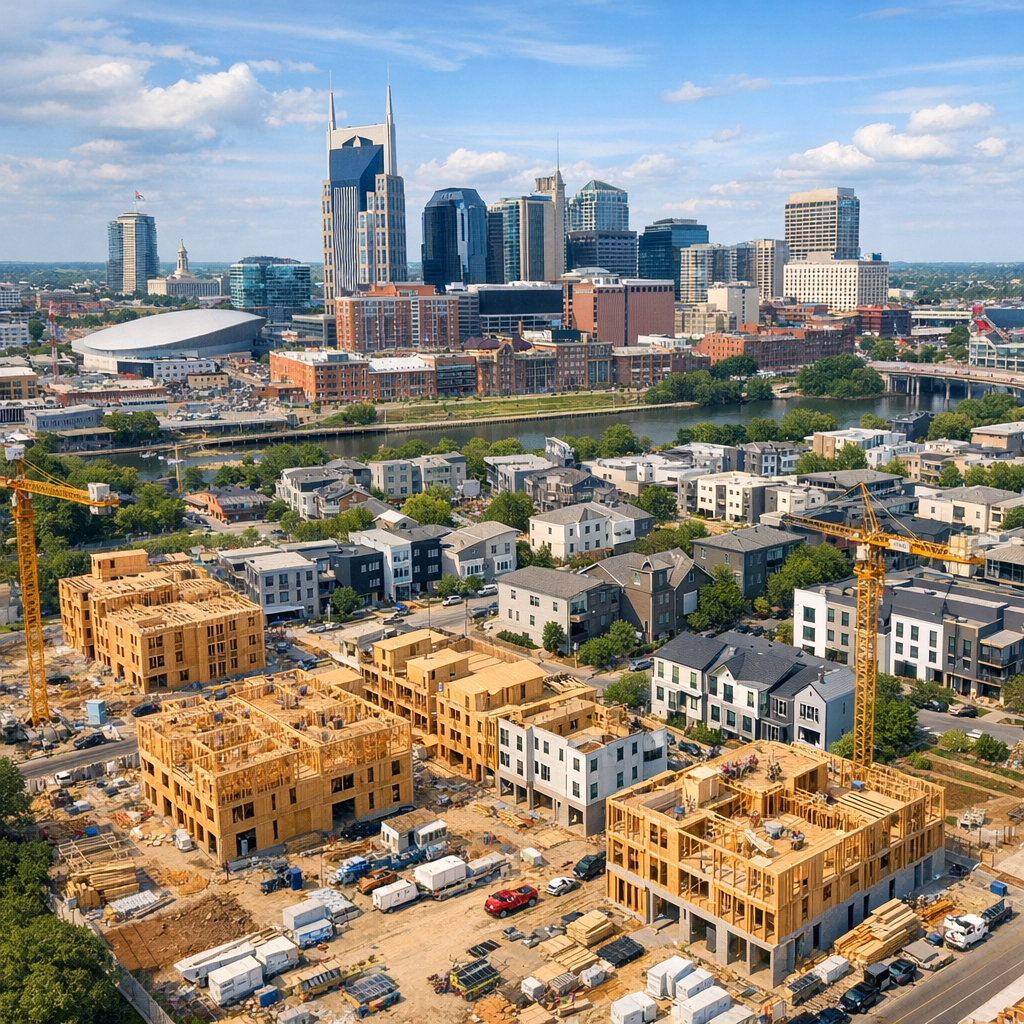
The Metro Nashville Housing & Infrastructure Study has raised red flags: without changes to zoning and development rules, the city could fall short of needed housing units by tens of thousands in the coming decade. Draft zoning standards are in progress to allow for more diverse housing types, especially smaller units and denser housing along major corridors. On the ground, large mixed-use projects continue downtown and in growth corridors—many with affordable housing components baked in.
What to Watch
- Developers’ new designs that include affordability must meet long-term protections, not just short-term promises.
- Zoning changes will impact neighborhood character—how well cities balance density with livability matters.
- Interest rates, lending costs, and local infrastructure capacity (utilities, roads, transit) are all crucial pieces in whether proposed development can really happen.