

By Emma Johnson
What’s the scale of global displacement?
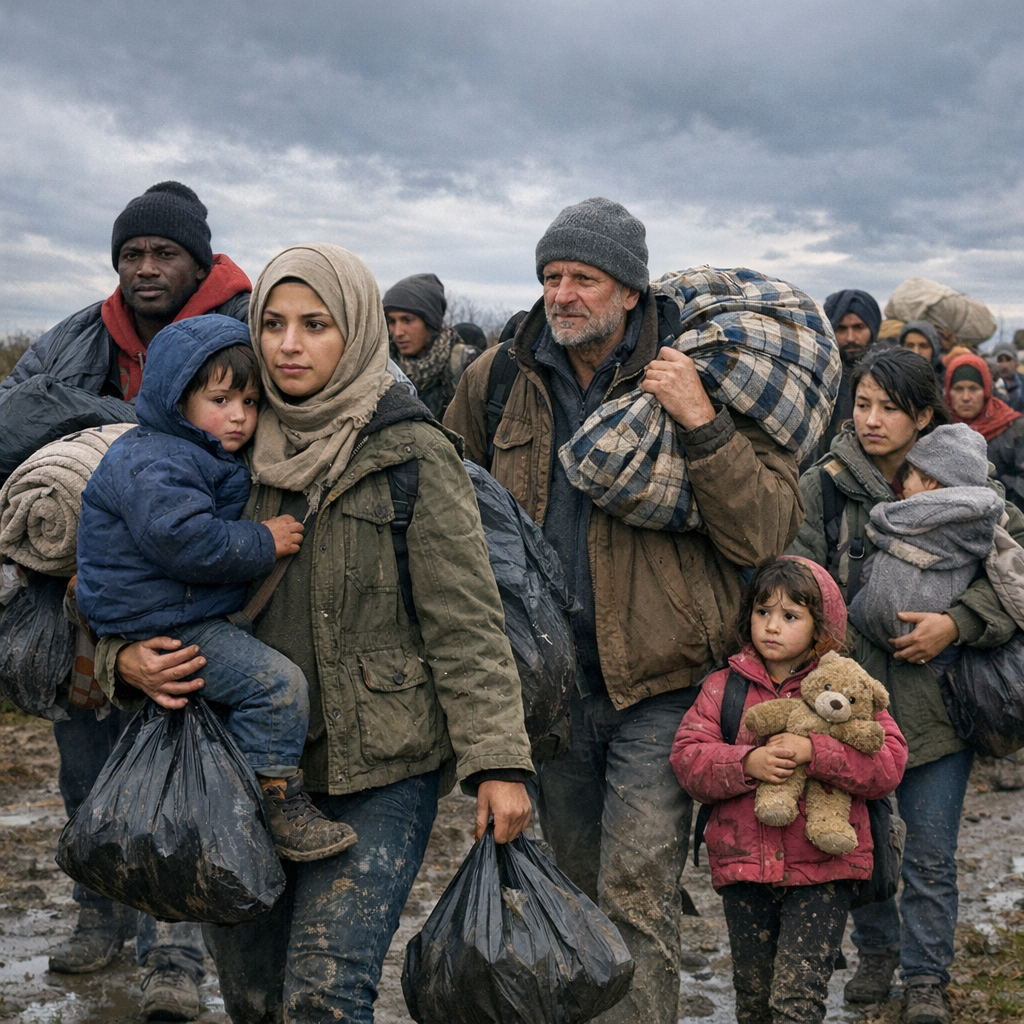
At the end of 2025, there were about 117.8 million people worldwide who were forcibly displaced due to conflict, violence, persecution, or events overpowering public order. That includes 41.6 million refugees who have crossed international borders, millions more seeking asylum, and nearly 69 million people displaced within their own countries. These numbers mark a slight decline from the previous year—but the overall crisis remains one of the most persistent and highest in human history.
What causes people to flee?
Displacement is rarely driven by a single factor. War and conflict still dominate the headlines—for example, the war in Sudan has displaced millions internally, while other conflicts have prompted refugee flows across borders.
But climate change is emerging as a critical, compounding factor. Droughts, floods, storms, and heat stress—along with gradual shifts in environment, like melting glaciers and rising sea levels—displace families, disrupt economies, and heighten conflict over resources. Although international law struggles to categorize “climate migrants” as refugees, the pressure for policy frameworks is growing.
Who is hosting displaced people?
The burden falls disproportionately on low- and middle-income countries. Around 65 % of refugees live in countries neighboring their home countries. Examples include Colombia (hosting Venezuelan refugees), Türkiye (hosting Syrians), and several nations in sub-Saharan Africa. Host countries are often already dealing with economic and resource constraints, making durable protection and integration hard.
What policy gaps persist?
While the global refugee framework (including the 1951 Refugee Convention) addresses persecution and war, it does not cover people displaced by environmental or climate-related causes alone. Few legal protections exist for climate-linked migration, and many global agreements are non-binding—leaving host countries to make policy trade-offs without international enforcement.
What could better solutions look like?
Experts suggest several paths forward:
- Integrate climate migration into national and international policy—ensuring rights and protection even where environmental change is the primary cause.
- Strengthen access to durable solutions—safe returns or resettlement, access to education, work, healthcare—for displaced persons.
- Enhance international cooperation and responsibility-sharing, including funding for host communities.
- Improve early warning systems and resilience efforts to reduce displacement triggers—like investment in climate adaptation or conflict prevention.
For communities in Nashville—and across the U.S.—this issue may feel distant, but understanding forced displacement helps us reflect on our shared global responsibilities: from the ripple effects of migration to the moral and economic roles we can play in supporting people who’ve lost home through little fault of their own.