

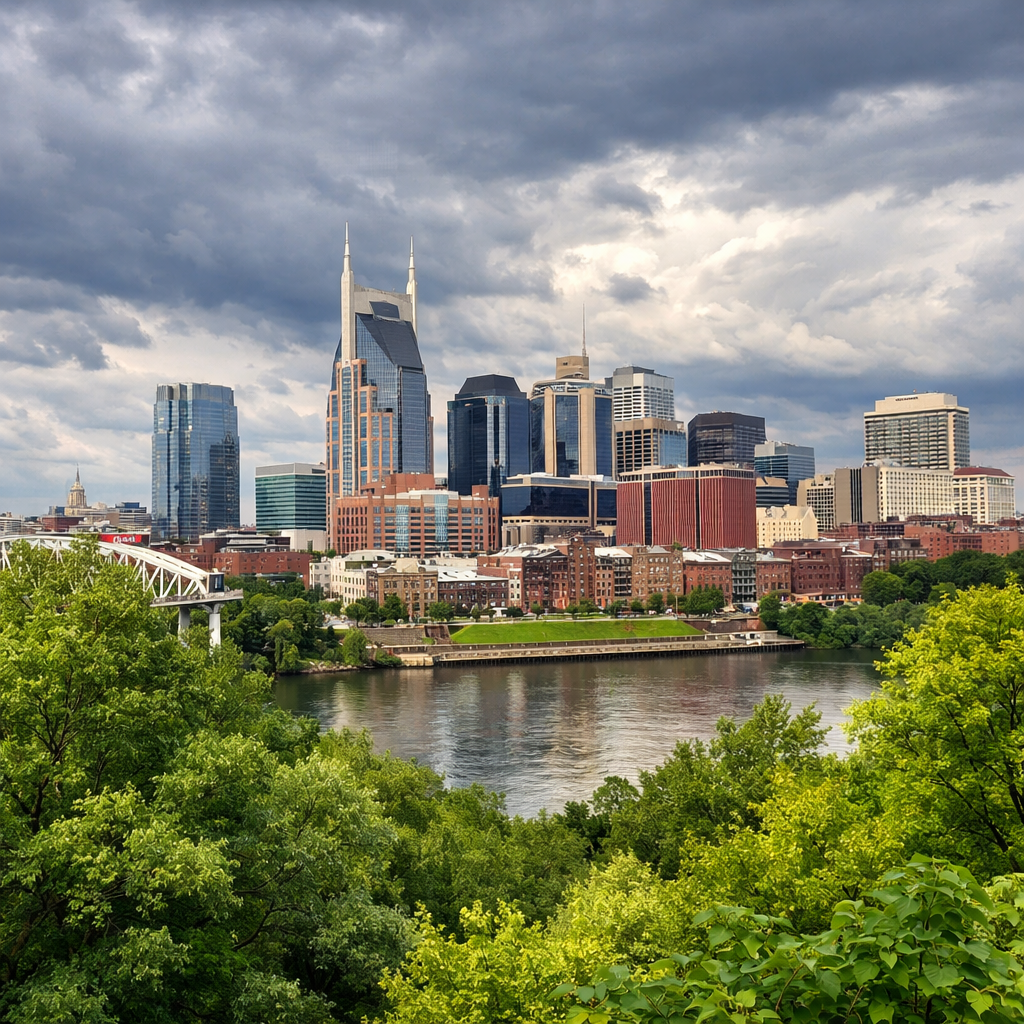
Hi neighbors—Mason Martinez here with a look at how our weather and environment are changing locally, what those shifts mean, and how we can adapt.
Temperature Trends: Winters Are Getting Milder, Summers More Intense
Over the past several decades, Nashville has seen noticeable warming—average daytime highs in winter (December–February) have risen by about 4.5 °C compared to the 1970s, meaning fewer freezing days and milder cold snaps. Summers are heating up too: our traditional heat has become hotter and more frequent, increasing risks of heat stress, especially on humid days.
Growing Season & Frost Days
Our growing season is now about 38 days longer than it was in the late 20th century, and the number of frost‐days—when overnight lows dip below freezing—has dropped by nearly 22 days per year. This gives gardeners and farmers more time to plant—but also stretches pest seasons and allergy windows.
Rainfall Patterns & Storm Risks
Annual precipitation in Nashville has been increasing modestly, but the pattern is changing. We’re seeing fewer long steady rains and more intense downpours—storms that dump a lot of water in a short time. That ups the risk of flash flooding and soil erosion. And despite more rain overall, summer soil can dry fast on hot, sunny days.
Air Quality & Health Implications
Nashville’s air quality has slipped recently. Levels of ground‐level ozone and particle pollution (PM2.5) are often exceeding healthy standards. A recent report ranked us among the worst U.S. metros for year‐round particle pollution. Sensitive groups—kids, seniors, those with asthma—are feeling the effects most clearly.
Ecological Impacts: Forests, Rivers & Urban Nature
Our local forests are under shifting stress: changing temperature and moisture patterns are altering species mix and affecting the health of hardwoods. Warmer winters can disrupt cycles of dormancy, while extreme heat and intense rain strain river systems, potentially increasing runoff and sedimentation.
What You Can Do
- Stay informed. Check Nashville’s air quality indexes daily, especially on hot, dry, or stagnant air days.
- Support green infrastructure—rain gardens, permeable pavement, native plantings—that helps absorb heavy rainfall and cool urban heat islands.
- Adjust planting schedules and crop choices if you garden or farm—look for varieties resilient to both heat and variable moisture.
- Reduce personal emissions: drive less, conserve energy, and consider greener heating and cooling methods.
- Advocate for resilient city planning: stronger stormwater management, tree canopy preservation, and flood mitigation efforts.
These shifts won’t wait. By understanding what’s happening and building resilience in our homes and neighborhoods, we can help Nashville adapt in ways that protect health, nature, and quality of life.