

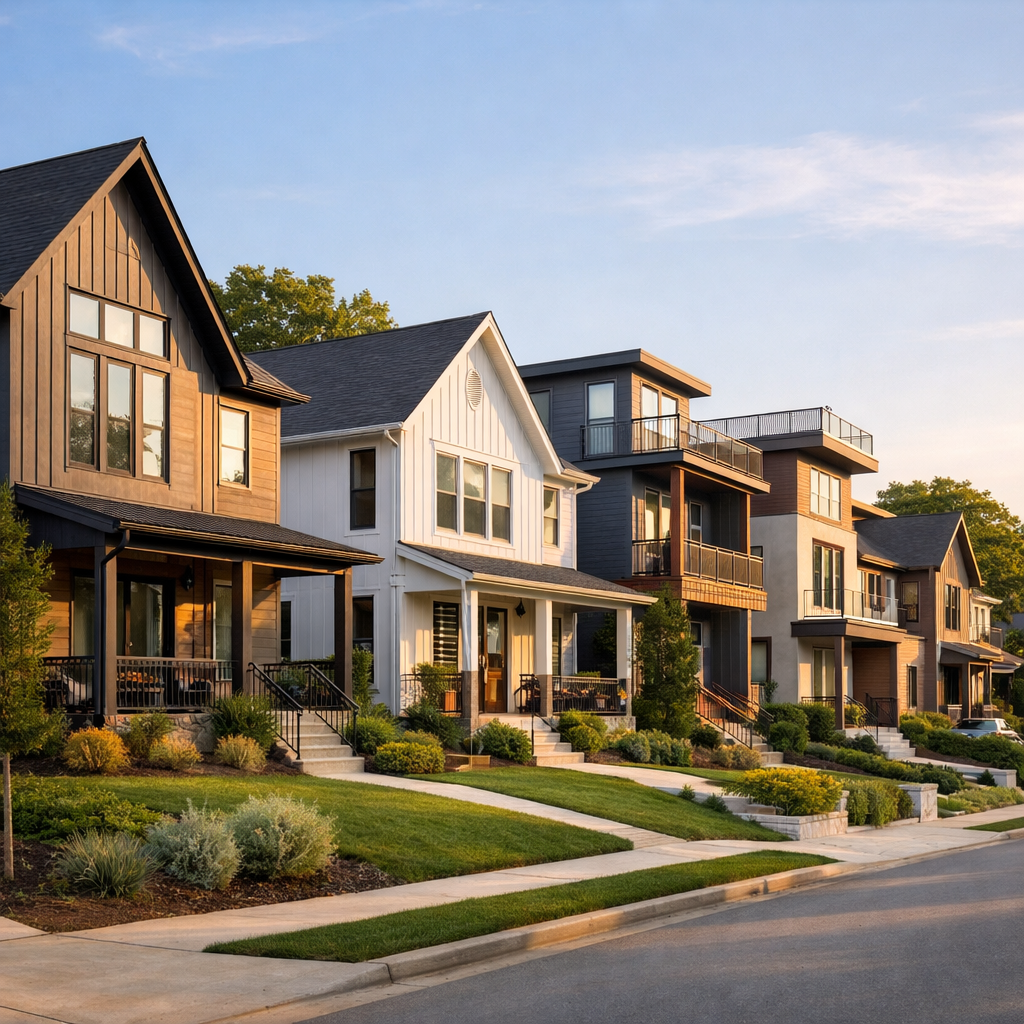
From East Nashville to the heart of downtown, Nashville’s housing scene is shifting. What once was a frenzied market is now showing signs of balance, easing pressure for buyers and renters — though affordability remains top of mind.
What recent data tells us
The median sale price of homes in Nashville is climbing modestly. In the quarter ending June 2026, the median home sold for about $480,000, up 1.0% from the same period a year earlier. Homes are taking around 61 days to sell, slightly slower than the previous year. This signals a shift from rapid turnover to something a bit more deliberate. (Redfin)
Meanwhile, Zillow reports the typical home value at around $436,600, down roughly 3.3% year-over-year. Homes are going under contract in about 25 days, and many are selling under asking price. These indicators suggest that the peak growth has passed and some softening is under way. (Zillow)
Rentals: wavering but still strong
For renters, average rental prices across all property types are holding around $2,200 per month. That’s slightly down from previous periods. Trends show a small cooling — some landlords are reducing rates, while others remain steady — but overall demand in dense or transit-adjacent neighborhoods continues to support higher rents. (Zillow Rentals)
Buyer’s market? What that means now
Nashville is being called one of the nation’s most favorable markets for buyers. As of June 2026, there were significantly more active sellers than buyers — about 129% more — giving buyers greater room to negotiate. Asking prices are being adjusted more often, and sellers are reportedly trimming prices by around 3–4% when needed. (Redfin)
Ongoing development and public efforts
Recognizing long-standing affordability concerns, Metro Nashville and partners have launched or expanded several development tools and programs. Among them are the Barnes Housing Trust Fund, the Mixed-Income PILOT, and priority review for affordable housing projects, all designed to support both renters and homebuyers with lower incomes. (Nashville Housing Division)
One notable project is Eastpoint Flats on the East Bank, a 100% affordable building that will include retail space and childcare, enabled by a 99-year ground lease to lock in long-term affordability. (Mayor’s Office)
Another major effort is the transformation of Napier Place and Sudekum Apartments, where the city is collaborating with private developers to revitalize existing housing stock and expand affordability. (MDHA)
What this means if you’re looking to buy or rent
- Buyers: You may face less competition and have more leverage in negotiations. Be intentional about pricing trends and work with local realtors who understand the changing dynamic.
- Renters: Prices may offer slight relief, especially outside premium neighborhoods. Be sure to factor in commute, amenities, and utility costs when comparing options.
- Affordability: Low- and moderate-income households still face barriers. Exploring subsidized programs, housing funds, and supportive city initiatives may improve your chances of finding stable, affordable housing.
Challenges and what’s still unresolved
Though the market is cooling, affordability remains a core challenge. Most local residents say buying a home in the city feels out of reach. Rising construction and infrastructure costs complicate efforts to deliver affordable units at scale. (Vanderbilt poll / housing reports)
Zoning and infrastructure capacity remain under review at the city level through the ongoing Housing & Infrastructure Study. The goal is to adjust rules and identify where support is needed for smaller-scale housing types and more walkable, transit-oriented neighborhoods. (Metro Planning)
What to watch for next
Keep an eye on median sale prices over the next two to three months — if they level or dip, that reinforces a buyer’s market. Also watch for new units opening under affordable housing programs; development permits; and how the Housing & Infrastructure Study’s recommendations affect zoning and tax incentives.
For both new homebuyers and renters, staying informed and watching local development plans is key. Nashville’s market may be easing, but where and how you buy or rent still matters deeply.
Author’s note: Data reflects trends reported through mid-2026 and ongoing public and private development projects as of summer 2026.