

By Mason Martinez
Signs that seasons are changing in Nashville
Over the past few decades, our city has already seen shifts that alter familiar rhythms. Spring arrives earlier, winters grow milder, and frost days—when overnight lows drop below freezing—occur far less frequently. Meanwhile, growing seasons are expanding, giving plants—and weeds—more time to sprout and thrive. These changes are measurable and echo broader patterns evident across many U.S. cities.
The Urban Heat Island: Why it matters here
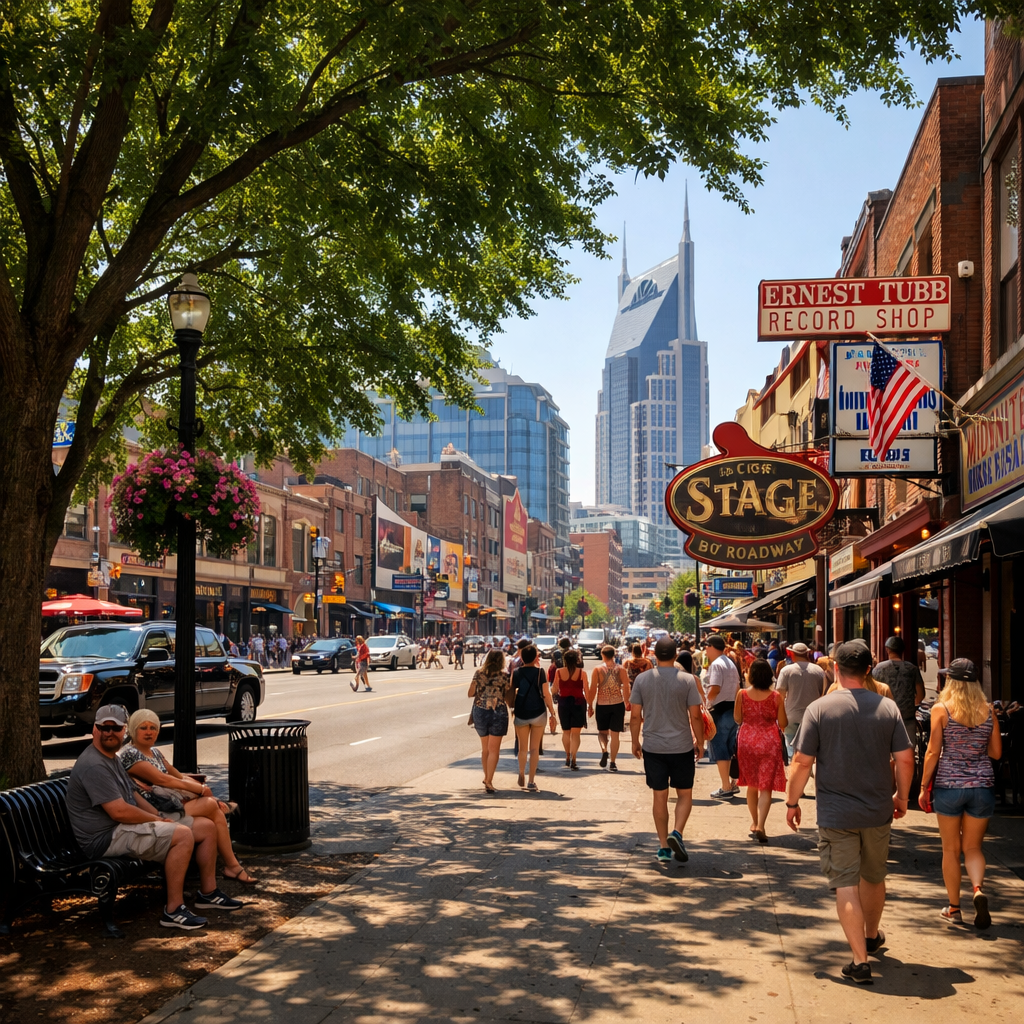
Nashville’s dense development, parking lots, and roads act like heat sponges, absorbing energy by day and releasing it at night. That makes urban cores and neighborhoods with less green cover significantly hotter than suburban or rural areas—for hours on end. Architects, scientists, and city officials warn that during heat waves, nighttime temperatures in heavily built-up districts may barely drop, intensifying health risks.
Who is most affected—and how equity comes into play
Not every part of Nashville bears the same heat burden. Areas historically marked by redlining or underinvestment often lack mature tree canopy, open green spaces, or fresh air circulation. Residents there tend to face the worst air quality when heat traps pollutants, and also the highest costs to cool indoor spaces. These vulnerabilities align with other environmental and social factors—including health conditions, energy costs, and housing challenges.
What you can do to adapt—and help the city grow more resilient
- Plant trees, especially where shade is sparse—along streets, in yards, around homes. Trees not only beautify, they lower surface and air temperatures.
- Choose lighter colors or reflective materials for roofs, driveways, and sidewalks to reduce heat absorption.
- Support or volunteer in neighborhood green space initiatives—parks, community gardens, riparian buffers.
- Stay informed during heat alerts: use cooling centers, limit outdoor activity midday, stay hydrated.
- Advocate for local policy that enforces heat-mitigation in new construction, increases tree canopy citywide, and addresses environmental inequities in vulnerable neighborhoods.
Looking forward: the bigger picture
Nashville’s investments in climate resilience—through its adaptation and resilience plan—recognize these challenges. The work requires ongoing data, community input, and coordination across agencies. But even as global climate trends continue to exert influence, every tree we plant, every roof we lighten, and every patch of green we preserve adds up. For residents, paying attention to where shade, cooling, and space still exists in our city can help all of us stay safer—and cooler.