

By Olivia Williams
1. A Roadmap for Affordable Housing
Nashville’s Unified Housing Strategy (UHS), adopted in 2025, lays out a coordinated plan to produce and preserve tens of thousands of affordable units over the next decade. It isn’t just about building––it’s about aligning funding, markets, and housing policy so people at 0–80% of Area Median Income can actually access stable homes. The City is leaning into seven core strategies from the UHS: creating an improved funding ecosystem, supporting homeownership, expanding supportive housing, preserving existing housing stock, and enhancing housing stability for renters and owners alike.
The City is also considering its first affordable housing bond to generate capital dedicated exclusively to this challenge. That bond would help scale up the work and test whether a voter-approved finance tool can bolster Nashville’s housing responses. Leadership is being deliberate: tracking progress with dashboards and engaging community feedback along the way.
2. “Choose How You Move”: A New Era in Nashville Transit
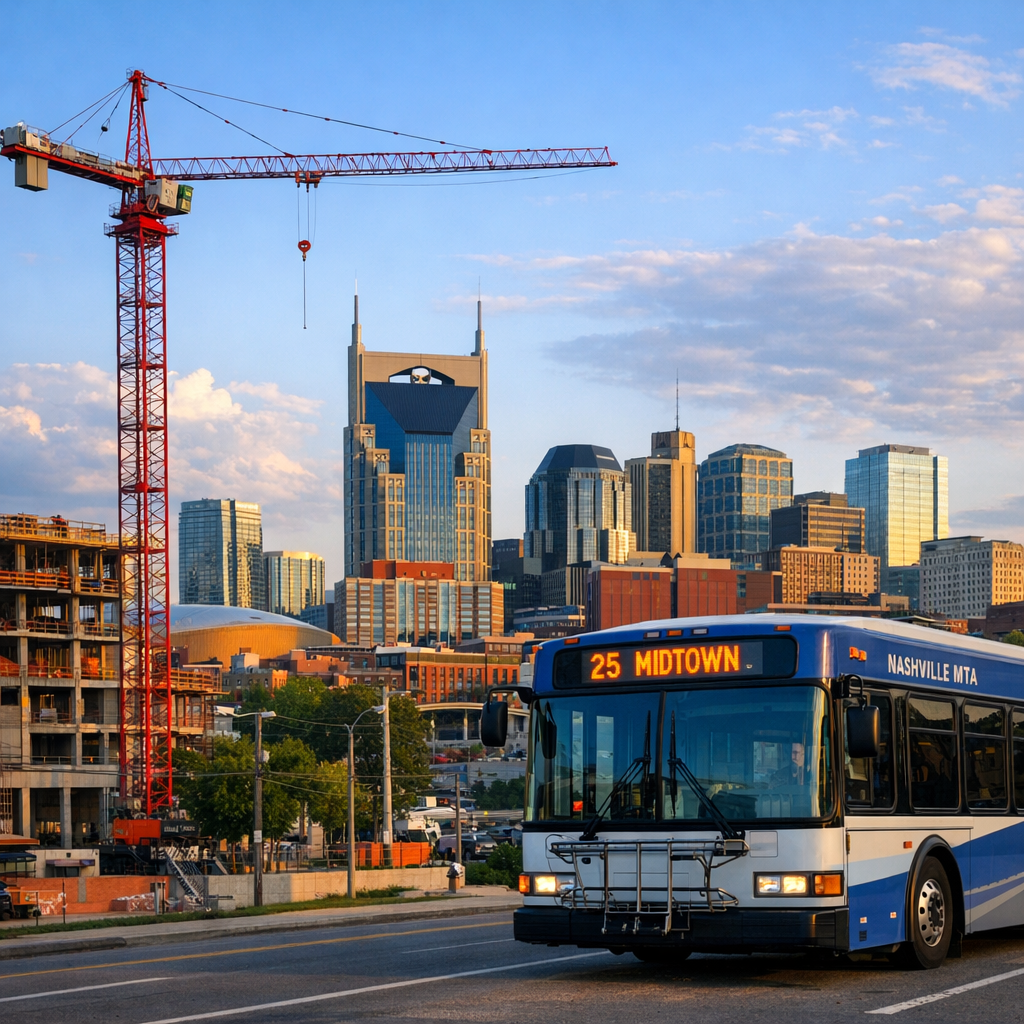
Nashville voters approved a transportation‐focused revenue initiative called “Choose How You Move,” enabling the City to pursue major upgrades in how people walk, bike, bus, or drive. Among the early wins: expanded sidewalks, smarter traffic signals that adapt in real time, safety upgrades on dangerous streets, and frequent transit operations—some even 24/7/365.
Work is underway now: First corridors are being built, priority funding is being allocated, and new bus routes aim for more reliable hours. For many Nashvillians who currently rely on transit or want safer walking routes, these improvements could mean better access to jobs, health care, and services without depending solely on a car.
3. Scrutiny on Power Reliability After Winter Storms
The January ice storm exposed gaps in Nashville Electric Service (NES)’s resilience. Infrastructure damage, widespread outages, and soft spots in preparation prompted public outcry. An after-action report revealed specific missteps and opportunities to strengthen the grid. Officials said the current state of power infrastructure hasn’t kept pace with Nashville’s rapid growth.
Residents voiced frustration, especially where prolonged outages occurred. In response, Metro is considering how to better integrate outside contractors, improve emergency response coordination, and invest in critical grid upgrades. This effort dovetails with broader infrastructure planning that includes stormwater and road improvements.
What Nashvillians Should Watch
- Whether the affordable housing bond moves forward: voter response and terms will matter.
- Timeline for completed sidewalks, safer crossings, and full service on key transit lines.
- NES progress on power grid resilience, especially in storm preparation and emergency response.
Nashville’s leadership is juggling big priorities as the city grows. For long-term success, implementation, transparency, and resident engagement will be key—it’s one thing to set goals, another to reach them in ways the whole city can feel and trust.