

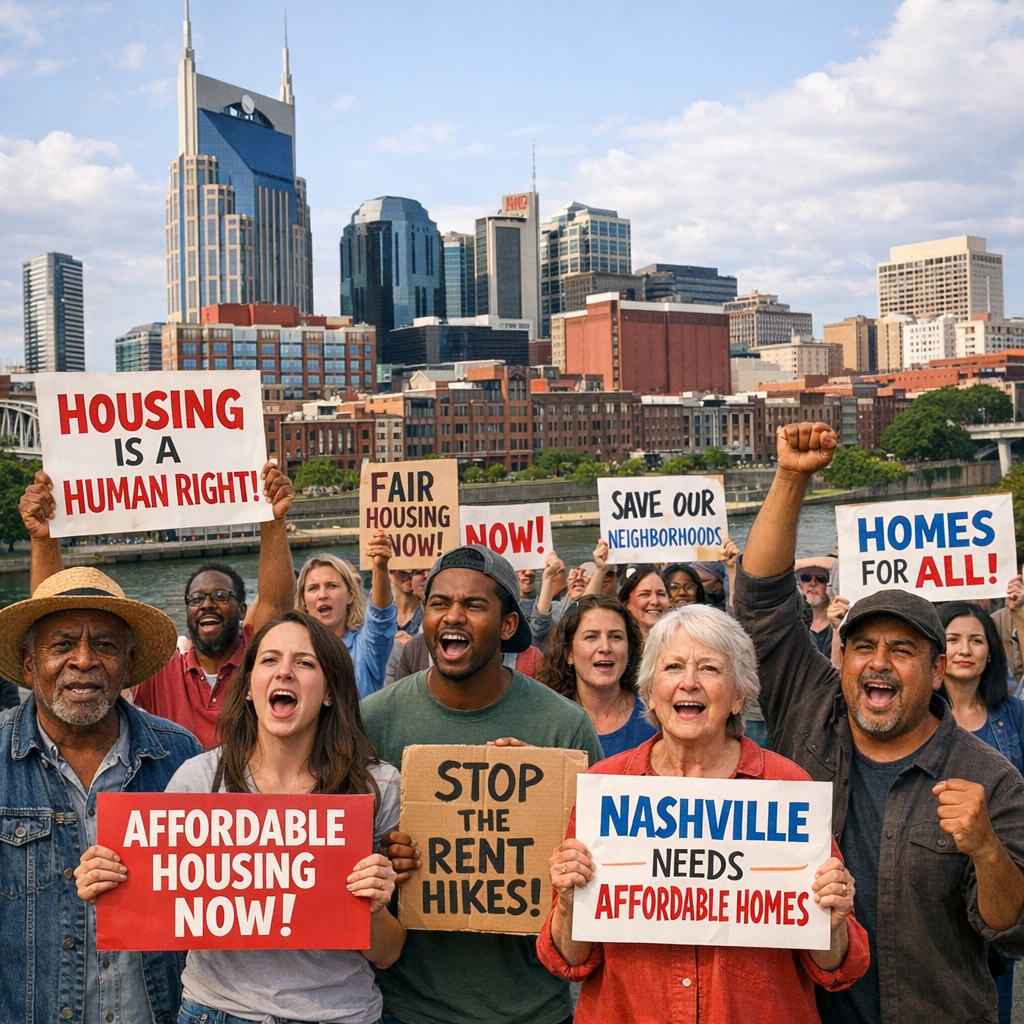
Nashville’s rapid growth has brought prosperity to many, but it has also intensified a housing affordability crisis that disproportionately affects Black and Hispanic families. Recent studies reveal that these communities can afford median-valued homes in less than 1% of the city’s 481 neighborhoods, highlighting a stark disparity in homeownership opportunities.
A Vanderbilt University poll indicates that 82% of Nashville residents feel they cannot afford to buy a home in Davidson County. This sentiment underscores the city’s escalating housing costs and the challenges faced by potential homeowners across various demographics.
Historically, discriminatory practices such as redlining and exclusionary zoning have contributed to these disparities. While these practices are now illegal, their legacy persists, limiting wealth accumulation opportunities for minority communities through homeownership.
In response, city officials have proposed zoning reforms to allow higher-density housing along transit corridors, aiming to increase affordable housing availability. However, these initiatives face political and community challenges, as public support for multifamily housing has waned.
Addressing Nashville’s housing affordability crisis requires a multifaceted approach, including policy reforms, community engagement, and targeted investments to ensure equitable access to housing for all residents.