

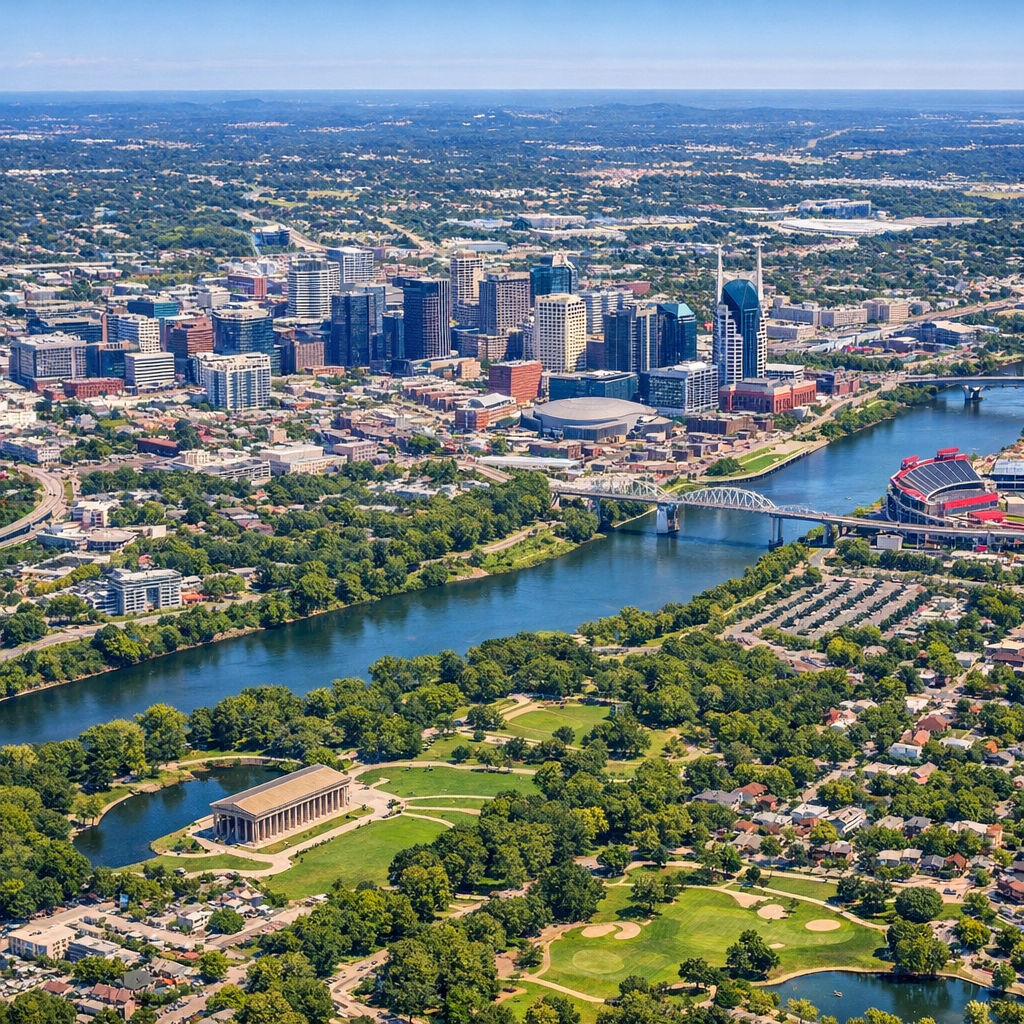
Nashville is proactively addressing the challenges posed by climate change through a series of comprehensive initiatives aimed at enhancing the city’s resilience and sustainability.
Climate Adaptation and Resilience Plan
In September 2024, the Mayor’s Office introduced the Climate Adaptation and Resilience Plan (CARP). This plan outlines strategies to prepare Nashville for climate-related disruptions, focusing on protecting vulnerable communities and infrastructure. Key objectives include reducing greenhouse gas emissions and implementing adaptive measures to mitigate the impacts of extreme weather events.
Urban Heat Island Mitigation
Recognizing the intensifying urban heat island effect, Nashville has conducted extensive heat mapping to identify the city’s hottest areas. This data informs efforts to increase green spaces and tree canopies, particularly in neighborhoods most affected by heat. Such initiatives aim to lower temperatures and improve air quality, thereby enhancing public health and comfort.
Zero Waste Initiative
In December 2019, Nashville’s Solid Waste Region Board approved a Solid Waste Master Plan targeting a 90% diversion of waste from landfills. The plan emphasizes reducing, reusing, recycling, and composting to minimize environmental impact. Efforts include expanding recycling programs and educating residents on sustainable waste management practices.
Community Engagement and Education
Organizations like Urban Green Lab play a pivotal role in educating Nashville’s communities on sustainable living. Through programs in schools and workplaces, they promote practices that reduce environmental footprints and foster a culture of sustainability across the city.
By implementing these strategies, Nashville demonstrates a strong commitment to environmental stewardship, aiming to create a resilient and sustainable future for all residents.