

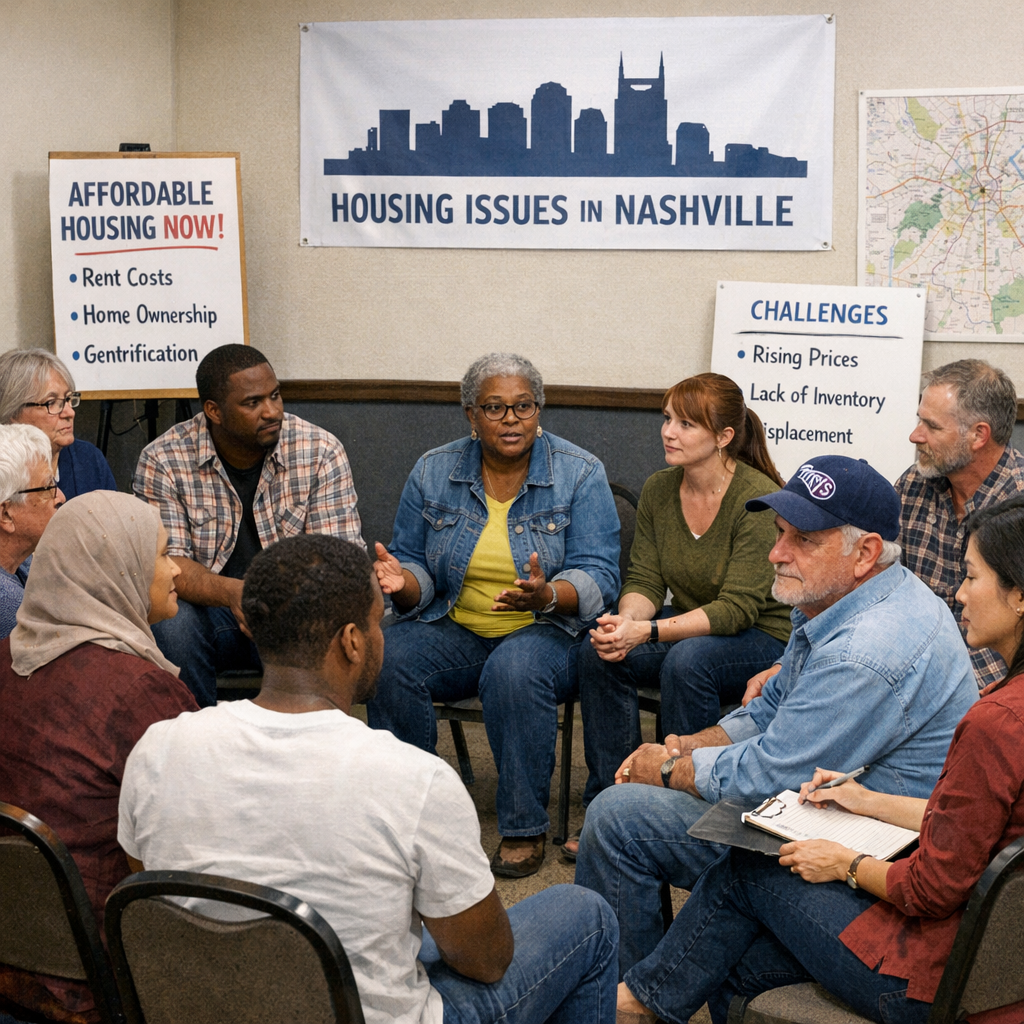
Nashville is grappling with a significant housing affordability crisis. A recent Vanderbilt University poll reveals that 82% of residents feel they cannot afford to purchase a home in Davidson County. This concern is further underscored by the fact that only 36% of respondents plan to buy a house in the area. The rising cost of living and rapid population growth have intensified these challenges, leading to increased economic strains on the community.
The affordability issue is particularly acute among African American residents. According to the American Community Survey’s 2024 estimates, the overall poverty rate in Nashville stands at 11.9%, but it rises to 18.0% for African Americans. Additionally, the unemployment rate for African Americans in Davidson County is 5.5%, nearly three times that of whites at 2.0%. These disparities highlight the systemic challenges faced by minority communities in achieving economic stability.
In response to these pressing issues, Metro Social Services has released its 17th annual Community Needs Evaluation report, titled “Affordability Challenges for African Americans in Nashville: Enduring Legacies. Emerging Issues.” The report identifies historic and contemporary causes of the city’s wealth gap and offers recommendations to address these disparities. Key findings include that nearly half of all renters in Nashville are “cost-burdened,” spending more than 30% of their income on housing.
Community initiatives are also playing a vital role in addressing the housing crisis. The 2026-2028 Nashville Community Health Improvement Plan has outlined four key priorities: Housing, Awareness and Navigation of Community Resources, Food Access/Food Insecurity, and Economic Opportunity and Job Skill Development. The plan aims to use the Unified Housing Strategy as a roadmap to identify immediate low-barrier actions to improve equitable health outcomes for vulnerable populations.
Furthermore, residents are finding creative ways to build community and support one another amid these challenges. Grassroots movements are emerging to counter rising social isolation, which research links to serious health risks. Simple yet effective strategies, such as hosting casual neighborhood gatherings and leveraging local parks for meet-ups, are fostering stronger community bonds and providing support networks for those affected by housing instability.
While the housing affordability crisis in Nashville presents significant challenges, the combined efforts of local government initiatives and community-driven solutions offer a path forward. Continued collaboration and targeted actions are essential to ensure that all Nashvillians have access to affordable and stable housing.