

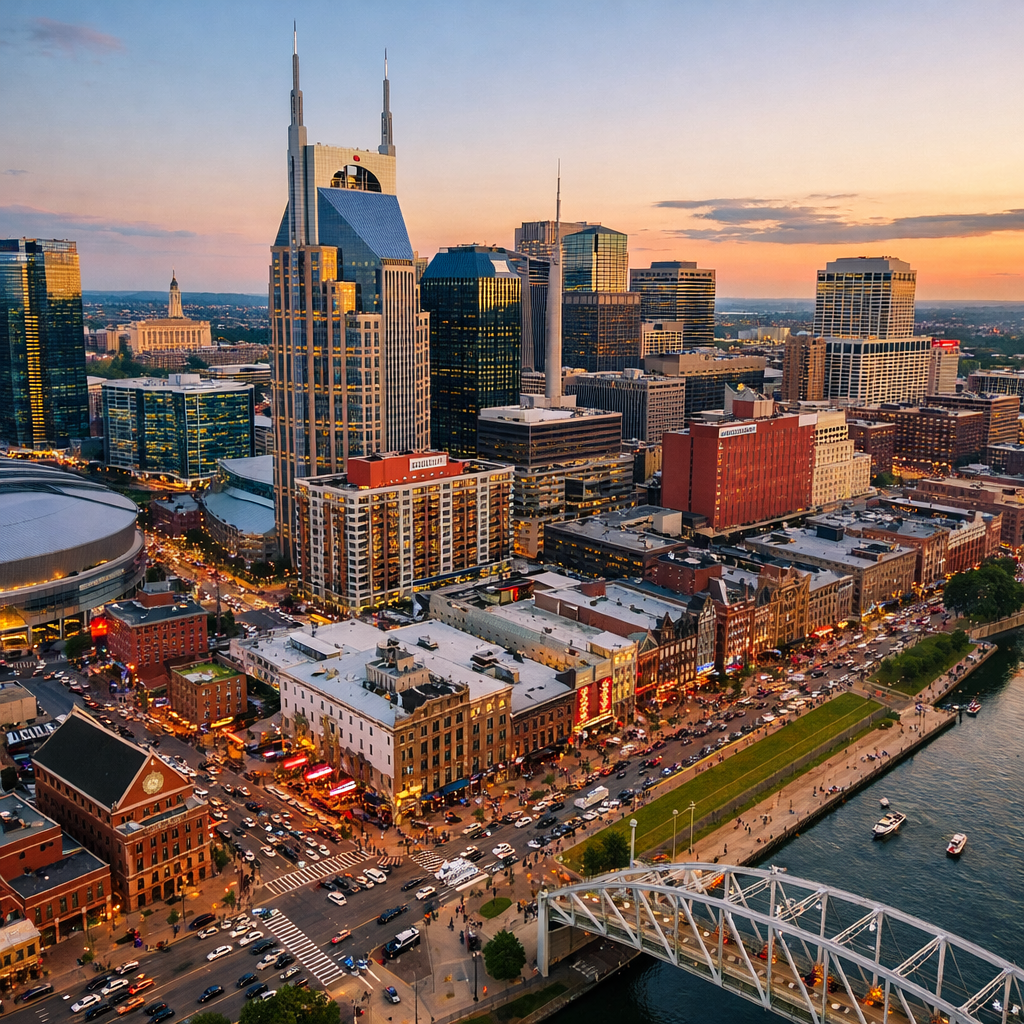
Nashville’s economic landscape has undergone significant transformation in recent years, reflecting broader national trends in tourism, education, and housing.
Tourism: A Booming Industry
In 2025, Tennessee’s tourism industry set a new record with $32.5 billion in visitor spending, marking a 40% increase since 2018. This surge has had significant economic implications, as sales tax is the state’s largest revenue source, directly funding critical infrastructure such as schools and roads. Key attractions like Dollywood, the Grand Ole Opry, and Graceland, along with the state’s food and hospitality sectors, fueled most of the spending. However, individual tourist budgets remained relatively flat due to inflationary pressures. Notably, international visitors declined by 8.8%, aligning with a nationwide downturn in foreign travel during the Trump administration. Overall, Tennessee continues to outperform national tourism trends.
Education and Income: The College Connection
A recent analysis of 2024 Census data reveals that in Nashville, a college education continues to significantly influence income levels. Adults aged 25 or older without college education earned a median income of $41,393, underscoring the wage gap between high school graduates and those with higher education. This comes as national sentiment grows skeptical about the value of college, with polls reflecting declining perceptions of its importance. However, the individuals who could benefit most from a college degree often face the greatest barriers, such as rising tuition, student debt, and a challenging job market influenced by AI. To combat these obstacles, Tennessee has introduced initiatives like Tennessee Reconnect, which offers tuition-free community or technical college education to residents aged 25 and older. About 11,000 people have taken part in the program’s coaching services, which guide students through financial and personal hurdles to complete their degrees. This highlights the importance of accessible support systems in helping adult learners succeed in higher education and improve their economic outcomes.
Housing Market: Post-Pandemic Shifts
The COVID-19 pandemic drastically reshaped Nashville’s housing market, creating lasting impacts. Home prices in Nashville and across Tennessee soared due to a mix of historically low borrowing costs and the rise of remote work, which ignited a homebuying boom. This price surge rendered homeownership increasingly unattainable for many residents. Middle Tennessee, in particular, saw some of the sharpest price increases, with anecdotal evidence showing home values in areas like East Nashville increasing by 50% since 2020. At the same time, mortgage interest rates spiked after historic lows in 2021, discouraging potential buyers and prompting many current homeowners to stay put to preserve their favorable rates. As housing became more expensive, prospective buyers began to look farther into the suburbs in search of more affordable options. This shift in buying behavior and price increases reflect larger national real estate trends observed over the past five years.
In summary, Nashville’s economic trajectory offers a microcosm of national patterns, underscoring the city’s integral role in the broader U.S. economy.