

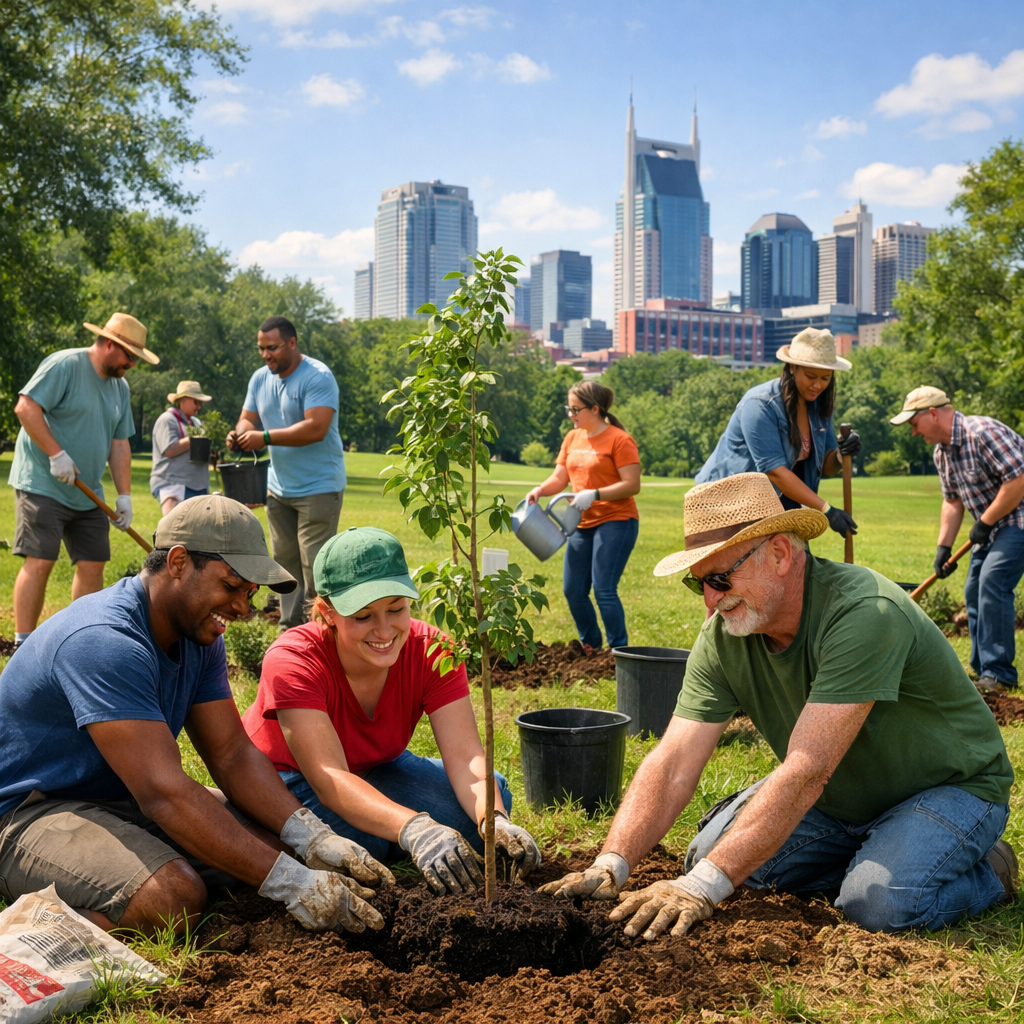
Nashville is making significant strides in environmental sustainability through a series of community-driven initiatives aimed at enhancing the city’s green spaces, reducing waste, and building climate resilience.
Investing in Our Tree Canopy
The city has prioritized the expansion and preservation of its urban tree canopy. Legislation mandates that trees on public property be managed as valuable assets, with regular progress reports and stringent replacement standards. Additionally, a dedicated revenue stream supports tree canopy restoration on private properties, contributing to the Root Nashville campaign’s goal of planting 500,000 trees by 2050.
Advancing Zero Waste Goals
In December 2019, Nashville’s Solid Waste Region Board approved a Solid Waste Master Plan aiming for a 90% diversion of waste from landfills. This plan focuses on increasing recycling, reducing food waste, and promoting composting throughout Davidson County. Public education programs are also being strengthened to encourage residents to refuse, reduce, reuse, recycle, and compost.
Enhancing Climate Resilience
Recognizing the challenges posed by climate change, Nashville has developed a Climate Adaptation and Resilience Plan. This plan assesses the health of the city’s natural resources and outlines concrete actions, including conservation priorities and policy recommendations, to prepare the community for climate-driven disruptions.
Community Engagement and Education
Organizations like Urban Green Lab play a pivotal role in educating communities on sustainable living. Their programs have reached nearly half of Davidson County’s zip codes, training educators and serving numerous organizations to promote sustainability education.
Through these concerted efforts, Nashville is fostering a culture of environmental stewardship, ensuring a sustainable and resilient future for all residents.